Cold and Flu Medicines: A Complete, Easy-to-Understand Guide for Safe and Effective Relief

cold and flu medicine

Introduction

Cold and flu medicines are among the most widely used healthcare products worldwide, especially during seasonal changes and winter months. Almost everyone experiences a cold or flu at least once a year, and many rely on cold and flu medications to reduce discomfort and continue daily activities. While these medicines do not cure viral infections, they play a vital role in relieving symptoms, improving comfort, and supporting recovery.

The common cold and influenza (flu) are caused by viruses, which means antibiotics are ineffective. Instead, cold and flu medicines are designed to target specific symptoms, such as fever, body aches, sore throat, nasal congestion, runny nose, and cough. Understanding how these medicines work helps people choose the most effective treatment while avoiding unnecessary risks.

Most cold and flu medicines are available over the counter (OTC), making them easy to access. However, misuse is common. Taking the wrong medicine, mixing products with the same ingredients, or exceeding recommended doses can lead to serious side effects. For example, some cold and flu medicines may increase blood pressure, cause drowsiness, or interact with existing medications.


Why Cold and Flu Medicines Are So Commonly Used

Cold and flu medicines are popular because they provide fast and targeted symptom relief. When symptoms disrupt sleep, work, or daily routines, these medicines help restore comfort and functionality.

Common reasons people use cold and flu medicines include:

  • Relief from fever and body aches
  • Reduction of nasal congestion and sinus pressure
  • Control of cough and throat irritation
  • Management of runny nose and sneezing
  • Improved sleep with night-time cold and flu medicines

Health data shows that adults experience an average of 2–3 colds per year, while children may experience even more. Influenza affects millions annually and can be severe in older adults, pregnant women, and people with chronic conditions. This makes cold and flu medicines a key part of everyday symptom management.


Treating Symptoms vs Curing the Illness

A critical fact about cold and flu medicines is that they do not eliminate viruses. Their purpose is to relieve symptoms while the immune system fights the infection naturally.

“Cold and flu medicines manage symptoms, not the virus itself. Rest, hydration, and time are essential for recovery.”

This explains why symptoms may last several days even when taking medication. Using the right cold and flu medicines can make recovery more comfortable, but they work best when combined with proper rest, hydration, and nutrition.


Common Myths About Cold and Flu Medicines

There are many misunderstandings surrounding cold and flu treatment. Some of the most common myths include:

  • “Stronger medicine means faster recovery” – Recovery depends on immune response, not medicine strength.
  • “Antibiotics treat colds and flu” – Antibiotics do not work against viruses.
  • “Taking more medicine works better” – Overdosing increases the risk of serious side effects.
  • “Combination cold and flu medicines are always best” – Single-ingredient medicines are often safer.

Understanding these myths helps people use cold and flu medicines safely and effectively.

What Is the Difference Between a Cold and the Flu?

Understanding the difference between a common cold and influenza (flu) is essential when choosing the right cold and flu medicines. Although both illnesses affect the respiratory system and share similar symptoms, they differ significantly in severity, duration, and treatment approach. Using the wrong type of medicine can lead to poor symptom control or unnecessary side effects.

Many people mistake the flu for a severe cold, but influenza is usually much more intense and can lead to serious complications, especially in older adults, young children, and people with weak immune systems.


Cold vs Flu: Key Differences Explained

The table below highlights the most important differences between a cold and the flu and how they impact the use of cold and flu medicines:

FeatureCommon ColdInfluenza (Flu)
Onset of symptomsGradualSudden
FeverRare or mildHigh (38–40°C)
Body achesMildSevere
FatigueMildExtreme
CoughMild to moderateSevere, dry cough
HeadacheRareCommon
Duration5–7 days7–14 days or longer
ComplicationsRarePneumonia, hospitalization

This distinction matters because cold and flu medicines are symptom-based, and flu symptoms often require stronger or more targeted treatment strategies.


Symptoms of the Common Cold

The common cold is usually mild and manageable with basic cold and flu medications. Typical cold symptoms include:

  • Runny or stuffy nose
  • Sneezing
  • Mild sore throat
  • Mild cough
  • Slight fatigue
  • Low or no fever

Cold symptoms often improve within a few days, and most people can manage them with single-ingredient cold medicines, rest, and hydration.


Symptoms of Influenza (Flu)

The flu tends to hit suddenly and feels much more intense than a cold. Common flu symptoms include:

  • High fever and chills
  • Severe muscle and body aches
  • Intense fatigue and weakness
  • Dry, persistent cough
  • Headache
  • Chest discomfort

Because flu symptoms are stronger, people often rely on multi-symptom cold and flu medicines to manage pain, fever, and congestion simultaneously.


Severity Comparison: Why the Difference Matters

The flu can cause serious health complications, including bronchitis, pneumonia, and worsening of chronic conditions like asthma or heart disease. This is why people with flu symptoms may need more than standard cold and flu medicines, especially if symptoms worsen or last longer than expected.

“If symptoms are severe, sudden, or include high fever and extreme fatigue, flu—not a cold—is more likely.”

Recognizing severity helps users decide when OTC cold and flu medicines are sufficient and when medical care is necessary.


Duration of Illness and Medicine Choice

  • Colds usually improve within a week and respond well to mild cold and flu medicines.
  • Flu symptoms can last two weeks or more and may require stronger symptom relief or prescription antiviral treatment.

Choosing cold and flu medicines based on illness duration prevents unnecessary medication use and reduces health risks.


How Diagnosis Affects Cold and Flu Medicines

Correct identification of symptoms ensures safer treatment:

  • Cold symptoms → nasal sprays, antihistamines, mild pain relievers
  • Flu symptoms → fever reducers, pain relievers, rest, hydration
  • Severe or persistent symptoms → medical consultation

Using targeted cold and flu medicines improves comfort while allowing the immune system to do its job effectively.

How Cold and Flu Medicines Work

To use cold and flu medicines safely and effectively, it is important to understand how they actually work inside the body. Many people assume these medicines cure colds or flu, but in reality, they are designed to manage symptoms, not eliminate the virus. This distinction helps set realistic expectations and prevents misuse.

Cold and flu viruses enter the body through the nose, mouth, or eyes and begin multiplying in the respiratory tract. The immune system responds by releasing chemicals that cause inflammation, fever, mucus production, and body aches. These reactions are part of the body’s defense system—but they are also responsible for most of the uncomfortable symptoms people experience.


Do Cold and Flu Medicines Cure Illness?

The simple answer is no. Cold and flu medicines do not kill viruses or shorten the infection in most cases. Instead, they reduce symptom intensity, making it easier for people to rest, sleep, and recover.

“Cold and flu medicines don’t fight the virus—they help you feel better while your immune system does.”

This is why rest, hydration, and proper nutrition remain just as important as medication.


How Different Cold and Flu Medicines Target Symptoms

Each category of cold and flu medicine works in a specific way:

  • Pain relievers and fever reducers lower body temperature and ease muscle aches.
  • Decongestants shrink swollen nasal blood vessels, improving airflow.
  • Antihistamines reduce sneezing and runny nose by blocking histamine release.
  • Cough suppressants calm the cough reflex.
  • Expectorants loosen mucus, making coughs more productive.

By targeting specific symptoms, cold and flu medicines allow the body to heal with less discomfort.


The Role of the Immune System in Recovery

Even when using cold and flu medicines, the immune system remains the primary defense against infection. Fever, for example, helps slow viral replication, while mucus traps and removes pathogens.

This is why experts recommend not suppressing every symptom aggressively unless necessary. For example:

  • Mild fever may not require treatment
  • Mild congestion can resolve naturally
  • Overuse of nasal sprays can worsen congestion

Understanding this balance helps people choose the right cold and flu medicines, not just more medicine.


Why Symptom-Based Treatment Works Best

Treating only the symptoms you have is safer and more effective than using multi-symptom products unnecessarily.

Example:

  • If you only have a headache and fever → use a pain reliever
  • If you have congestion only → use a decongestant
  • If you have a cough with mucus → use an expectorant

This approach reduces side effects and lowers the risk of ingredient overlap or overdose.


Cold and Flu Medicines vs Antiviral Medications

It is important to distinguish between cold and flu medicines and antiviral drugs:

TypePurposeExample
Cold and flu medicinesSymptom reliefParacetamol, antihistamines
Antiviral medicinesReduce flu severityOseltamivir

Antivirals are prescription medicines used only in certain flu cases and must be taken early to be effective.

Types of Cold and Flu Medicines

There are many different types of cold and flu medicines, and each one is designed to relieve specific symptoms. Understanding these categories helps people avoid unnecessary medications and choose the safest, most effective option for their condition. Instead of using a “one-size-fits-all” product, symptom-based selection leads to better relief and fewer side effects.

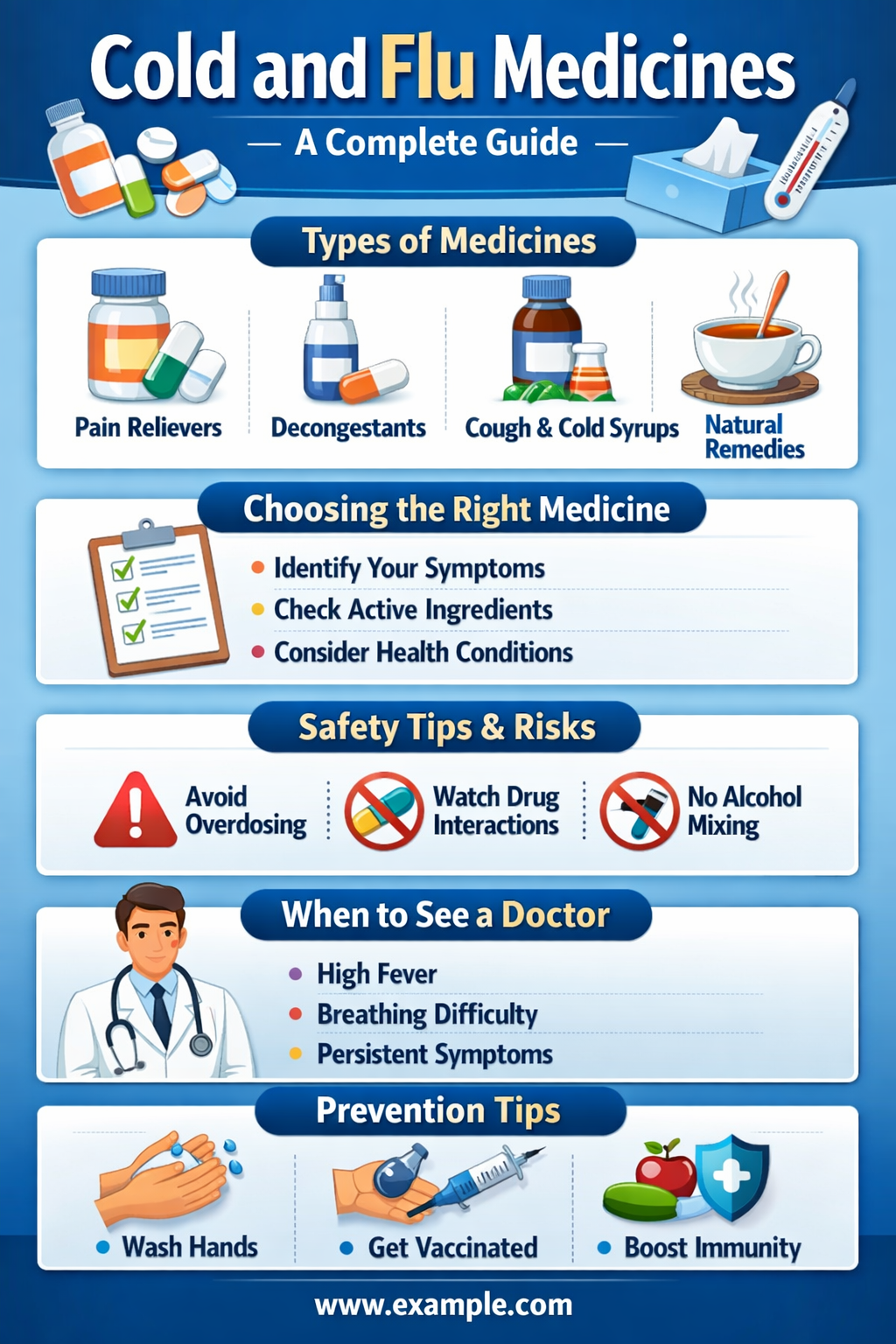
Most over-the-counter cold and flu medicines fall into five main categories: pain relievers, decongestants, antihistamines, cough medicines, and combination products.


1. Pain Relievers and Fever Reducers

Pain relievers and fever reducers are among the most commonly used cold and flu medicines. They help reduce fever, headaches, sore throat pain, and body aches, which are common in both colds and flu.

Common active ingredients include:

  • Acetaminophen (Paracetamol) – Gentle on the stomach and widely used
  • Ibuprofen – Reduces inflammation and pain
  • Aspirin – Effective but not recommended for children

How they work:
These medicines act on the brain and nervous system to lower fever and block pain signals. They do not treat congestion or cough but are highly effective for flu-related body pain.

Safety tips:

  • Do not exceed daily dosage limits
  • Avoid mixing multiple products containing acetaminophen
  • Children should not take aspirin due to the risk of Reye’s syndrome

2. Decongestants for Cold and Flu Relief

Decongestants are cold and flu medicines designed to relieve stuffy nose and sinus pressure. They work by narrowing swollen blood vessels in the nasal passages, allowing easier breathing.

Types of decongestants:

  • Oral decongestants (tablets or syrups)
  • Nasal sprays

Benefits:

  • Fast relief from nasal blockage
  • Improved breathing and sleep

Risks and precautions:

  • Can raise blood pressure and heart rate
  • Nasal sprays should not be used for more than 3–5 days
  • Not recommended for people with heart disease or hypertension

3. Antihistamines in Cold and Flu Medicines

Antihistamines are commonly included in cold and flu medicines to reduce runny nose, sneezing, and watery eyes.

Two main types:

  • First-generation antihistamines – Cause drowsiness
  • Second-generation antihistamines – Less sedating

When they help most:

  • Early cold symptoms
  • Night-time cold and flu medicines for sleep

Common side effects:

  • Drowsiness
  • Dry mouth
  • Blurred vision

4. Cough Suppressants and Expectorants

Cough is one of the most persistent symptoms of cold and flu. Different cold and flu medicines are used depending on the type of cough.

Cough TypeBest Medicine
Dry coughCough suppressants
Wet coughExpectorants

Key ingredients:

  • Dextromethorphan – Suppresses cough reflex
  • Guaifenesin – Loosens mucus

Using the wrong cough medicine may worsen symptoms, so identifying the cough type is important.


5. Combination Cold and Flu Medicines

Combination cold and flu medicines contain multiple active ingredients in one product. These are popular for convenience but require careful use.

Advantages:

  • Treat multiple symptoms at once
  • Easy to use

Disadvantages:

  • Higher risk of ingredient overlap
  • Increased side effects
  • Unnecessary ingredients for some users

Quick Comparison of Cold and Flu Medicine Types

CategoryTreatsKey Caution
Pain relieversFever, achesOverdose risk
DecongestantsNasal blockageBlood pressure
AntihistaminesRunny noseDrowsiness
Cough medicinesCoughWrong type misuse
Combination productsMultiple symptomsIngredient overlap

Best Cold and Flu Medicines for Common Symptoms

Choosing the right cold and flu medicines depends on the specific symptoms you are experiencing. Treating only the symptoms you have—rather than using multi-symptom products unnecessarily—can improve effectiveness and reduce side effects. Below is a symptom-based guide to selecting the most appropriate cold and flu medications.


Best Cold and Flu Medicines for Fever and Body Aches

Fever and body pain are especially common with influenza but can also occur with severe colds. Pain relievers and fever reducers are the first-line cold and flu medicines for these symptoms.

Most effective options include:

  • Acetaminophen (paracetamol) – Safe for most people when used correctly
  • Ibuprofen – Helps with inflammation and muscle pain
  • Always follow dosage instructions
  • Avoid taking two medicines with the same active ingredient
  • Stay hydrated to support fever reduction

Best Cold and Flu Medicines for Stuffy Nose and Sinus Pressure

Nasal congestion can make breathing and sleeping difficult. Decongestants are commonly used cold and flu medicines for this symptom.

Effective choices include:

  • Oral decongestants for all-day relief
  • Nasal sprays for fast, short-term relief

Important safety notes:

  • Limit nasal spray use to 3–5 days
  • People with high blood pressure should avoid many decongestants
  • Use saline sprays as a safer alternative when possible

Best Cold and Flu Medicines for Sore Throat

A sore throat is often caused by inflammation and post-nasal drip. Cold and flu medicines that reduce pain and swelling can help.

Helpful options include:

  • Pain relievers (paracetamol or ibuprofen)
  • Throat lozenges and sprays
  • Warm fluids and saltwater gargles

Best Cold and Flu Medicines for Cough

Cough treatment depends on the type of cough.

For dry coughs:

  • Cough suppressants help reduce irritation

For productive (wet) coughs:

  • Expectorants loosen mucus

Avoid this mistake:
Using cough suppressants for wet coughs can trap mucus and worsen congestion.


Best Night-Time Cold and Flu Medicines

Night-time cold and flu medicines are designed to relieve symptoms that disrupt sleep.

Common features include:

  • Antihistamines for runny nose
  • Pain relievers for aches
  • Mild sedative effects for sleep

Quick Symptom-to-Medicine Guide

SymptomRecommended Cold and Flu Medicine
FeverParacetamol, ibuprofen
Body achesPain relievers
Stuffy noseDecongestants
Runny noseAntihistamines
Dry coughCough suppressants
Wet coughExpectorants

Cold and Flu Medicines for Children

Using cold and flu medicines for children requires extra caution. Children are more sensitive to medications, and improper use can lead to serious side effects. In recent years, health authorities have issued strong warnings about the misuse of cold and flu medicines in young children, making it essential for parents and caregivers to understand what is safe and what is not.


Are Cold and Flu Medicines Safe for Kids?

Not all cold and flu medicines are safe for children. Many combination products are not recommended for children under 6 years of age, and some should be avoided even up to age 12.

Key reasons for caution include:

  • Higher risk of overdose
  • Increased sensitivity to side effects
  • Difficulty measuring correct doses
  • Presence of multiple active ingredients

Fact: Leading health organizations advise against using multi-symptom cold and flu medicines in young children due to safety concerns.


Age-Based Guidelines for Cold and Flu Medicines

Age GroupRecommendation
Under 2 yearsAvoid cold and flu medicines
2–6 yearsUse only if advised by a doctor
6–12 yearsLimited options with proper dosing
12+ yearsMany adult medicines may be used carefully

Always check age labels and dosing instructions before giving any cold and flu medicine to a child.


Safer Options for Children’s Cold and Flu Symptoms

For children, symptom relief should focus on non-drug and single-ingredient treatments.

Safer choices include:

  • Paracetamol for fever and pain
  • Saline nasal drops for congestion
  • Honey (for children over 1 year) to soothe cough
  • Warm fluids and rest

Important: Never give aspirin to children due to the risk of Reye’s syndrome.


Why Combination Cold and Flu Medicines Are Risky for Kids

Combination cold and flu medicines often contain:

  • Pain relievers
  • Decongestants
  • Antihistamines
  • Cough suppressants

This increases the risk of ingredient overlap and overdose, especially if parents also give additional medicine separately.


Signs a Child Needs Medical Attention

Parents should seek medical care if a child has:

  • High or persistent fever
  • Difficulty breathing
  • Severe cough or wheezing
  • Symptoms lasting more than 7–10 days
  • Signs of dehydration

Key Safety Tips for Parents

  • Use proper measuring devices
  • Never exceed recommended doses
  • Avoid using adult cold and flu medicines
  • Store medicines out of children’s reach

Using cold and flu medicines responsibly helps protect children while allowing their immune systems to recover naturally.

Prescription vs Over-the-Counter Cold and Flu Medicines

When it comes to cold and flu medicines, most people rely on over-the-counter (OTC) options, but there are situations where prescription medications may be necessary. Understanding the differences between OTC and prescription medicines helps users choose the safest and most effective treatment.


Over-the-Counter Cold and Flu Medicines

OTC medicines are widely available and can be purchased without a prescription. They are designed to relieve specific symptoms, including:

  • Fever and body aches (pain relievers like paracetamol or ibuprofen)
  • Runny nose and sneezing (antihistamines)
  • Nasal congestion (decongestants)
  • Cough (suppressants or expectorants)

Advantages of OTC medicines:

  • Easy access
  • Generally safe when used as directed
  • Variety of single-ingredient and combination options

Limitations:

  • Do not treat the underlying viral infection
  • Multi-symptom products may increase risk of side effects
  • Not suitable for children under certain ages or adults with specific health conditions

Prescription Cold and Flu Medicines

Prescription medications are usually recommended in special cases, particularly for influenza. They can help reduce symptom severity, shorten illness duration, or prevent complications. Examples include:

  • Antiviral medications (e.g., oseltamivir, zanamivir) – Used for confirmed influenza cases, especially if started within 48 hours of symptom onset
  • Stronger cough suppressants or combination products – Sometimes prescribed for persistent or severe symptoms

When prescription medicine is necessary:

  • High-risk patients (elderly, pregnant women, or people with chronic illnesses)
  • Severe flu symptoms (high fever, extreme fatigue, chest discomfort)
  • Symptoms that do not improve with OTC cold and flu medicines

Note: Antibiotics are not effective for viral infections like colds or flu. They are only prescribed if a bacterial complication develops (e.g., sinus infection or pneumonia).


Key Differences Between OTC and Prescription Cold and Flu Medicines

FeatureOTC MedicinesPrescription Medicines
PurposeSymptom reliefSymptom relief + antiviral effects
AccessNo prescription requiredPrescription needed
SafetyGenerally safe with label instructionsMust be monitored by a healthcare provider
ExampleParacetamol, decongestantsOseltamivir, prescription-strength cough syrups

Choosing the Right Option

For most healthy adults, OTC cold and flu medicines are sufficient to manage symptoms. Prescription medications are reserved for high-risk cases, confirmed flu, or severe symptoms. Always consult a healthcare provider if you are unsure about which medicine is appropriate.

Natural and Home Remedies vs Cold and Flu Medicines

Many people seek natural or home remedies to relieve cold and flu symptoms, either alone or alongside cold and flu medicines. While these remedies do not cure viral infections, they can support recovery, reduce discomfort, and complement medication safely.


Do Natural Remedies Work for Cold and Flu?

Natural remedies target symptoms rather than the virus itself. They can help:

  • Reduce congestion
  • Soothe sore throat
  • Calm coughs
  • Support hydration and immunity

Examples of effective remedies include:

  1. Herbal teas
    • Chamomile, ginger, and peppermint teas can soothe a sore throat and ease congestion
    • Warm liquids also promote hydration
  2. Honey
    • Effective for reducing nighttime cough in children over 1 year and adults
    • Has mild antimicrobial properties
  3. Steam inhalation or humidifiers
    • Helps loosen mucus and reduce nasal irritation
    • Moist air can improve breathing and comfort
  4. Vitamin C and Zinc
    • May shorten duration of cold symptoms if taken early
    • Supports immune system function
  5. Rest and hydration
    • Essential for immune function and recovery
    • Helps the body fight the infection naturally

How to Combine Natural Remedies with Cold and Flu Medicines

  • Use natural remedies for comfort and supportive care
  • Take cold and flu medicines only for symptom relief that interferes with daily life
  • Avoid overloading the body with multiple treatments at once

Example:
A person with a mild cough can drink herbal tea and use honey, while someone with high fever may combine these remedies with paracetamol for fever and pain relief.


Benefits of Natural Remedies

  • Low risk of side effects
  • Cost-effective
  • Often improves comfort and sleep
  • Can be used safely in children and elderly when appropriate

Limitations

  • Do not shorten the duration of infection significantly
  • Cannot replace medicines for severe symptoms
  • May interact with certain medications (e.g., herbal supplements affecting blood pressure or anticoagulants)

How to Choose the Right Cold and Flu Medicine

Selecting the right cold and flu medicine can feel overwhelming due to the wide variety of options available. Making the right choice ensures effective symptom relief, reduces side effects, and avoids unnecessary medication. The key is to base your selection on your specific symptoms, health conditions, and age.


Step 1: Identify Your Symptoms

Before picking any medicine, list the symptoms you want to treat. Common cold and flu symptoms include:

  • Fever and body aches
  • Nasal congestion or runny nose
  • Sore throat
  • Cough (dry or productive)
  • Sneezing
  • Fatigue and headache

Step 2: Check the Active Ingredients

Look for the active ingredients on the label:

  • Paracetamol/Acetaminophen – Fever and body aches
  • Ibuprofen – Pain and inflammation
  • Pseudoephedrine or Phenylephrine – Nasal congestion
  • Dextromethorphan – Dry cough
  • Guaifenesin – Wet cough or mucus
  • Antihistamines (diphenhydramine, loratadine) – Runny nose, sneezing

Avoid doubling up: Taking two products with the same active ingredient can cause overdose and serious side effects.


Step 3: Consider Your Health Conditions

Certain medicines may not be safe depending on your health:

  • High blood pressure → avoid many decongestants
  • Heart disease → avoid stimulant-based nasal sprays
  • Kidney or liver problems → use pain relievers cautiously
  • Pregnancy → check with a healthcare provider before taking any cold and flu medicine

Step 4: Consider Age and Weight

  • Children: Use pediatric formulations and proper dosing devices
  • Adults: Follow label instructions and monitor for side effects
  • Elderly: Start with the lowest effective dose; watch for drowsiness and drug interactions

Step 5: Choose Day or Night Formulas

Some cold and flu medicines are designed for daytime use, minimizing drowsiness, while others are night-time formulas with mild sedatives to improve sleep. Select based on your daily routine and sleep needs.


Step 6: Avoid Unnecessary Combination Products

Combination products may contain multiple ingredients you don’t need. For instance:

  • If you only have nasal congestion → single-ingredient decongestant may be safer
  • If you only have a cough → avoid multi-symptom products with pain relievers or antihistamines

Rule of thumb: Use symptom-specific medicines whenever possible to reduce risk of side effects.


Step 7: Consult a Pharmacist or Doctor if Unsure

  • If symptoms persist beyond 7–10 days
  • If you have multiple chronic conditions
  • If you are taking other medications
  • If you are treating children or elderly individuals

A healthcare professional can recommend the safest and most effective cold and flu medicine.

Side Effects and Risks of Cold and Flu Medicines

While cold and flu medicines are generally safe when used correctly, they can cause side effects and health risks if misused. Understanding these potential issues helps users take medicines safely and avoid complications.


Common Side Effects

Each type of cold and flu medicine can cause different side effects:

  • Pain relievers (paracetamol, ibuprofen): nausea, stomach upset, liver or kidney damage with overdose
  • Decongestants: increased blood pressure, rapid heartbeat, insomnia
  • Antihistamines: drowsiness, dry mouth, blurred vision, dizziness
  • Cough suppressants: drowsiness, nausea, confusion in elderly patients
  • Combination medicines: higher risk of multiple side effects due to multiple ingredients

Even mild side effects can interfere with daily activities, which is why taking the lowest effective dose is recommended.


Serious Risks to Watch For

Overuse or misuse of cold and flu medicines can lead to serious health problems:

  • Paracetamol overdose – Can cause life-threatening liver damage
  • Excess decongestants – Can trigger heart attack or stroke in high-risk individuals
  • Combination overdose – Taking multiple products with the same active ingredient can be dangerous
  • Drug interactions – Cold and flu medicines can interact with medications for blood pressure, heart disease, diabetes, and anticoagulants

Mixing Cold and Flu Medicines With Other Drugs

Always check labels and avoid combining:

  • Multiple products containing acetaminophen or ibuprofen
  • Decongestants with stimulant medications
  • Cough suppressants with certain antidepressants

Alcohol and Cold and Flu Medicines

Some cold and flu medicines, particularly night-time formulations with antihistamines or sedatives, can interact with alcohol:

  • Increased drowsiness
  • Slower reaction times
  • Risk of accidents

It’s best to avoid alcohol while taking cold and flu medicines that cause sedation.


Key Safety Guidelines

  1. Read the medicine label carefully
  2. Measure doses accurately
  3. Follow recommended frequency and duration
  4. Avoid unnecessary multi-symptom products
  5. Consult a healthcare provider if symptoms worsen or persist

Common Mistakes People Make with Cold and Flu Medicines

Even though cold and flu medicines are widely used, many people make mistakes that reduce effectiveness or create health risks. Avoiding these errors ensures safe and efficient symptom relief.


1. Taking Multiple Products With the Same Ingredient

One of the most common mistakes is accidentally doubling up on active ingredients. For example:

  • Using a combination cold medicine containing paracetamol and taking a separate paracetamol tablet
  • Taking multiple cough syrups with overlapping ingredients

Risk: Overdose, liver damage, or other serious side effects

2. Overusing Nasal Sprays

Decongestant nasal sprays provide fast relief, but overuse can cause rebound congestion, making symptoms worse.

  • Limit use to 3–5 days
  • Consider saline sprays for safer long-term relief

3. Ignoring Dosage Instructions

Some people take cold and flu medicines more frequently or in higher doses than recommended, hoping for faster relief.

Risks:

  • Liver or kidney damage (with acetaminophen or NSAIDs)
  • Heart complications (with decongestants)

4. Using Antibiotics for Viral Infections

Many people mistakenly believe antibiotics will treat colds or flu.

Fact: Colds and flu are caused by viruses, not bacteria. Antibiotics do not help and can lead to:

  • Antibiotic resistance
  • Unnecessary side effects

5. Taking Cold and Flu Medicines When Not Needed

  • Using multi-symptom products when you have only one mild symptom
  • Taking medicines too early or too late in illness

6. Mixing Medications With Alcohol

  • Night-time cold and flu medicines often contain sedating antihistamines
  • Alcohol can increase drowsiness, slow reaction times, and create safety risks

Rule: Avoid alcohol while using cold and flu medicines that cause drowsiness.


Summary of Common Mistakes

MistakeRiskHow to Avoid
Doubling up ingredientsOverdoseCheck labels carefully
Overusing nasal spraysRebound congestionLimit to 3–5 days
Ignoring dosageLiver/kidney issuesFollow instructions
Using antibioticsIneffectiveOnly use for bacterial infections
Taking unnecessary medsSide effectsTreat only symptoms
Mixing with alcoholIncreased sedationAvoid alcohol

Avoiding these mistakes improves recovery and reduces potential harm from cold and flu medicines.

When Cold and Flu Medicines Are Not Enough

While cold and flu medicines are effective for managing most symptoms, there are situations where medical attention is necessary. Recognizing the warning signs can prevent complications and ensure proper treatment.


When to See a Doctor

Seek professional help if you experience any of the following:

  1. Symptoms Lasting Too Long
    • Colds usually resolve within 5–7 days
    • Flu symptoms typically improve within 7–14 days
    • Persistent fever, congestion, or cough beyond these timeframes may indicate complications
  2. High Fever
    • Fever above 39°C (102°F) or lasting more than 3 days warrants medical evaluation
    • Could indicate bacterial infection or severe flu
  3. Difficulty Breathing or Chest Pain
    • Shortness of breath, wheezing, or chest discomfort may signal pneumonia or another serious respiratory condition
  4. Severe Dehydration or Weakness
    • Signs include very little urination, dizziness, or extreme fatigue
    • Especially concerning for children and elderly adults
  5. Underlying Health Conditions
    • People with asthma, diabetes, heart disease, or weakened immune systems should consult a doctor if cold or flu symptoms appear

Why Cold and Flu Medicines May Not Be Enough

  • They only relieve symptoms—they do not treat the underlying infection
  • Some infections require prescription antivirals (for flu) or antibiotics (if bacterial complications develop)
  • Severe symptoms may indicate complications that require medical monitoring

Preventing Complications

Even while using cold and flu medicines, these steps help reduce risks:

  • Rest and sleep adequately
  • Stay hydrated
  • Monitor symptom progression daily
  • Avoid self-medicating if symptoms worsen or new symptoms appear

Preventing Cold and Flu: Reducing the Need for Medicines

The best way to manage colds and flu is prevention. Reducing the likelihood of getting sick not only minimizes the need for cold and flu medicines but also helps protect overall health.


1. Practice Good Hand Hygiene

  • Wash hands frequently with soap and water for at least 20 seconds
  • Use alcohol-based hand sanitizer when soap is unavailable
  • Avoid touching your face, especially the nose, mouth, and eyes, to prevent viral entry

Fact: Studies show proper hand hygiene can reduce respiratory infections by up to 21%.


2. Get Vaccinated

  • Annual flu vaccine helps prevent influenza or reduce its severity
  • Vaccination is especially important for children, elderly adults, pregnant women, and people with chronic illnesses

3. Strengthen the Immune System

Healthy lifestyle choices support immune function and reduce the severity of infections:

  • Balanced diet rich in fruits, vegetables, and protein
  • Regular physical activity
  • Adequate sleep (7–9 hours for adults)
  • Stress management through mindfulness or relaxation techniques

4. Avoid Close Contact During Peak Seasons

  • Stay away from people who are sick when possible
  • Wear masks in crowded or high-risk areas during flu season
  • Maintain good ventilation indoors

5. Stay Hydrated and Support Respiratory Health

  • Drink plenty of fluids to keep mucous membranes moist
  • Use humidifiers in dry environments to prevent nasal irritation
  • Gargle with salt water to reduce throat irritation

Frequently Asked Questions About Cold and Flu Medicines

Here are some of the most common questions people have about cold and flu medicines, answered in a simple, clear, and practical way.


1. Can cold and flu medicines cure the illness?

No. Cold and flu medicines do not cure the viral infection. They only relieve symptoms like fever, congestion, cough, and body aches, allowing the body to recover more comfortably.


2. Can I take multiple cold and flu medicines at the same time?

You can, but only if the active ingredients do not overlap. Taking multiple medicines with the same ingredient can cause overdose and serious side effects. Always read labels carefully.


3. Are cold and flu medicines safe for children?

Many cold and flu medicines are not recommended for children under 6 years old. Parents should use pediatric formulations and follow dosage instructions closely. Honey can be used for coughs in children over 1 year.


4. Can I use antibiotics for colds or flu?

No. Antibiotics do not work against viruses like the common cold or influenza. They are only used if a bacterial infection develops as a complication.


5. What are the best medicines for a stuffy nose?

Decongestants—oral or nasal sprays—are most effective. Saline sprays are safer for long-term use, and nasal sprays should not be used for more than 3–5 days to avoid rebound congestion.


6. How do I know if I need a doctor instead of OTC medicine?

Seek medical attention if you experience:

  • High or persistent fever
  • Difficulty breathing or chest pain
  • Severe dehydration
  • Symptoms lasting longer than 7–10 days
  • High-risk conditions (e.g., elderly, pregnant, chronic illnesses)

7. Can natural remedies replace cold and flu medicines?

Natural remedies like herbal teas, honey, vitamin C, and steam inhalation support recovery but do not replace medicines for moderate to severe symptoms. They work best alongside symptom-targeted medications.


8. Is it safe to drink alcohol while taking cold and flu medicines?

Alcohol can increase drowsiness and side effects, especially with night-time formulas or antihistamines. It’s best to avoid alcohol while taking these medications.


9. Can cold and flu medicines shorten the duration of illness?

No. They relieve symptoms but do not significantly shorten the course of a viral infection. Recovery primarily depends on your immune system.


10. How do I choose the right cold and flu medicine?

  • Identify your symptoms
  • Check active ingredients
  • Consider age, health conditions, and potential interactions
  • Avoid unnecessary combination products
  • Consult a pharmacist or doctor if unsure

Conclusion: Safe and Effective Use of Cold and Flu Medicines

Cold and flu medicines are essential tools for managing the discomfort of viral respiratory infections. While they cannot cure colds or flu, they provide symptom relief that helps people rest, recover, and maintain daily activities. Understanding how these medicines work, selecting the right product, and using them safely ensures the best possible outcome.

Categories: Dental Care

Respiratory Failure: Causes, Symptoms, and Effective Treatment Options

Introduction

Respiratory failure is a serious medical condition that occurs when the lungs cannot supply enough oxygen to the blood or remove carbon dioxide effectively. This condition can develop suddenly (acute respiratory failure) or over time (chronic respiratory failure) and can be life-threatening if not treated promptly. Understanding respiratory failure is crucial because early recognition and intervention significantly improve patient outcomes.

Respiratory failure is not a disease itself but rather a complication of other underlying health problems, such as chronic lung disease, heart conditions, or severe infections. It affects people of all ages but is more common in older adults or individuals with pre-existing respiratory issues.

In this comprehensive guide, we will explore:

  • What respiratory failure is, including its types and mechanisms.
  • Causes and risk factors leading to respiratory failure.
  • Symptoms and warning signs to watch for.
  • Diagnosis methods and how doctors confirm respiratory failure.
  • Treatment options, from oxygen therapy to mechanical ventilation.
  • Prevention strategies to reduce the risk of respiratory failure.

What is Respiratory Failure?

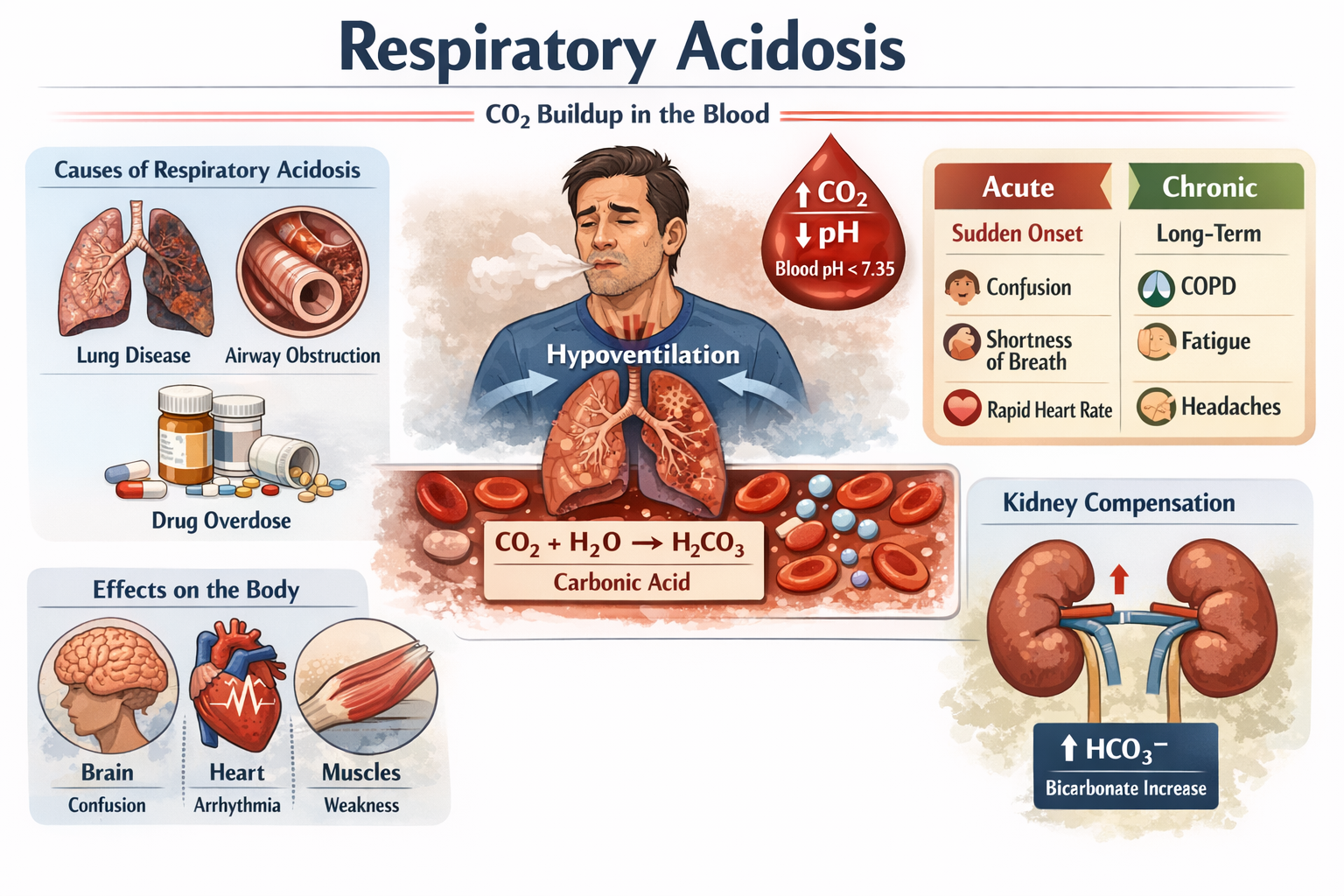
Respiratory failure occurs when the lungs fail to adequately exchange gases, leading to low oxygen levels (hypoxemia) or high carbon dioxide levels (hypercapnia) in the blood. This condition can be acute, developing rapidly over hours or days, or chronic, progressing gradually over weeks or months. Respiratory failure is a critical health issue because both oxygen deprivation and carbon dioxide buildup can damage vital organs, including the heart and brain.

Although respiratory failure is often associated with lung disease, it can also result from heart problems, neurological disorders, or muscular diseases that impair breathing. Essentially, respiratory failure is a sign that the body’s respiratory system cannot meet its oxygen demands or properly eliminate carbon dioxide.

Types of Respiratory Failure

Respiratory failure is commonly classified into two main types, each with distinct characteristics:

  1. Type 1 Respiratory Failure (Hypoxemic)
    • Characterized by low oxygen levels (PaO2 < 60 mmHg) while carbon dioxide remains normal or low.
    • Most often caused by lung diseases such as pneumonia, pulmonary edema, or acute respiratory distress syndrome (ARDS).
    • Symptoms typically include shortness of breath, rapid breathing, and low oxygen saturation.
  2. Type 2 Respiratory Failure (Hypercapnic)
    • Defined by high carbon dioxide levels (PaCO2 > 50 mmHg), often accompanied by low oxygen.
    • Usually results from conditions that reduce ventilation, such as COPD, severe asthma, drug overdose, or neuromuscular disorders.
    • Common symptoms include confusion, drowsiness, and headache, caused by carbon dioxide accumulation in the blood.

Understanding the type of respiratory failure is crucial because it directly affects the treatment approach. Type 1 respiratory failure primarily requires oxygen therapy, while Type 2 may necessitate interventions to improve ventilation.

Variations and Related Terms:

  • Lung failure – sometimes used interchangeably with respiratory failure.
  • Respiratory insufficiency – refers to a milder form where oxygen levels are borderline low.

Causes of Respiratory Failure

Respiratory failure can result from a wide range of medical conditions that interfere with the lungs’ ability to deliver oxygen to the blood or remove carbon dioxide. Understanding the causes is essential for prevention, early detection, and effective treatment. Causes can be broadly divided into respiratory, cardiac, neurological, and other factors.


Respiratory Causes

Many lung-related conditions directly lead to respiratory failure:

  • Pneumonia: Severe infections in the lungs reduce oxygen exchange and can trigger hypoxemic respiratory failure.
  • Chronic Obstructive Pulmonary Disease (COPD) Exacerbations: Flare-ups of COPD can block airways, leading to high carbon dioxide levels and chronic respiratory failure.
  • Pulmonary Embolism: A blood clot in the lungs restricts blood flow, causing sudden hypoxemia.
  • Acute Respiratory Distress Syndrome (ARDS): A life-threatening condition often caused by trauma, infections, or sepsis, leading to fluid accumulation in the lungs and severe oxygen deficiency.

Cardiac Causes

Heart-related issues can indirectly cause respiratory failure by affecting lung function:

  • Heart Failure: Reduced cardiac output can lead to pulmonary congestion and low oxygen levels.
  • Cardiogenic Pulmonary Edema: Fluid buildup in the lungs due to heart problems can impair gas exchange.

Neurological and Muscular Causes

Diseases that affect the nervous system or muscles responsible for breathing can also lead to respiratory failure:

  • Stroke or Brain Injury: Can disrupt the brain’s respiratory centers, impairing breathing.
  • Neuromuscular Disorders: Conditions like Myasthenia Gravis, Amyotrophic Lateral Sclerosis (ALS), or muscular dystrophies weaken the respiratory muscles.
  • Spinal Cord Injuries: High-level spinal injuries can prevent proper lung expansion.

Other Causes

Some additional factors may trigger or contribute to respiratory failure:

  • Chest Trauma: Broken ribs or lung punctures can interfere with normal breathing.
  • Severe Infections: Systemic infections, such as sepsis, can impair lung function.
  • Drug Overdose or Poisoning: Certain medications, sedatives, or opioids can depress the respiratory system.


Symptoms of Respiratory Failure

Recognizing the signs and symptoms of respiratory failure is crucial, as early detection can prevent serious complications or death. Symptoms may develop gradually in chronic respiratory failure or appear suddenly in acute respiratory failure. They vary depending on whether the condition is hypoxemic (Type 1) or hypercapnic (Type 2).

Common Symptoms

Some of the most frequently observed signs of respiratory failure include:

  • Shortness of breath (dyspnea): Difficulty breathing even at rest or during minimal activity.
  • Rapid or shallow breathing: The body attempts to compensate for low oxygen or high carbon dioxide levels.
  • Confusion or drowsiness: Often caused by high carbon dioxide levels affecting brain function.
  • Cyanosis: A bluish tint to lips, fingertips, or skin due to oxygen deprivation.
  • Fatigue and weakness: Caused by insufficient oxygen supply to muscles and organs.
  • Anxiety or restlessness: A response to hypoxemia and difficulty breathing.

Symptoms by Type of Respiratory Failure

Type 1 Respiratory Failure (Hypoxemic)

  • Low oxygen levels with normal or low carbon dioxide.
  • Shortness of breath and rapid breathing are the most common signs.
  • Cyanosis is often visible due to oxygen deprivation.
  • Less likely to show confusion unless the condition is severe.

Type 2 Respiratory Failure (Hypercapnic)

  • High carbon dioxide levels, often with low oxygen.
  • Confusion, lethargy, and headache are prominent due to carbon dioxide retention.
  • Flushed skin, sweating, and increased heart rate may also occur.
  • May experience morning headaches if chronic respiratory failure develops during sleep.


Risk Factors for Respiratory Failure

Certain conditions, lifestyle choices, and demographic factors can increase the likelihood of developing respiratory failure. Understanding these risk factors helps with early detection, prevention, and management of this serious condition.


Chronic Lung Diseases

People with pre-existing respiratory conditions are at higher risk:

  • Chronic Obstructive Pulmonary Disease (COPD): Frequent flare-ups can lead to chronic or acute respiratory failure.
  • Asthma: Severe or uncontrolled asthma attacks can temporarily impair oxygen exchange.
  • Interstitial Lung Disease: Reduces lung capacity and gas exchange efficiency.

Lifestyle and Environmental Factors

  • Smoking: Damages lung tissue, increases inflammation, and predisposes to lung infections.
  • Air Pollution and Occupational Exposure: Long-term exposure to dust, chemicals, or fumes can compromise lung function.
  • Obesity and Sleep Apnea: Obstructive sleep apnea can cause chronic oxygen deprivation, contributing to respiratory failure.

Age and Health Status

  • Advanced Age: Older adults have reduced lung elasticity and weaker respiratory muscles, increasing vulnerability.
  • Weakened Immune System: Makes it harder to fight infections like pneumonia that can lead to respiratory failure.
  • Comorbidities: Conditions such as heart disease, diabetes, or kidney disease increase the risk of complications.

Other Risk Factors

  • Neurological disorders: Stroke, ALS, or muscular dystrophies can impair breathing.
  • Severe infections or sepsis: Can overwhelm the lungs and lead to acute respiratory failure.
  • Drug overdose or sedative use: Medications that depress the respiratory system increase risk.


How is Respiratory Failure Diagnosed?

Accurate and timely diagnosis of respiratory failure is essential to prevent complications and start appropriate treatment. Doctors use a combination of clinical evaluation, laboratory tests, and imaging studies to confirm the condition and identify its underlying cause.


Medical History and Physical Examination

  • Doctors begin by reviewing the patient’s symptoms, medical history, and risk factors, such as chronic lung disease, heart conditions, or recent infections.
  • A physical examination may reveal:
    • Rapid or labored breathing
    • Cyanosis (bluish skin or lips)
    • Use of accessory muscles for breathing
    • Abnormal lung sounds (wheezing, crackles)

Blood Tests

  • Arterial Blood Gas (ABG) Test: Measures oxygen (PaO2) and carbon dioxide (PaCO2) levels in the blood.
    • Low PaO2 indicates hypoxemia (Type 1).
    • High PaCO2 indicates hypercapnia (Type 2).
  • Complete Blood Count (CBC): Can detect infections or anemia that may worsen respiratory failure.

Imaging Studies

  • Chest X-ray: Helps identify lung infections, fluid buildup, or structural abnormalities.
  • CT Scan: Provides a more detailed view of lung tissue and potential causes such as pulmonary embolism.

Pulmonary Function Tests

  • Measures lung capacity, airflow, and gas exchange efficiency.
  • Useful for chronic respiratory failure to monitor disease progression.

Other Monitoring Tools

  • Pulse Oximetry: Non-invasive monitoring of blood oxygen saturation.
  • Electrocardiogram (ECG): Detects heart problems that could contribute to respiratory failure.
  • Continuous Monitoring in ICU: For severe cases, continuous monitoring ensures rapid intervention if oxygen levels drop.


Treatment Options for Respiratory Failure

Treating respiratory failure depends on its type, severity, and underlying cause. Immediate intervention is often required to restore oxygen levels, remove excess carbon dioxide, and address the root cause. Treatment strategies may include oxygen therapy, mechanical ventilation, medications, and lifestyle modifications.


Oxygen Therapy

  • Purpose: Increase blood oxygen levels in patients with hypoxemia.
  • Methods:
    • Nasal cannula: Delivers low-flow oxygen for mild cases.
    • Face mask: Provides higher concentrations for moderate to severe hypoxemia.
  • Considerations: Oxygen must be carefully monitored in Type 2 respiratory failure to avoid worsening hypercapnia.

Mechanical Ventilation

  • Indications: Severe respiratory failure, inability to maintain adequate oxygenation, or high carbon dioxide levels.
  • Types:
    • Non-invasive ventilation (NIV): Delivered via a mask, used for COPD exacerbations or sleep apnea-related respiratory failure.
    • Invasive ventilation: Requires intubation and is typically used in ICU settings for acute respiratory failure.
  • Benefits: Supports breathing while the underlying condition is treated.

Medications

  • Bronchodilators: Open the airways, improving airflow in conditions like COPD and asthma.
  • Steroids: Reduce inflammation in the lungs, particularly in asthma and severe COPD exacerbations.
  • Antibiotics: Treat bacterial infections such as pneumonia that can trigger respiratory failure.
  • Diuretics: Help reduce fluid overload in cases of heart failure causing pulmonary congestion.

Lifestyle and Home Management

  • Pulmonary Rehabilitation: Exercise programs and breathing techniques to improve lung function.
  • Smoking Cessation: Essential for patients with chronic lung diseases.
  • Nutrition and Exercise: Maintaining a healthy weight reduces strain on the lungs and heart.
  • Regular Monitoring: Using devices like pulse oximeters to track oxygen levels at home.

Complications of Respiratory Failure

Respiratory failure, if not treated promptly, can lead to serious and potentially life-threatening complications. Both acute and chronic forms of respiratory failure can impact multiple organ systems due to oxygen deprivation and carbon dioxide buildup.


Organ Damage

  • Brain: Hypoxemia and hypercapnia can cause confusion, seizures, or permanent neurological damage.
  • Heart: Low oxygen levels strain the heart, increasing the risk of arrhythmias, heart attacks, or heart failure.
  • Kidneys and Liver: Prolonged oxygen deprivation can impair organ function and exacerbate existing conditions.

Cardiac Complications

  • Pulmonary hypertension can develop due to chronic low oxygen levels, putting additional strain on the heart.
  • Heart failure may worsen, particularly in patients with pre-existing cardiovascular disease.

Secondary Infections

  • Patients on mechanical ventilation are at increased risk of ventilator-associated pneumonia (VAP).
  • Chronic respiratory failure can weaken the immune response, making it easier for infections to develop.

Chronic Respiratory Insufficiency

  • Long-term respiratory failure can lead to dependence on supplemental oxygen or ventilatory support.
  • Reduced physical activity and exercise tolerance may affect overall quality of life.


Prevention of Respiratory Failure

While not all cases of respiratory failure can be prevented, many strategies can reduce the risk and improve lung health. Prevention focuses on managing underlying conditions, avoiding harmful exposures, and recognizing early warning signs.


Managing Underlying Conditions

  • Chronic Lung Diseases: Regular check-ups and adherence to treatment plans for COPD, asthma, or interstitial lung disease help prevent exacerbations.
  • Heart Conditions: Proper management of heart failure or cardiomyopathy reduces the risk of pulmonary congestion and hypoxemia.
  • Neurological Disorders: Early intervention and physical therapy can help maintain respiratory muscle strength.

Vaccinations

  • Influenza Vaccine: Reduces the risk of severe respiratory infections that can trigger respiratory failure.
  • Pneumococcal Vaccine: Protects against pneumonia, a common cause of acute respiratory failure.

Lifestyle and Environmental Measures

  • Avoid Smoking: Smoking cessation improves lung function and reduces inflammation.
  • Air Quality: Avoid exposure to dust, chemicals, and pollution. Use protective equipment when necessary.
  • Healthy Weight and Exercise: Maintaining a healthy weight and staying active improves lung and heart efficiency.

Early Recognition and Monitoring

  • Home Monitoring: Use pulse oximeters to track oxygen levels, especially for high-risk individuals.
  • Prompt Medical Attention: Seek immediate care for worsening shortness of breath, cyanosis, or confusion.

Key Insight: Preventing respiratory failure involves a combination of medical management, lifestyle modifications, and early intervention. Awareness of risk factors and proactive healthcare can significantly reduce the likelihood of serious complications.


When to Seek Medical Help for Respiratory Failure

Recognizing the warning signs of respiratory failure and seeking timely medical care can be life-saving. Early intervention can prevent complications, reduce hospital stays, and improve outcomes.


Warning Signs of Acute Respiratory Distress

Seek immediate medical attention if you or someone else experiences:

  • Severe shortness of breath that does not improve with rest.
  • Rapid, shallow, or labored breathing.
  • Cyanosis: Bluish lips, fingertips, or skin.
  • Confusion, drowsiness, or disorientation.
  • Chest pain or palpitations.
  • Sweating, anxiety, or restlessness.

When to Call Emergency Services

  • If oxygen levels drop significantly (PaO2 < 60 mmHg or SpO2 < 90%).
  • Sudden worsening of chronic lung disease symptoms.
  • Difficulty breathing combined with fever, indicating a potential infection like pneumonia.

Importance of Early Medical Intervention

  • Prevents organ damage: The brain, heart, and kidneys are highly sensitive to low oxygen and high carbon dioxide levels.
  • Reduces need for invasive treatments: Timely care may allow non-invasive interventions like oxygen therapy instead of mechanical ventilation.
  • Improves recovery outcomes: Patients treated early are less likely to develop chronic respiratory insufficiency.

Key Insight: Recognizing the early signs of respiratory failure and seeking immediate medical help is crucial. Delays in care can lead to severe complications or even death, making awareness and prompt action essential.


Prognosis and Recovery from Respiratory Failure

The prognosis for respiratory failure depends on multiple factors, including its type, underlying cause, severity, and timeliness of treatment. Understanding recovery expectations helps patients and caregivers prepare for short-term and long-term management.


Factors Affecting Recovery

  • Type of Respiratory Failure:
    • Acute respiratory failure caused by infections or trauma often improves quickly with prompt treatment.
    • Chronic respiratory failure associated with COPD or neuromuscular diseases requires ongoing management and lifestyle adjustments.
  • Age and Overall Health: Younger patients with fewer comorbidities generally have a better prognosis.
  • Underlying Conditions: The success of treatment largely depends on managing diseases like heart failure, COPD, or pneumonia.
  • Severity at Diagnosis: Early detection significantly improves outcomes and reduces complications.

Recovery Process

  • Acute Cases:
    • May require short-term oxygen therapy or mechanical ventilation.
    • Full recovery is possible if underlying causes are treated effectively.
  • Chronic Cases:
    • Patients may need long-term supplemental oxygen or non-invasive ventilation.
    • Pulmonary rehabilitation and lifestyle changes are essential to maintain quality of life.
  • Monitoring and Follow-Up: Regular check-ups, pulmonary function tests, and adherence to treatment plans are critical for ongoing health.

Quality of Life Considerations

  • Chronic respiratory failure may limit physical activity and daily routines.
  • Patients may benefit from support groups, counseling, and rehabilitation programs.
  • Advances in treatment and technology, such as portable oxygen devices, can help maintain independence.

Key Insight: While the prognosis varies, early recognition, prompt treatment, and proper management of underlying conditions greatly improve recovery and quality of life for patients with respiratory failure

Categories: Dental Care

Respiratory Infection: Causes, Symptoms, Treatment, and Prevention

respiratory infection

Introduction

Respiratory infections are among the most common health problems worldwide, affecting millions of people each year. A respiratory infection occurs when viruses, bacteria, or other pathogens invade the respiratory tract, which includes the nose, throat, airways, and lungs. These infections can range from mild illnesses, like the common cold, to severe conditions, such as pneumonia or tuberculosis.

Understanding respiratory infections is crucial because early recognition of symptoms and proper treatment can prevent complications, especially in vulnerable groups like children, the elderly, and people with weakened immune systems. In this article, we will cover everything you need to know about respiratory infections—including causes, symptoms, types, treatments, prevention strategies, and frequently asked questions. By the end, you’ll have a clear understanding of how to protect yourself and manage these infections effectively.

What is a Respiratory Infection?

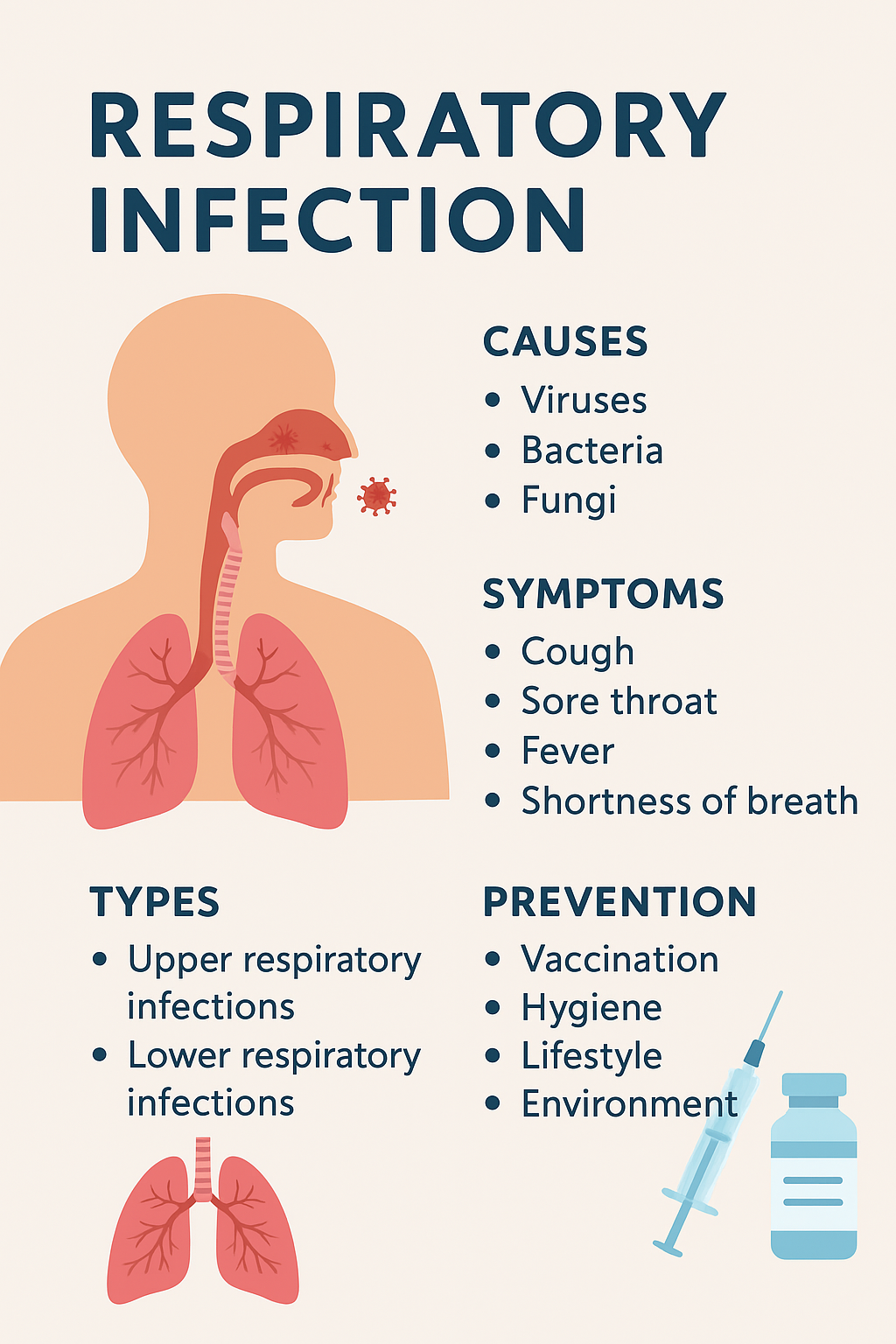
A respiratory infection is an illness that affects any part of the respiratory system, including the nose, throat, airways, and lungs. These infections occur when harmful microorganisms, such as viruses, bacteria, or fungi, enter the respiratory tract and cause inflammation. Respiratory infections are extremely common and can affect people of all ages, although certain groups—like infants, older adults, and individuals with weakened immune systems—are more susceptible to severe forms.

Upper vs. Lower Respiratory Infections

Respiratory infections are generally classified into upper and lower respiratory infections based on the part of the respiratory system they affect:

  • Upper Respiratory Infections (URIs): These infections affect the nose, sinuses, and throat. Common URIs include:
    • Common cold – caused by viruses like rhinovirus
    • Sinusitis – infection of the sinuses
    • Pharyngitis and laryngitis – inflammation of the throat and voice box
  • Lower Respiratory Infections (LRIs): These infections affect the airways and lungs and are generally more serious. Examples include:
    • Bronchitis – inflammation of the bronchial tubes
    • Pneumonia – infection of the lungs that can be viral, bacterial, or fungal
    • Tuberculosis (TB) – a chronic bacterial lung infection

Common Types of Respiratory Infections

Respiratory infections can be caused by different types of pathogens:

  1. Viral respiratory infections: Influenza, COVID-19, RSV, and common cold viruses
  2. Bacterial respiratory infections: Streptococcus pneumoniae, Haemophilus influenzae, and Mycoplasma pneumoniae
  3. Fungal infections: Rare but can affect immunocompromised individuals

Understanding the type of infection is critical because it determines the treatment plan. For example, antibiotics are effective only for bacterial infections, not viral ones.

Why Respiratory Infections Matter

While many respiratory infections are mild and self-limiting, they can lead to serious complications if not properly managed. Severe respiratory infections can cause difficulty breathing, organ damage, or even death in high-risk individuals. Early recognition of symptoms, proper hygiene, vaccination, and timely medical care are essential in reducing the impact of these infections.

Causes of Respiratory Infections

Respiratory infections can arise from various causes, primarily viruses, bacteria, fungi, and environmental factors. Understanding the root cause helps in prevention, early diagnosis, and effective treatment.

Viral Causes of Respiratory Infections

Viruses are the most common cause of respiratory infections, responsible for illnesses ranging from the common cold to severe pneumonia. Common viral pathogens include:

  • Influenza virus – Causes seasonal flu with fever, body aches, cough, and fatigue. Influenza can lead to complications like pneumonia, especially in children and older adults.
  • Coronavirus (including COVID-19) – Can infect both upper and lower respiratory tracts, causing symptoms like fever, cough, and shortness of breath. Severe cases may require hospitalization.
  • Respiratory syncytial virus (RSV) – Often affects infants and young children, causing bronchiolitis and pneumonia.
  • Rhinovirus and adenovirus – Major causes of the common cold, typically mild but highly contagious.

Bacterial Causes of Respiratory Infections

Bacterial infections can be more severe than viral ones and often require antibiotics for treatment. Common bacterial causes include:

  • Streptococcus pneumoniae – Can cause pneumonia, sinus infections, and ear infections.
  • Haemophilus influenzae – Often linked to bronchitis and pneumonia, particularly in people with weakened immune systems.
  • Mycoplasma pneumoniae – Causes “walking pneumonia,” a milder but persistent form of lung infection.

Fungal and Other Causes

Although less common, fungi can also cause respiratory infections, especially in individuals with compromised immune systems. Examples include:

  • Aspergillus species – Can lead to lung infections in immunocompromised patients
  • Histoplasma capsulatum – Causes histoplasmosis, often associated with exposure to bird or bat droppings

Environmental and Lifestyle Risk Factors

Several non-infectious factors can increase susceptibility to respiratory infections:

  • Smoking and exposure to secondhand smoke – Damages airways and weakens immune defense
  • Air pollution – Particulate matter irritates the lungs, making infections more likely
  • Weakened immune system – Due to chronic diseases, stress, or certain medications
  • Close contact with infected individuals – Crowded places, schools, or healthcare settings

Symptoms of Respiratory Infections

Recognizing the symptoms of a respiratory infection early is essential for effective treatment and preventing complications. Symptoms can vary depending on whether the infection affects the upper or lower respiratory tract, and whether it is viral, bacterial, or fungal.

Common Symptoms of Respiratory Infections

Most respiratory infections start with mild, easily noticeable symptoms, such as:

  • Cough – Can be dry or produce mucus, depending on the type of infection
  • Sore throat – Often accompanies viral infections like the common cold or pharyngitis
  • Runny or congested nose – Typical in upper respiratory infections
  • Fever and chills – Usually mild in viral infections, but can be higher in bacterial infections
  • Fatigue and body aches – Common during viral illnesses like influenza

Other general symptoms may include headache, mild shortness of breath, and watery eyes. These early signs often resolve within a few days with rest and home care for mild infections.

Severe Symptoms Requiring Medical Attention

In some cases, respiratory infections can escalate and become life-threatening. Seek immediate medical care if you notice:

  • Shortness of breath or difficulty breathing – May indicate pneumonia or severe bronchitis
  • Chest pain or pressure – Can signal a serious lower respiratory infection
  • Persistent high fever – Especially if lasting more than 3 days
  • Confusion, dizziness, or extreme fatigue – Particularly in elderly patients or infants
  • Bluish lips or face – A sign of oxygen deprivation

Severe infections can develop rapidly, especially in high-risk populations like children, older adults, and immunocompromised individuals. Early medical intervention can significantly reduce complications.

Symptoms by Infection Type

Infection TypeTypical SymptomsSeverity Level
Common Cold (Viral URI)Runny nose, sneezing, mild coughMild
Influenza (Viral LRI)High fever, body aches, cough, fatigueModerate to Severe
Pneumonia (Bacterial or Viral LRI)Chest pain, persistent cough, high fever, shortness of breathSevere
Tuberculosis (Bacterial LRI)Persistent cough, night sweats, weight loss, fatigueSevere, chronic

Types of Respiratory Infections

Respiratory infections are broadly classified into upper respiratory infections (URIs) and lower respiratory infections (LRIs). Understanding the differences between these types helps in diagnosis, treatment, and prevention.

Upper Respiratory Infections (URIs)

Upper respiratory infections affect the nose, sinuses, throat, and larynx. They are generally mild and resolve within a week or two but can still cause discomfort and affect daily activities. Common URIs include:

  • Common Cold – Caused by viruses like rhinovirus and adenovirus; symptoms include runny nose, sneezing, and mild fever.
  • Sinusitis – Infection of the sinuses leading to congestion, facial pain, and headache.
  • Pharyngitis – Inflammation of the throat, often accompanied by sore throat and difficulty swallowing.
  • Laryngitis – Affects the voice box, causing hoarseness and voice loss.

Key Points About URIs:

  • Usually viral in nature
  • Mild and self-limiting
  • Can be prevented with good hygiene and vaccination (for influenza)

Lower Respiratory Infections (LRIs)

Lower respiratory infections affect the airways and lungs and are often more serious than URIs. LRIs can lead to hospitalization, especially in vulnerable populations. Common LRIs include:

  • Bronchitis – Inflammation of the bronchial tubes, causing persistent cough, mucus production, and sometimes mild fever.
  • Pneumonia – Infection of the lungs that can be viral, bacterial, or fungal; symptoms include chest pain, high fever, and severe shortness of breath.
  • Tuberculosis (TB) – Chronic bacterial infection causing persistent cough, night sweats, weight loss, and fatigue; requires long-term antibiotic treatment.

Key Points About LRIs:

  • Can be bacterial, viral, or fungal
  • Often require medical treatment
  • Can cause severe complications if untreated

Other Specific Respiratory Infections

  • RSV (Respiratory Syncytial Virus): Common in infants and young children, causing bronchiolitis and pneumonia.
  • Influenza (Flu): Seasonal viral infection affecting both upper and lower respiratory tracts.
  • COVID-19: Can range from mild cold-like symptoms to severe pneumonia and respiratory failure.

Diagnosis of Respiratory Infections

Proper diagnosis of respiratory infections is essential to determine the cause—whether viral, bacterial, or fungal—and to provide the correct treatment. Doctors use a combination of physical examination, patient history, laboratory tests, and imaging to make an accurate diagnosis.

Physical Examination and Patient History

  • Doctors first assess symptoms such as cough, fever, shortness of breath, and chest pain.
  • They check for signs of respiratory distress, like rapid breathing or wheezing.
  • Medical history helps identify risk factors such as chronic illnesses, smoking, immunodeficiency, or recent exposure to infected individuals.

Laboratory Tests

  • Blood Tests: Can indicate infection and inflammation by measuring white blood cell count.
  • Throat or Nasal Swabs: Identify specific viruses or bacteria causing the infection.
  • Sputum Tests: Examining mucus coughed up from the lungs helps detect bacterial or fungal pathogens.

Imaging Tests

  • Chest X-ray: Used to detect pneumonia, lung inflammation, or fluid accumulation.
  • CT Scan: Provides a detailed view of the lungs and is used for complex or severe infections.

Differentiating Viral and Bacterial Infections

  • Viral infections often present with milder symptoms, such as low-grade fever and fatigue, and usually improve on their own.
  • Bacterial infections are more likely to cause high fever, severe cough, and prolonged illness, and often require antibiotics.
  • Sometimes, doctors may use rapid antigen tests or PCR tests to identify the specific pathogen.

Other Diagnostic Considerations

  • Underlying Conditions: Patients with asthma, COPD, or weakened immunity may require additional tests.
  • Severity Assessment: Determines whether outpatient treatment is sufficient or hospitalization is necessary.

Treatment Options for Respiratory Infections

Treating a respiratory infection depends on its cause, severity, and the patient’s overall health. Mild infections often resolve with home care, while severe bacterial or viral infections may require medical intervention.

Home Remedies and Self-Care

For mild respiratory infections, self-care measures can significantly reduce symptoms and speed recovery:

  • Rest and hydration: Adequate sleep and drinking plenty of fluids help the immune system fight infections.
  • Warm fluids and steam inhalation: Tea, soups, and steam from a hot shower or humidifier can soothe the throat and clear nasal congestion.
  • Over-the-counter medications: Pain relievers, fever reducers, and decongestants can ease discomfort.
  • Saltwater gargle: Helps relieve sore throat and reduce inflammation.

These measures are particularly effective for viral upper respiratory infections, like the common cold.

Medical Treatment

When infections are more severe or bacterial in origin, medical treatments are necessary:

  • Antibiotics: Prescribed only for bacterial infections such as bacterial pneumonia, strep throat, or TB. Overuse can lead to antibiotic resistance.
  • Antiviral medications: Certain viral infections, such as influenza or severe COVID-19 cases, may require antiviral drugs.
  • Hospitalization: Severe lower respiratory infections, like pneumonia or complications from influenza, may require oxygen therapy, IV fluids, or intensive care.

Managing Complications

Some respiratory infections can lead to complications if untreated:

  • Pneumonia: Can develop from both viral and bacterial infections, leading to lung inflammation and difficulty breathing.
  • Asthma or COPD flare-ups: Respiratory infections often exacerbate chronic lung conditions.
  • Sepsis: Rare but serious bacterial infections can spread into the bloodstream.

Monitoring and Follow-Up:

  • Patients recovering from severe respiratory infections should have follow-up appointments to ensure lungs are healing properly.
  • Vaccinations and preventive measures are recommended to reduce the risk of future infections.

Prevention of Respiratory Infections

Preventing respiratory infections is often easier than treating them, and it involves a combination of vaccination, hygiene practices, and healthy lifestyle habits. Implementing these measures reduces the risk of infection and helps protect vulnerable populations.

Vaccinations

Vaccines play a critical role in preventing serious respiratory infections:

  • Influenza vaccine: Recommended annually to protect against seasonal flu strains.
  • COVID-19 vaccine: Reduces the risk of severe respiratory illness caused by coronavirus.
  • Pneumococcal vaccine: Protects against pneumonia caused by Streptococcus pneumoniae, especially for older adults and high-risk individuals.
  • Other vaccines: TB vaccination (BCG) in certain countries and RSV vaccines for infants in development.

Good Hygiene Practices

Simple hygiene measures significantly lower the risk of spreading infections:

  • Regular handwashing with soap and water
  • Using hand sanitizers when soap isn’t available
  • Covering mouth and nose when coughing or sneezing
  • Avoiding close contact with sick individuals

Healthy Lifestyle and Immune Support

A strong immune system helps the body fight infections:

  • Balanced diet: Rich in vitamins C, D, and zinc
  • Regular exercise: Enhances immune response
  • Adequate sleep: Rest supports recovery and immune function
  • Avoiding smoking and pollutants: Reduces airway irritation and vulnerability

Common Myths and Misconceptions About Respiratory Infections

Respiratory infections are surrounded by several myths and misconceptions that can lead to improper treatment or preventable spread. Understanding the facts helps in managing and preventing infections effectively.

Myth 1: Antibiotics Cure All Respiratory Infections

  • Fact: Antibiotics are effective only against bacterial infections.
  • Viral infections, like the common cold, influenza, or most cases of bronchitis, cannot be treated with antibiotics. Using antibiotics unnecessarily can lead to antibiotic resistance.

Myth 2: Cold Weather Causes Respiratory Infections

  • Fact: Cold weather itself does not directly cause infections.
  • Respiratory infections are caused by viruses or bacteria. However, cold weather can weaken the immune system and encourage people to stay indoors, increasing exposure to infected individuals.

Myth 3: All Coughs Indicate a Serious Infection

  • Fact: Most coughs are due to mild viral infections or irritants.
  • Persistent or severe coughs, especially with fever or shortness of breath, may indicate a serious lower respiratory infection and require medical attention.

Myth 4: You Can Only Get Respiratory Infections Once Per Season

  • Fact: There are many strains of viruses and bacteria, so it’s possible to catch multiple infections in a season.
  • Vaccinations and hygiene practices reduce risk but do not guarantee complete immunity.

Myth 5: Over-the-Counter Medications Can Cure Infections

  • Fact: OTC medications help relieve symptoms but do not cure the infection.
  • They are useful for comfort but should be combined with rest, hydration, and medical treatment if necessary.

When to See a Doctor

While many respiratory infections are mild and resolve on their own, it is important to recognize when professional medical care is necessary. Early medical intervention can prevent complications and, in some cases, be life-saving.

Warning Signs of Severe Infection

Seek medical attention if you experience any of the following:

  • Shortness of breath or difficulty breathing – May indicate pneumonia or another severe lower respiratory infection.
  • Persistent high fever – Especially if it lasts more than 3 days or is above 102°F (39°C).
  • Chest pain or pressure – Could signal a serious lung infection.
  • Confusion or extreme fatigue – Particularly concerning in elderly patients or infants.
  • Bluish lips or face – A sign of oxygen deprivation and a medical emergency.

High-Risk Groups Who Should Be Extra Cautious

Certain individuals are more likely to develop complications from respiratory infections:

  • Infants and young children – Their immune systems are still developing.
  • Elderly adults – Age-related immune decline increases risk.
  • Immunocompromised individuals – Including people with HIV, cancer, or those taking immunosuppressive drugs.
  • People with chronic lung conditions – Such as asthma or COPD.

Tips for Seeking Care

  • Do not ignore symptoms: Even mild symptoms can worsen in high-risk populations.
  • Follow medical advice: Take prescribed medications fully and attend follow-up appointments.
  • Monitor at home: Track fever, breathing difficulties, and oxygen levels if recommended by a healthcare provider.

Prevention and Protection Against Respiratory Infections

Preventing respiratory infections is often easier than treating them, and simple daily habits can significantly reduce the risk of catching or spreading illnesses. While no measure is 100% foolproof, combining multiple strategies offers the best protection.

1. Vaccinations
Vaccines remain one of the most effective ways to prevent serious respiratory infections:

  • Influenza vaccine – Recommended annually for everyone over 6 months of age.
  • COVID-19 vaccine – Helps reduce severity and risk of hospitalization.
  • Pneumococcal vaccines – Particularly important for infants, older adults, and those with chronic conditions.
  • Whooping cough (Tdap) booster – Protects against pertussis, which can be severe in infants and the elderly.

2. Good Hygiene Practices
Maintaining hygiene is crucial to preventing respiratory infections:

  • Frequent handwashing with soap and water for at least 20 seconds.
  • Use of hand sanitizer containing at least 60% alcohol when soap is unavailable.
  • Avoid touching your face, particularly the eyes, nose, and mouth.
  • Covering coughs and sneezes with a tissue or elbow to prevent droplet spread.

3. Environmental Measures
Your surroundings can influence infection risk:

  • Regularly disinfect high-touch surfaces such as doorknobs, phones, and keyboards.
  • Ensure proper ventilation in homes and workplaces. Open windows when possible to allow fresh air circulation.
  • Maintain clean air filters in air conditioners and heaters.

4. Healthy Lifestyle Choices
A strong immune system is your first line of defense:

  • Balanced diet rich in fruits, vegetables, lean proteins, and whole grains.
  • Regular exercise to boost immune function.
  • Adequate sleep, aiming for 7–9 hours per night for adults.
  • Stress management, as chronic stress can weaken immunity.

5. Avoiding High-Risk Situations
Certain environments increase the chance of respiratory infections:

  • Crowded or poorly ventilated spaces during peak respiratory illness seasons.
  • Close contact with sick individuals—if unavoidable, consider masks and frequent hand hygiene.
  • Smoking and secondhand smoke exposure, which can impair lung defenses.

By combining vaccination, hygiene, environmental precautions, and lifestyle strategies, individuals can substantially reduce their risk of respiratory infections and protect vulnerable populations around them.

Home Care and Symptom Management

For mild respiratory infections, most people can recover at home with proper care and monitoring. While rest and hydration are key, managing symptoms effectively can reduce discomfort and prevent complications.

1. Rest and Activity Management

  • Prioritize rest: Allow your body to focus on fighting the infection.
  • Gradually resume activities: Avoid strenuous exercise until fully recovered.
  • Listen to your body: Fatigue is a sign to slow down and conserve energy.

2. Hydration and Nutrition

  • Drink plenty of fluids: Water, herbal teas, and broths help thin mucus and prevent dehydration.
  • Eat nutrient-rich meals: Foods high in vitamins C, D, and zinc support immune function.
  • Small, frequent meals: If appetite is low, smaller meals ensure energy intake without overwhelming the digestive system.

3. Symptom Relief Measures

  • Fever and pain management: Use over-the-counter medications like acetaminophen or ibuprofen as directed.
  • Cough relief: Honey (for adults and children over 1 year) or warm fluids can soothe the throat. Avoid suppressing productive coughs that help clear mucus.
  • Nasal congestion: Saline sprays, steam inhalation, or humidifiers can ease breathing.

4. Monitoring Symptoms at Home

  • Track fever and duration: Persistent high fever may indicate complications.
  • Observe breathing patterns: Wheezing, shortness of breath, or rapid breathing require immediate medical attention.
  • Oxygen levels (if advised): Pulse oximeters can help high-risk individuals monitor oxygen saturation.

5. When to Seek Escalated Care
Even with home management, certain symptoms necessitate medical evaluation:

  • Fever lasting more than 3 days or exceeding 102°F (39°C).
  • Difficulty breathing, chest pain, or wheezing.
  • Confusion, severe fatigue, or bluish lips and face.
  • Symptoms worsening instead of improving after 5–7 days.

6. Avoiding Spread to Others

  • Stay home: Minimize contact with others while contagious.
  • Practice respiratory etiquette: Cover coughs and sneezes and dispose of tissues properly.
  • Disinfect shared surfaces: Reduce the risk of transmitting germs to household members.

Proper home care, combined with vigilance for warning signs, allows most respiratory infections to resolve safely without hospitalization. However, maintaining awareness of potential complications is critical, especially for high-risk groups.

Categories: Dental Care

Affordable Dental Care: Your Complete Guide to Quality Teeth Care on a Budget

affodable dental care

What is Affordable Dental Care?

Dental care is a critical aspect of overall health, yet for many people, the cost of routine checkups, procedures, and treatments can be a major barrier. Affordable dental care refers to dental services that are accessible and reasonably priced without compromising on quality. The goal is to maintain optimal oral health while reducing financial strain. This concept has gained prominence as more individuals seek ways to prioritize oral hygiene without falling into debt.

Definition and Importance of Affordable Dental Care

Affordable dental care is essentially high-quality dental services offered at a lower cost, often through community clinics, nonprofit organizations, dental schools, or special discount programs. It focuses not just on treating problems, but on prevention and early intervention, which are often more cost-effective than emergency treatments. According to the American Dental Association (ADA), preventive care like cleanings and regular checkups can save thousands in future dental expenses by avoiding complex procedures like root canals or crowns.

Why it matters:

  • Health benefits: Regular dental care prevents gum disease, tooth decay, and infections that can affect overall health.
  • Financial savings: Early intervention reduces the likelihood of costly emergency dental procedures.
  • Improved quality of life: Maintaining oral health enhances confidence, nutrition, and social interactions.

How Affordable Dental Care Differs from Standard Dental Services

Many people assume that lower-cost dental services mean lower quality. This is a misconception. Affordable dental care often involves:

  • Sliding-scale fees based on income
  • Community or nonprofit clinics offering subsidized rates
  • Dental schools where supervised students provide care at reduced prices
  • Discount dental plans that reduce out-of-pocket costs

Unlike traditional private dental practices, which may charge premium rates for services, affordable dental care models aim to balance cost with quality, making dental treatment accessible to a broader population.

Why Everyone Needs Access to Affordable Dental Care

Oral health is not a luxury—it’s a necessity. Poor dental hygiene can lead to tooth loss, gum disease, and serious systemic health issues such as heart disease and diabetes. However, high costs prevent many people from visiting the dentist regularly. By expanding access to affordable dental care, individuals can maintain healthy teeth, prevent long-term complications, and reduce the economic burden of dental emergencies.

Fact: A study published in the Journal of Public Health Dentistry found that adults who lack affordable dental care are 2–3 times more likely to develop untreated cavities and gum disease.


Common Dental Care Services and Their Costs

Understanding the range of dental services and their typical costs is essential when looking for affordable dental care. Dental procedures vary widely in price, depending on complexity, materials used, location, and whether the dentist accepts insurance or offers discounts. By knowing what services are available and their cost ranges, patients can make informed decisions and plan for affordable options.

Routine Checkups and Cleanings

Routine dental visits are the foundation of preventive dental care. They include a professional cleaning, oral examination, and sometimes X-rays. These services help identify issues before they become major problems.

  • Average Cost: $75–$200 per visit (without insurance)
  • Affordable Options: Many community clinics and dental schools provide cleanings for $50 or less. Some offer sliding-scale fees based on income.

Benefits:

  • Removes plaque and tartar buildup
  • Prevents cavities and gum disease
  • Early detection of oral health problems

Case Study: A 2022 ADA study found that adults who had routine cleanings every six months had a 40% lower risk of developing cavities requiring fillings.


Fillings, Crowns, and Root Canals

Restorative dental services address damage caused by decay, trauma, or wear. These procedures are often more costly than preventive care but are essential for maintaining oral health.

ProcedureAverage Cost (Without Insurance)Affordable Alternatives
Tooth Filling$100–$250 per toothDental schools or clinics: $50–$150
Dental Crown$800–$1,500 per toothSubsidized clinics: $500–$1,000
Root Canal$700–$1,200 per toothDental schools: $400–$700

Tips for Affordability:

  • Compare prices across local dental clinics
  • Ask about payment plans or discounts
  • Consider dental schools for supervised care

Cosmetic Dentistry on a Budget

While cosmetic dentistry isn’t always necessary for health, it can improve confidence and oral function. Affordable options include:

  • Teeth whitening kits: $50–$150 (at-home, dentist-supervised)
  • Veneers alternatives: Composite bonding ($250–$600 per tooth) instead of porcelain veneers ($900–$2,500 per tooth)

Tip: Prioritize essential procedures for oral health first; cosmetic improvements can often be delayed or done incrementally to manage costs.


Emergency Dental Services

Dental emergencies, like broken teeth or severe pain, can be financially stressful. Affordable emergency care options include:

  • Community clinics with walk-in emergency services
  • Urgent dental care centers with fixed fees
  • Dental insurance or discount plans that cover urgent procedures

Average Costs:

  • Tooth extraction: $75–$300
  • Emergency root canal: $400–$900

Average Costs vs. Affordable Options

The table below summarizes typical costs and possible affordable alternatives:

Service TypeTypical Cost (Private)Affordable Option (Clinic/School/Plan)
Cleaning & Exam$75–$200$30–$100
Fillings$100–$250$50–$150
Crown$800–$1,500$500–$1,000
Root Canal$700–$1,200$400–$700
Teeth Whitening$300–$800$50–$150
Tooth Extraction$75–$300$50–$150

Insight: Planning preventive visits and exploring community clinics or dental schools can save 30–50% on common dental procedures.


How to Find Affordable Dental Care

Finding quality affordable dental care can feel overwhelming, but with the right strategies, you can access professional dental services without overspending. Knowing where to look, which programs to consider, and how to leverage available resources can make dental care more accessible for everyone.


Community Dental Clinics and Nonprofits

Many cities and towns have community dental clinics or nonprofit organizations that provide reduced-cost services. These clinics often operate on a sliding-scale fee structure based on income, making dental care more attainable for low-income families.

  • Services Offered: Routine exams, cleanings, fillings, extractions, and sometimes emergency care.
  • Benefits: Affordable rates, professional care, and often flexible payment plans.
  • Example: The Dental Lifeline Network in the U.S. provides free or low-cost dental care to people with disabilities, elderly individuals, and low-income patients.

Dental Schools and Student Clinics

Dental schools provide a cost-effective option for high-quality care. Supervised dental students perform treatments under experienced faculty oversight.

  • Services Offered: Cleanings, fillings, crowns, root canals, and sometimes braces.
  • Cost Savings: Typically 30–70% lower than private practices.
  • Tip: Appointments may take longer due to training, but the quality remains high, and savings are significant.

Government Programs and Subsidies

Several government initiatives can make dental care more affordable, particularly for families, children, and seniors.

  • Medicaid Dental Coverage: Many states offer dental benefits for children and adults.
  • CHIP (Children’s Health Insurance Program): Provides dental care for eligible children at low or no cost.
  • Vouchers or Subsidy Programs: Some local governments provide subsidies for basic dental services for low-income residents.

Fact: According to the CDC, children with access to Medicaid or CHIP are twice as likely to receive preventive dental care compared to uninsured children.


Discount Dental Plans vs. Insurance

For adults without traditional dental insurance, discount dental plans are a practical alternative. These plans typically require a membership fee and provide discounted rates at participating dentists.

  • Discount Plans: Save 10–60% on dental procedures, often with no waiting period.
  • Dental Insurance: Covers preventive care fully and partially covers more complex procedures but may have waiting periods and annual caps.

Tip: Compare local dentists that accept your plan to ensure maximum savings.


Online Directories and Local Recommendations

Leverage online tools to locate affordable dental care near you:

  • ADA Find-a-Dentist: Search for licensed dentists in your area.
  • Zocdoc or Healthgrades: Filter by price range, ratings, and insurance accepted.
  • Local Community Boards or Social Media Groups: Many residents share tips for budget-friendly dental services.


Tips to Reduce Dental Care Costs

Even with access to affordable dental care, managing expenses can still be challenging. There are practical strategies and preventive habits you can adopt to lower costs while maintaining excellent oral health. These tips help you avoid expensive procedures and make dental care more budget-friendly.


Preventive Care: Brushing, Flossing, and Oral Hygiene at Home

One of the most effective ways to reduce dental costs is preventive care. Regular brushing, flossing, and proper oral hygiene can prevent cavities, gum disease, and the need for costly restorative procedures.

  • Brush at least twice a day with fluoride toothpaste
  • Floss daily to remove plaque between teeth
  • Use antiseptic mouthwash to reduce bacteria
  • Limit sugary foods and drinks that increase cavity risk

Fact: According to the American Dental Association, consistent home care can prevent up to 80% of cavities and gum disease, dramatically reducing long-term dental expenses.


Negotiating Prices with Dentists

Many dental offices are willing to work with patients on pricing, especially if you:

  • Ask about cash discounts
  • Inquire about payment plans or monthly financing options
  • Compare prices for similar procedures across local practices

Tip: Don’t hesitate to ask your dentist for cost estimates upfront. Transparent pricing helps you plan and avoid surprises.


Using Dental Insurance Effectively

Dental insurance can save significant money, but only if used strategically:

  • Schedule preventive visits (cleanings, exams) covered fully by insurance
  • Check coverage for restorative procedures like fillings and crowns
  • Know annual maximums to plan procedures within coverage limits

Example: A dental plan with a $1,500 annual cap can cover multiple fillings or a crown if planned carefully, saving you hundreds compared to paying out-of-pocket.


Seeking Dental Financing or Payment Plans

For more expensive procedures, many dental offices provide financing options:

  • Low or zero-interest payment plans
  • Monthly installment programs for major treatments
  • Third-party financing like CareCredit for flexible repayment

These options allow patients to get necessary care without delaying treatment due to cost concerns.


Affordable Alternatives to Cosmetic Procedures

Cosmetic dentistry can be costly, but there are budget-friendly alternatives:

  • Over-the-counter teeth whitening kits instead of professional whitening
  • Composite bonding instead of porcelain veneers
  • Gradual orthodontic options like at-home aligners rather than traditional braces

Tip: Focus on oral health first. Cosmetic improvements can be phased in later as your budget allows.


Affordable Dental Care for Specific Groups

Different populations face unique challenges when it comes to accessing affordable dental care. Children, seniors, low-income families, and people without insurance often have specific needs that require tailored solutions. Understanding these options ensures everyone can maintain good oral health without overspending.


Affordable Dental Care for Children

Children require regular checkups, cleanings, and preventive treatments like fluoride varnishes or sealants. Affordable options include:

  • Medicaid and CHIP programs: Cover routine checkups, cleanings, and treatments for eligible children.
  • Community pediatric dental clinics: Offer sliding-scale fees based on family income.
  • School-based dental programs: Provide preventive services, including screenings and fluoride treatments, often at no cost.

Fact: The CDC reports that children who receive preventive dental care are half as likely to experience cavities requiring fillings.


Affordable Dental Care for Seniors

Seniors often face higher dental costs due to age-related issues like gum disease, tooth loss, or dentures. Affordable options include:

  • Medicare Advantage Plans with dental coverage: Some plans include preventive care, fillings, and partial dentures.
  • Senior community clinics: Many nonprofit organizations provide discounted care for the elderly.
  • Dental schools and volunteer programs: Offer low-cost treatment for common age-related dental issues.

Tip: Early intervention and preventive care are especially important for seniors to avoid costly procedures later.


Affordable Dental Care for Low-Income Families

Low-income families often struggle to prioritize dental visits due to financial constraints. Options include:

  • Sliding-scale community clinics: Costs adjusted based on household income.
  • Nonprofit dental programs: Many nonprofits offer free or low-cost exams, cleanings, and treatments.
  • Government assistance programs: Medicaid and state-funded programs cover both preventive and emergency care.

Insight: Planning regular visits and preventive care reduces the likelihood of expensive emergency procedures that disproportionately affect low-income families.


Affordable Dental Care for People Without Insurance

Even without insurance, people can access professional dental care at lower costs:

  • Discount dental plans: Provide savings on routine and restorative procedures.
  • Dental schools: Offer supervised care at significantly reduced rates.
  • Community clinics and charity programs: Focus on providing care regardless of insurance status.

Fact: According to the ADA, uninsured adults are more likely to delay treatment, leading to advanced dental problems. Using affordable options can prevent serious health issues and higher costs in the future


Dental Insurance and Affordable Dental Care

Dental insurance plays a crucial role in making affordable dental care accessible. Understanding how insurance works, what it covers, and how to maximize its benefits can significantly reduce out-of-pocket expenses.


How Insurance Helps Reduce Costs

Dental insurance typically covers preventive care fully or partially, which includes:

  • Routine checkups and cleanings
  • X-rays for early detection of dental problems
  • Some fluoride treatments and sealants

Coverage for restorative or major procedures like fillings, crowns, and root canals is often partial, usually ranging from 50%–80% depending on the plan. By using insurance wisely, patients can save hundreds or even thousands annually.

Fact: According to the ADA, patients with dental insurance are three times more likely to have regular preventive care than those without insurance.


Choosing the Right Insurance Plan for Your Needs

Selecting a dental insurance plan depends on your oral health needs, budget, and expected procedures. Consider:

  • Annual maximums: How much the plan pays per year
  • Deductibles: What you pay before coverage begins
  • Waiting periods: Some plans require a waiting period for major procedures
  • Network dentists: Using in-network dentists maximizes coverage and reduces costs

Tip: If you only need preventive care and minor procedures, a basic plan may be sufficient. For families or patients needing multiple restorative procedures, consider a comprehensive plan with higher coverage.


Understanding Coverage and Out-of-Pocket Expenses

Even with insurance, some costs may not be fully covered:

  • Cosmetic procedures (veneers, whitening)
  • Certain elective treatments
  • Procedures above the annual maximum

To manage costs:

  • Confirm coverage before scheduling treatments
  • Use preventive services fully, as they are often fully covered
  • Plan major procedures strategically within your insurance calendar year

Insight: Using dental insurance strategically in combination with community clinics, student dental programs, and discount plans creates a comprehensive approach to affordable dental care.

Categories: Dental Care

The Ultimate Guide to Dental Health: Tips, Care, and Best Practices

Dental health

Introduction

Dental health is one of the most important yet often overlooked aspects of overall well-being. Maintaining good dental health goes beyond just having a bright smile—it directly impacts your ability to eat, speak, and even your overall physical health. Poor oral hygiene can lead to cavities, gum disease, and infections, which in turn may contribute to more serious health issues such as heart disease, diabetes, and respiratory problems.

Understanding the fundamentals of dental care and adopting consistent oral hygiene routines can prevent most dental problems before they start. This comprehensive guide will cover everything you need to know about oral health, from daily care routines and common dental issues to professional treatments and lifestyle factors that influence your teeth and gums. By the end, you’ll have a thorough understanding of how to protect your healthy teeth and maintain optimal dental health for life.

In this article, we will answer all the questions you might have about dental health, including:

  • What exactly constitutes dental health and why it matters.
  • The most common dental problems and how to prevent them.
  • Daily routines, diet, and lifestyle tips to strengthen your teeth and gums.
  • Professional dental care and advanced solutions for maintaining oral health.

By reading this guide, you will gain practical knowledge and actionable tips to improve your dental care habits and safeguard your oral health for years to come.


What Is Dental Health?

Maintaining dental health is essential not just for a beautiful smile, but for overall well-being. Good oral health ensures your teeth, gums, and mouth function properly, enabling you to eat, speak, and socialize confidently. Understanding what dental health truly means, its importance, and common misconceptions will help you make informed choices about your dental care routine.

Definition of Dental Health

Dental health refers to the condition of your teeth, gums, and the entire oral cavity. It encompasses:

  • Healthy teeth free from cavities and decay
  • Gums that are pink, firm, and free from inflammation
  • Oral hygiene practices that prevent infections and maintain functionality

While often used interchangeably with oral hygiene, dental health is broader. Oral hygiene is the practice of keeping your mouth clean, while dental health is the overall state of your mouth and its ability to function properly.

Importance of Dental Health

The benefits of maintaining dental health go far beyond aesthetics:

  1. Prevents common dental problems – Regular care reduces the risk of cavities, gum disease, and bad breath.
  2. Supports overall health – Research shows a strong connection between poor oral health and systemic conditions like heart disease, diabetes, and stroke.
  3. Improves self-confidence – Healthy teeth and gums contribute to better speech, smiling, and social interactions.
  4. Enhances nutrition – Healthy teeth make it easier to chew a wide variety of foods, ensuring proper nutrient intake.

According to the World Health Organization (WHO), oral diseases affect nearly 3.5 billion people worldwide, making dental health one of the most common and preventable health concerns globally.

Common Misconceptions About Dental Health

Many people have misunderstandings that can harm their oral health:

  • Myth 1: Sugar is the only cause of cavities – While sugar contributes to decay, plaque buildup, poor oral hygiene, and acidic foods are also major factors.
  • Myth 2: Flossing is optional – Flossing is essential for removing debris and plaque between teeth that brushing cannot reach.
  • Myth 3: Whitening damages teeth – Professional whitening, when done correctly, is safe and does not harm enamel.
  • Myth 4: Only older adults need dental care – Oral hygiene is crucial for all ages, including children and teenagers.

Understanding these basics lays a strong foundation for effective dental care, helping you prevent problems before they arise.


]

Common Dental Health Problems and How to Prevent Them

Even with the best oral hygiene practices, dental problems can still occur. Understanding the most common issues and how to prevent them is essential for maintaining lifelong dental health. Below, we explore the key dental problems, their causes, symptoms, and prevention strategies.

Cavities (Tooth Decay)

Cavities, also known as tooth decay, are one of the most prevalent dental issues worldwide. They occur when plaque—a sticky film of bacteria—builds up on teeth and produces acids that erode enamel.

Causes:

  • Poor brushing or flossing habits
  • Frequent consumption of sugary or acidic foods and drinks
  • Dry mouth or insufficient saliva, which reduces natural protection

Prevention:

  • Brush at least twice a day with fluoride toothpaste
  • Floss daily to remove food particles between teeth
  • Limit sugary snacks and acidic drinks
  • Visit your dentist regularly for checkups and cleanings

Fact: According to the American Dental Association (ADA), nearly 92% of adults worldwide have experienced tooth decay in permanent teeth.


Gum Disease (Gingivitis & Periodontitis)

Gum disease affects the tissues surrounding and supporting the teeth. It begins as gingivitis, a mild inflammation, and can progress to periodontitis, a severe condition that may lead to tooth loss.

Signs and Symptoms:

  • Red, swollen, or bleeding gums
  • Persistent bad breath
  • Receding gums or loose teeth

Prevention:

  • Brush and floss daily to remove plaque
  • Use an antimicrobial mouthwash to reduce bacteria
  • Regular professional dental cleanings
  • Avoid smoking, which increases gum disease risk

Data: Studies show that nearly 50% of adults over 30 in the U.S. have some form of periodontal disease, making prevention crucial.


Tooth Sensitivity

Tooth sensitivity is discomfort or pain when teeth are exposed to hot, cold, sweet, or acidic substances.

Causes:

  • Enamel erosion from acidic foods or teeth grinding
  • Gum recession exposing tooth roots
  • Cracked teeth or worn fillings

Prevention and Remedies:

  • Use desensitizing toothpaste
  • Avoid excessively acidic foods and drinks
  • Maintain proper brushing techniques to prevent enamel wear
  • Consult a dentist for advanced treatments like fluoride varnishes or dental bonding

Bad Breath (Halitosis)

Bad breath, or halitosis, is a common dental problem that can affect social interactions and self-esteem.

Causes:

  • Bacterial buildup on teeth and tongue
  • Poor oral hygiene or infrequent brushing
  • Certain foods (garlic, onions) and smoking
  • Underlying health conditions like sinus infections or diabetes

Prevention:

  • Brush and floss twice daily
  • Clean the tongue with a scraper
  • Drink plenty of water to reduce dry mouth
  • Regular dental checkups to detect underlying issues

Other Dental Problems

Other common issues include:

  • Tooth erosion – loss of enamel from acidic foods or beverages
  • Cracked or chipped teeth – caused by trauma or grinding
  • Oral infections – can lead to abscesses or serious systemic complications

Preventive Tips:

  • Wear a mouthguard during sports
  • Avoid chewing hard objects like ice or pens
  • Maintain a consistent oral hygiene routine

Table: Quick Overview of Common Dental Problems and Prevention

Dental ProblemMain CausePrevention Tips
CavitiesPlaque and sugarBrush, floss, limit sugar, fluoride treatments
Gum DiseasePoor oral hygiene, smokingBrush, floss, professional cleaning, avoid tobacco
Tooth SensitivityEnamel erosion, gum recessionDesensitizing toothpaste, proper brushing, dental care
Bad BreathBacteria, dry mouth, certain foodsBrush, floss, tongue cleaning, hydration
Tooth Erosion/CracksAcidic foods, trauma, grindingAvoid acids, mouthguard, careful chewing habits

Daily Dental Health Care Routine

Maintaining dental health starts with a consistent and effective daily oral care routine. Small, everyday habits can prevent major dental problems and ensure your teeth and gums remain healthy for life. This section covers the essential practices for daily dental care, including brushing, flossing, diet, and hydration.

Brushing Techniques

Brushing is the cornerstone of good oral health. However, brushing incorrectly can damage enamel or leave plaque behind.

Best Practices:

  • Brush twice daily, ideally in the morning and before bedtime
  • Use a soft-bristled toothbrush to avoid gum damage
  • Hold the brush at a 45-degree angle to your gums and use gentle circular motions
  • Brush for at least two minutes, covering all tooth surfaces
  • Replace your toothbrush every 3–4 months or sooner if bristles are frayed

Tip: Electric toothbrushes can be more effective at removing plaque than manual brushes, especially for people with limited mobility.


Flossing and Mouthwash

Flossing is essential for removing plaque and debris between teeth that brushing alone cannot reach.

Flossing Tips:

  • Floss once daily, preferably before bedtime
  • Use gentle motions to slide the floss between teeth and under the gumline
  • Avoid snapping or forcing floss, which can injure gums

Mouthwash Benefits:

  • Reduces bacteria and plaque buildup
  • Freshens breath
  • Strengthens enamel if using fluoride-based mouthwash

Recommendation: Choose a mouthwash approved by the American Dental Association (ADA) for maximum safety and effectiveness.


Diet and Nutrition for Healthy Teeth

What you eat has a direct impact on dental health. A nutrient-rich diet strengthens teeth and prevents decay.

Foods that support dental health:

  • Dairy products (milk, cheese, yogurt) – rich in calcium for strong teeth
  • Leafy greens – provide vitamins and minerals for healthy gums
  • Crunchy fruits and vegetables (apples, carrots) – stimulate saliva and naturally clean teeth
  • Water – neutralizes acids and washes away food particles

Foods to limit or avoid:

  • Sugary snacks and beverages – promote cavities
  • Acidic drinks (soda, citrus juices) – erode enamel
  • Sticky candies – cling to teeth and increase decay risk

Tip: Eating a balanced diet not only helps teeth but also supports overall health.


Hydration and Its Role in Dental Health

Drinking enough water is often overlooked but is vital for oral hygiene.

Benefits of Hydration:

  • Keeps the mouth moist, reducing dry mouth and bad breath
  • Helps wash away food particles and bacteria
  • Maintains saliva production, which neutralizes acids and protects enamel

Tip: Drinking fluoridated water provides additional protection against cavities.


By incorporating these habits into your daily dental health care routine, you can prevent most common dental problems, maintain fresh breath, and ensure your teeth and gums remain strong and healthy.


Professional Dental Care

Even with a diligent daily oral hygiene routine, professional dental care is essential for maintaining long-term dental health. Dentists provide preventive care, detect early signs of dental issues, and offer treatments that cannot be performed at home. This section covers how often to visit a dentist, types of dental professionals, common treatments, and special care for children and seniors.

How Often Should You Visit a Dentist?

Regular dental visits are crucial for detecting problems early and preventing severe complications.

Recommendations:

  • Every 6 months: Routine checkups and cleanings
  • More frequently: If you have gum disease, frequent cavities, or other dental issues
  • Emergency visits: Severe pain, swelling, or trauma to the teeth or gums

Fact: Studies show that individuals who maintain regular dental visits are more likely to prevent cavities and gum disease, reducing long-term treatment costs.


Types of Dental Professionals

Different dental specialists focus on specific aspects of dental health:

  • General Dentist: Provides routine checkups, fillings, cleanings, and preventive care
  • Orthodontist: Corrects teeth alignment and bite issues using braces or aligners
  • Periodontist: Specializes in gum health and treatment of periodontal disease
  • Endodontist: Focuses on root canal treatments and preserving damaged teeth
  • Pediatric Dentist: Provides specialized care for children’s teeth

Understanding the role of each professional ensures you receive the right care for your dental needs.


Common Dental Treatments

Professional dental treatments help maintain oral health, correct problems, and restore function:

  • Fillings: Repair cavities and prevent further decay
  • Root Canals: Save infected or damaged teeth
  • Crowns and Bridges: Restore tooth shape, strength, and appearance
  • Teeth Cleaning (Prophylaxis): Removes plaque and tartar for healthy gums
  • Teeth Whitening: Safe professional methods to improve aesthetics

Tip: Early detection of issues reduces the need for complex procedures and improves treatment outcomes.


Dental Health and Children

Good dental care habits should start early:

  • Schedule your child’s first dental visit by age one
  • Teach proper brushing and flossing techniques
  • Limit sugary snacks and drinks to prevent cavities
  • Use fluoride toothpaste suitable for children

Fact: Early dental care can prevent long-term oral health problems, including misaligned teeth and early decay.


Dental Health and Seniors

Seniors face unique dental challenges due to age-related changes:

  • Tooth loss and wear – May require dentures or implants
  • Gum recession – Increases sensitivity and risk of cavities
  • Dry mouth – Often caused by medications, increasing decay risk

Tips for Seniors:

  • Regular dental checkups to monitor oral health
  • Use fluoride treatments and moisturizers for dry mouth
  • Maintain a balanced diet to strengthen teeth and gums

Professional dental care ensures that all age groups maintain optimal oral health, preventing problems that can affect overall quality of life.


Lifestyle Factors Affecting Dental Health

Beyond daily oral care and professional treatments, lifestyle choices have a significant impact on dental health. Habits such as smoking, diet, stress management, and medication use can either support healthy teeth and gums or increase the risk of dental problems. Understanding these factors allows you to make informed decisions for optimal oral care.


Smoking and Tobacco Use

Smoking and using tobacco products are among the most damaging habits for dental health.

Effects on Oral Health:

  • Increases the risk of gum disease and tooth loss
  • Causes tooth discoloration and bad breath
  • Raises the likelihood of oral cancer

Prevention:

  • Quit smoking or using tobacco products
  • Schedule regular dental visits for early detection of issues
  • Use whitening treatments if needed, under professional guidance

Fact: According to the CDC, smokers are twice as likely to develop gum disease compared to non-smokers.


Alcohol and Caffeine Consumption

Moderate to high consumption of alcohol and caffeinated beverages can affect dental health:

  • Alcohol: Can dry the mouth, reduce saliva production, and increase risk of cavities and oral cancer
  • Caffeine: Coffee and tea may stain teeth; excessive sugary caffeinated drinks contribute to decay

Tips:

  • Limit alcohol and sugary caffeinated drinks
  • Rinse with water after consumption
  • Include teeth-strengthening foods like dairy and leafy greens in your diet

Stress and Dental Health

Chronic stress can negatively affect oral health in several ways:

  • Teeth grinding (bruxism): Causes enamel wear, jaw pain, and headaches
  • Neglect of oral hygiene: Stress can lead to skipping brushing or flossing
  • Increased gum inflammation: Stress may contribute to periodontal problems

Tips:

  • Practice stress-reduction techniques such as meditation, yoga, or exercise
  • Use a mouthguard at night if you grind your teeth
  • Maintain regular dental checkups to catch stress-related dental issues early

Medications and Dental Health

Certain medications can impact oral health by causing side effects such as dry mouth, gum swelling, or tooth sensitivity:

  • Antihistamines, antidepressants, and blood pressure medications often reduce saliva flow
  • Chemotherapy and radiation can weaken oral tissues
  • Tips for managing medication effects:
    • Drink plenty of water to combat dry mouth
    • Use saliva substitutes if needed
    • Inform your dentist about all medications for tailored care

By being aware of these lifestyle factors, you can take proactive steps to protect your teeth and gums, ensuring long-term dental health.

Categories: Dental Care

“Comprehensive Guide to Nursing Care at Home for Patients and Families”

Nursing Care at Home

Providing quality healthcare at home is becoming increasingly important for patients who prefer comfort and personalized attention outside a hospital setting. Nursing care at home ensures that individuals with chronic illnesses, post-surgery recovery needs, or mobility limitations receive professional medical attention in the comfort of their own homes. This approach not only supports physical healing but also promotes emotional well-being for both patients and their families.

In this comprehensive guide, we’ll explore every aspect of nursing care at home—from types of services to benefits, preparation, and tips for choosing the right care—so you can make informed decisions for your loved ones.


What is Nursing Care at Home?

Nursing care at home refers to professional medical services provided by licensed nurses or healthcare professionals in a patient’s residence. Unlike general home assistance, this type of care is medically focused and tailored to individual health needs.

Key aspects of nursing care at home include:

  • Personalized Health Monitoring: Nurses track vital signs, medication schedules, and treatment plans.
  • Skilled Medical Services: This may include wound care, intravenous therapy, post-surgery care, and chronic illness management.
  • Supportive Care: Beyond medical procedures, nurses provide guidance and emotional support to patients and family members.

Difference from Other Care Services:

Service TypeDescription
Home Nursing CareLicensed nurses provide skilled medical services and health monitoring.
Home Health CareBroader services including rehabilitation, therapy, and personal care.
Hospice CareComfort-focused care for terminally ill patients.

Why Nursing Care at Home is Popular:
With hospitals becoming crowded and healthcare costs rising, many families now prefer at-home nursing care for convenience, comfort, and personalized attention. Patients often recover faster in familiar surroundings and experience reduced stress, leading to better overall outcomes.


Who Can Benefit from Nursing Care at Home?

Nursing care at home is not limited to a single group of patients; it is highly versatile and tailored to meet diverse health needs. Families often wonder if their loved ones qualify for professional home nursing services, and understanding who benefits most can help in making informed decisions.

1. Elderly Patients with Chronic Illnesses

Aging often comes with health challenges such as diabetes, heart disease, arthritis, or dementia. Elderly individuals may struggle with mobility or remembering medications. Home nursing care ensures regular monitoring of health conditions, medication management, and assistance with daily routines, significantly improving their quality of life.

2. Post-Surgery Recovery Patients

Recovering from surgery at home can be challenging without professional support. Nurses provide wound care, monitor vital signs, manage medications, and guide patients through safe mobility exercises. This reduces the risk of post-surgical complications and prevents unnecessary hospital readmissions.

3. Patients with Disabilities or Mobility Issues

Individuals with limited mobility or disabilities require help with personal care tasks such as bathing, dressing, and transferring safely. Home nursing services not only provide physical support but also offer therapeutic interventions that promote independence over time.

4. Long-Term Illness Management

Patients with chronic conditions such as cancer, respiratory diseases, or neurological disorders benefit from continuous professional supervision. At-home nursing care ensures proper medication adherence, monitors disease progression, and provides emotional support to patients and families.

5. Family Caregivers Needing Professional Support

Caring for a loved one can be physically and emotionally exhausting. Home nursing allows family members to share the caregiving burden with trained professionals, ensuring patients receive quality care while caregivers avoid burnout.

Case Study Example:

Mrs. Khan, a 72-year-old with diabetes and mild dementia, started receiving nursing care at home. The nurse monitored her blood sugar daily, assisted with meals, and educated the family on medication management. Within months, Mrs. Khan’s health stabilized, and her family reported reduced stress and improved confidence in her care.

Key Takeaway:
Anyone needing medical support at home—whether temporarily after surgery or long-term due to chronic illness—can benefit from professional nursing care. This service bridges the gap between hospital care and independent living, ensuring safety, comfort, and optimal health outcomes.


Types of Nursing Care at Home

Nursing care at home is not a one-size-fits-all service. It includes a variety of specialized services tailored to meet individual patient needs. Understanding these types helps families choose the right care plan for their loved ones.

1. Skilled Nursing Care

Skilled nursing care involves medically trained nurses providing professional health services at home.

Services Include:

  • Medication Management: Ensuring patients take the correct dosage at the right time.
  • Wound Care and Dressing Changes: Monitoring healing and preventing infections.
  • Monitoring Vital Signs: Checking blood pressure, heart rate, oxygen levels, and other critical indicators.
  • IV Therapy and Injections: Administering necessary treatments safely at home.

Benefit: Skilled nursing care is ideal for patients recovering from surgery, managing chronic illnesses, or requiring continuous medical supervision.


2. Personal Care Assistance

Personal care focuses on supporting patients with daily living activities that they may struggle with independently.

Services Include:

  • Bathing, grooming, and dressing.
  • Assistance with mobility, including walking and transferring from bed to wheelchair.
  • Help with eating and maintaining personal hygiene.

Benefit: Personal care allows patients, especially the elderly or disabled, to maintain dignity and independence while receiving necessary support.


3. Palliative and Hospice Care

These services are designed for patients with terminal illnesses or those requiring comfort-focused care.

Services Include:

  • Pain management and symptom relief.
  • Emotional and psychological support for patients and families.
  • End-of-life care planning and counseling.

Benefit: Palliative and hospice care provides a compassionate environment where patients can spend their remaining time in comfort and with dignity, surrounded by loved ones.


4. Rehabilitation Services

Rehabilitation at home supports patients recovering from surgery, injuries, or illnesses affecting mobility and daily function.

Services Include:

  • Physical Therapy: Exercises to restore strength and movement.
  • Occupational Therapy: Assistance in performing everyday tasks efficiently.
  • Speech Therapy: Support for communication and swallowing difficulties.

Benefit: Home-based rehabilitation helps patients recover faster in a familiar environment, promoting confidence and long-term independence.


Quick Comparison Table of Nursing Care Types:

Type of CareFocus AreaIdeal For
Skilled Nursing CareMedical supervision, wound care, medsPost-surgery, chronic illness patients
Personal Care AssistanceDaily living activitiesElderly, disabled individuals
Palliative & Hospice CareComfort, pain managementTerminally ill patients
Rehabilitation ServicesPhysical & occupational recoveryPost-injury or post-surgery patients

Benefits of Nursing Care at Home

Opting for nursing care at home offers numerous advantages for both patients and their families. Beyond medical support, home care promotes comfort, emotional well-being, and independence.

1. Personalized Care Tailored to Individual Needs

At-home nursing allows for customized care plans based on the patient’s health condition, daily routine, and preferences. Unlike hospitals, where attention is divided among multiple patients, nurses in home care focus entirely on one individual, ensuring consistent monitoring and timely intervention.

2. Comfort of a Familiar Environment

Recovering or receiving medical support in one’s own home reduces stress and anxiety. Patients feel more relaxed in familiar surroundings, which positively impacts healing and overall mental health. Studies have shown that patients recovering at home often experience faster recovery and improved emotional well-being compared to hospital settings.

3. Cost-Effective Compared to Hospital Stays

Long-term hospitalization can be expensive, especially for chronic illnesses or post-surgery recovery. Home nursing care is often more affordable because it eliminates unnecessary hospital costs while still providing professional medical support.

4. Reduces Risk of Hospital-Acquired Infections

Hospitals, despite high standards, carry a higher risk of infections. Receiving care at home minimizes exposure to pathogens, making it a safer environment, particularly for elderly or immunocompromised patients.

5. Improved Quality of Life and Emotional Support

Home nurses not only provide medical care but also offer companionship, emotional support, and education for patients and family members. This holistic approach promotes a sense of security and encourages active participation in recovery and self-care.

Fact: According to a 2022 report by the Home Care Association, patients receiving professional nursing care at home had a 30% lower readmission rate compared to those discharged to home without professional support.

Case Study Example:

Mr. Ahmed, recovering from hip surgery, received home nursing care including physical therapy and daily health monitoring. Within six weeks, he regained mobility faster than expected and avoided a hospital readmission. His family also reported reduced stress and greater confidence in managing his recovery.

Key Takeaway:
The combination of medical expertise, emotional support, and personalized attention makes nursing care at home an invaluable option for patients requiring ongoing health management, recovery, or palliative care.


How to Choose the Right Nursing Care at Home

Selecting the right nursing care at home provider is crucial to ensure your loved one receives safe, professional, and compassionate care. Several factors should guide your decision, from nurse qualifications to service offerings and costs.

1. Qualifications of Nurses

  • Licenses and Certifications: Ensure the nurse holds valid licensure and certifications relevant to home healthcare.
  • Experience: Look for nurses with experience in your loved one’s specific medical condition, such as chronic illness management, post-surgery care, or elderly care.
  • Specialized Training: Some patients require specialized care like dementia support, palliative care, or physical rehabilitation. Verify that the nurse has the appropriate training.

2. Services Offered

  • Matching Services to Needs: Confirm that the agency provides services tailored to your loved one’s medical and personal care requirements.
  • Full-Time vs Part-Time Care: Depending on the patient’s condition, decide if 24/7 care, daily visits, or a few weekly visits are appropriate.
  • Emergency Support: Ask if the agency provides immediate response options in case of sudden health issues.

3. Cost and Insurance Coverage

  • Typical Costs: Home nursing care costs vary depending on location, type of services, and care duration. Skilled nursing is generally more expensive than personal care services.
  • Insurance Options: Check if your insurance, Medicare, or Medicaid covers home nursing services. Many plans partially or fully reimburse qualified home care.

4. Reviews and Recommendations

  • References and Testimonials: Seek feedback from previous clients to gauge service quality and reliability.
  • Reputation of the Agency: Research agencies online and verify certifications with local health authorities.
  • Transparency: Reliable providers should be transparent about costs, services, and nurse qualifications.

Tips for Choosing a Provider:

  1. Conduct in-person or virtual interviews with prospective nurses or agencies.
  2. Ask for a written care plan tailored to your loved one’s needs.
  3. Confirm that the agency has clear protocols for emergencies, medication administration, and reporting.

Key Takeaway:
Choosing the right nursing care at home provider requires careful evaluation of qualifications, services, costs, and reputation. A trusted provider ensures that patients receive safe, personalized care while families gain peace of mind.


Preparing Your Home for Nursing Care

Creating a safe and supportive environment is essential for effective nursing care at home. Proper preparation ensures that both patients and nurses can manage health needs efficiently and comfortably.

1. Creating a Safe Environment

  • Remove Hazards: Clear walkways, secure loose rugs, and remove clutter to prevent falls.
  • Install Safety Equipment: Grab bars in bathrooms, non-slip mats, and railings on stairs can help patients move safely.
  • Proper Lighting: Ensure all areas, especially hallways and bathrooms, are well-lit to reduce accidents.

2. Essential Medical Equipment

Depending on the patient’s needs, you may require:

  • Hospital bed or adjustable mattress
  • Wheelchairs or walkers
  • Oxygen supplies and monitors
  • Blood pressure and glucose monitoring devices
  • First aid kit and emergency medications

3. Organizing Medications and Medical Records

  • Use labeled pill organizers or medication dispensers to avoid missed or double doses.
  • Keep a dedicated folder for medical records, test results, and care instructions.
  • Maintain a list of emergency contacts, including doctors, the nursing agency, and family members.

4. Family Involvement and Support

  • Communicate openly with the nurse about the patient’s daily routine, preferences, and health concerns.
  • Encourage family members to assist with non-medical support, such as companionship and meal preparation.
  • Establish a care schedule that balances professional care and family involvement to reduce stress and improve consistency.

Quick Tips:

  • Ensure easy access to essential items like water, snacks, and personal belongings.
  • Keep phones and communication devices handy for emergencies.
  • Regularly review and update care plans as the patient’s condition changes.

Key Takeaway:
A well-prepared home enhances the effectiveness of nursing care at home, ensuring patient safety, comfort, and smooth coordination between nurses and family caregivers.


Common Questions About Nursing Care at Home

Families often have questions before opting for nursing care at home. Addressing these concerns helps set clear expectations and ensures smooth care for patients.

1. How Often Will the Nurse Visit?

The frequency of visits depends on the patient’s medical needs.

  • Daily Visits: For post-surgery recovery, chronic illness management, or medication monitoring.
  • Several Times a Week: For less intensive care or ongoing rehabilitation.
  • 24/7 Care: For patients requiring continuous supervision or end-of-life care.

2. Can Nursing Care Be 24/7?

Yes, many agencies offer round-the-clock nursing care, either with shifts of multiple nurses or live-in care arrangements. This is especially useful for patients with serious medical conditions or those needing constant monitoring.

3. How to Monitor the Quality of Care?

  • Request regular updates and progress reports from the nurse.
  • Observe how the nurse interacts with the patient, ensures medication compliance, and follows care plans.
  • Encourage open communication between the family and healthcare provider for any concerns.

4. What Happens if a Medical Emergency Occurs?

Professional home nursing agencies have protocols for emergencies, including:

  • Immediate assessment by the nurse
  • Contacting emergency medical services if necessary
  • Notifying family members promptly
  • Documenting the incident and updating the care plan

5. Will the Patient Maintain Privacy and Dignity?

Yes, trained nurses prioritize patient dignity while providing care. They assist discreetly with personal care, respect patient preferences, and maintain confidentiality regarding health information.

Key Takeaway:
Understanding these common questions ensures families feel confident about choosing nursing care at home, knowing that both medical needs and emotional well-being are being prioritized.


Challenges of Nursing Care at Home

While nursing care at home offers numerous benefits, it is not without challenges. Understanding these potential obstacles allows families to plan ahead and ensure the best possible care.

1. Emotional and Physical Challenges for Family Caregivers

Even with professional nurses, family members often remain actively involved in caregiving. This can lead to:

  • Emotional stress and anxiety over a loved one’s condition.
  • Physical exhaustion from assisting with mobility or daily routines.
  • Balancing caregiving responsibilities with personal and professional life.

Tip: Scheduling regular respite care or involving multiple family members can help reduce caregiver burnout.

2. Managing Multiple Health Conditions at Home

Patients with chronic or complex medical conditions may require coordination between multiple healthcare providers.

  • Monitoring medications and treatments can be challenging.
  • Ensuring all care providers are updated on the patient’s status is crucial.

Solution: Maintain an organized health record and regular communication between nurses, doctors, and family members.

3. Communication Issues Between Patient, Family, and Nurse

Misunderstandings can arise regarding treatment plans, medication schedules, or patient preferences.

  • Lack of clarity can lead to errors or missed care.

Solution: Encourage open, regular dialogue and written care plans to ensure everyone is on the same page.

4. Limitations of Home Care Facilities

  • Home care may not be equipped for critical emergencies or advanced medical procedures.
  • Some patients may still require hospital visits for specialized treatments or tests.

Key Takeaway:
Being aware of these challenges and proactively planning for them helps families make nursing care at home a safe, effective, and stress-reduced experience. Proper preparation, open communication, and support systems are essential for overcoming these obstacles.


Future Trends in Nursing Care at Home

The landscape of nursing care at home is evolving rapidly due to technological advancements, changing demographics, and growing healthcare needs. Understanding these trends can help families and providers prepare for the future of home healthcare.

1. Telehealth and Remote Patient Monitoring

  • Telehealth Services: Virtual consultations allow patients to receive medical advice without leaving home.
  • Remote Monitoring Devices: Wearable devices track vital signs like heart rate, blood pressure, and oxygen levels in real time.
  • Benefits: Early detection of health issues, reduced hospital visits, and continuous care for patients with chronic conditions.

2. AI and Smart Home Technology in Home Care

  • AI-Powered Monitoring: Artificial intelligence can predict potential health risks based on patient data.
  • Smart Home Devices: Sensors detect falls, track medication schedules, and provide alerts to nurses or family members.
  • Impact: Enhanced patient safety, more efficient care delivery, and reduced burden on caregivers.

3. Growing Demand Due to Aging Populations

  • The global aging population is increasing the need for professional nursing care at home.
  • Home-based care is becoming a preferred alternative to long-term hospital stays or nursing homes, providing comfort and personalized attention for elderly patients.

4. Integration of Holistic Care Approaches

  • Future home nursing services are focusing not only on medical care but also mental health, nutrition, and wellness.
  • Programs that combine physical therapy, counseling, and lifestyle guidance help patients achieve better overall outcomes.

Key Takeaway:
The future of nursing care at home is becoming more technologically advanced, patient-focused, and accessible. Telehealth, AI integration, and holistic care approaches will continue to improve safety, efficiency, and quality of life for patients receiving care at home.

Categories: Dental Care

“The Role of Perception in Medicine: Mindset, Healing, and Health Outcomes”

percption medicine

In recent years, the field of perception medicine has emerged as a fascinating intersection between psychology, neuroscience, and traditional healthcare. Simply put, perception medicine studies how our beliefs, mindset, and mental interpretation of experiences can influence our physical and mental health. While conventional medicine focuses on biological symptoms and treatments, perception medicine emphasizes the power of the mind in shaping health outcomes.

Research shows that how we perceive illness, treatment, and recovery can significantly alter the body’s response to stress, pain, and healing. This approach does not replace traditional medicine but works alongside it, offering a holistic view of health that includes the mind, emotions, and physical body.

Key concepts in perception medicine include:

  • The mind-body connection, highlighting how thoughts and emotions influence physical well-being.
  • The placebo and nocebo effects, demonstrating that expectation and belief can accelerate or hinder healing.
  • The role of cognitive biases, which can shape how patients perceive treatment and recovery.

Understanding perception medicine can help both healthcare professionals and patients create more effective, personalized treatment plans. In this article, we’ll explore the history, benefits, techniques, and applications of perception medicine, as well as practical ways to incorporate it into daily life.


What is Perception Medicine?

Definition and Overview

Perception medicine is a branch of healthcare that studies the connection between how we perceive our experiences and our physical and mental health. Unlike traditional medicine, which primarily focuses on symptoms and biological causes, perception medicine examines the influence of beliefs, mindset, and mental framing on health outcomes. It operates on the principle that the brain plays a crucial role in shaping how the body responds to stress, illness, and treatment.

For example, patients who maintain a positive outlook during recovery from surgery often heal faster and experience less pain than those who expect negative outcomes. Similarly, people with chronic conditions who perceive their illness as manageable tend to have better long-term health outcomes.

History and Origins

The concept of perception influencing health is not entirely new. Ancient civilizations, such as Greek and Chinese medicine, recognized the connection between mental states and physical health. In the modern era, studies in psychosomatic medicine, placebo research, and mindfulness practices have further validated these connections.

Key milestones include:

  • 1955: Placebo effect studies demonstrated that patient expectations could significantly affect treatment outcomes.
  • 1970s-1980s: Psychosomatic research explored how stress and perception contributed to diseases like ulcers and hypertension.
  • Recent decades: Neuroimaging has confirmed that the brain actively modulates pain, immune function, and healing, supporting perception medicine’s core principles.

Difference Between Perception Medicine and Traditional Medicine

While traditional medicine focuses on diagnosis and treatment based on biological markers, perception medicine emphasizes the subjective experience of illness.

AspectTraditional MedicinePerception Medicine
FocusBiological symptoms, lab tests, imagingMindset, beliefs, perception of illness
ApproachStandardized treatmentsPersonalized strategies incorporating mental and emotional factors
Outcome MeasurementObjective data (recovery rate, lab results)Both objective and subjective (pain perception, stress reduction)

Perception medicine is not a replacement for conventional treatments but a complementary approach, helping patients leverage the mind-body connection for enhanced recovery and well-being.


How Perception Affects Health

Psychological Impact

Our mental state plays a crucial role in shaping overall health. Perception medicine emphasizes that how we interpret events, illness, or pain can either worsen or improve outcomes. For example, people with a positive mindset often report less fatigue, lower stress, and higher resilience during recovery from illness. Conversely, negative thinking, worry, or catastrophizing can amplify symptoms and reduce quality of life.

Studies have shown that optimism and hope can directly influence recovery times. For instance, heart surgery patients with a positive outlook experienced faster recovery and fewer complications compared to those with pessimistic expectations. These findings highlight that perception is not just a mental phenomenon—it has real biological consequences.


Physical and Biological Effects

Perception medicine also demonstrates that the body responds to mental states in measurable ways. Stress, fear, or negative beliefs can trigger the release of cortisol and other stress hormones, which, when chronic, suppress immune function, slow wound healing, and increase inflammation. On the other hand, positive perception and mental resilience boost immune response, reduce pain, and even enhance cellular repair.

Key biological effects of perception include:

  • Pain modulation: Beliefs about pain can intensify or reduce its perceived severity.
  • Immune function: Positive emotions and mindset strengthen immune defenses.
  • Recovery rate: Optimistic patients often experience shorter hospital stays and faster post-surgery recovery.

For example, cancer patients who maintain a positive mental outlook report less fatigue and better tolerance to treatments, illustrating the tangible benefits of perception medicine.


Perception and Chronic Illness

Perception medicine has particular relevance for chronic disease management. Long-term conditions like diabetes, hypertension, and chronic pain are influenced not only by medication and lifestyle but also by how patients perceive and respond to their condition.

  • Patients who view their illness as manageable and controllable tend to adhere more consistently to treatments and lifestyle changes.
  • Negative perceptions, such as feeling helpless or hopeless, can lead to poorer health outcomes, including higher pain sensitivity and increased disease progression.

Case Study:
A 2018 study on patients with rheumatoid arthritis found that those with positive illness perception reported significantly lower pain levels and better physical functioning over six months compared to patients with negative perceptions.

In summary, perception is not merely a mental abstraction—it actively shapes psychological well-being, biological responses, and chronic disease outcomes, highlighting the power of the mind in healthcare.


Key Concepts in Perception Medicine

Cognitive Biases and Health

Cognitive biases are systematic ways in which our thinking deviates from rational judgment, and they play a significant role in perception medicine. These biases influence how patients interpret symptoms, treatments, and medical advice.

Common cognitive biases in health include:

  • Confirmation bias: Focusing only on information that supports pre-existing beliefs about illness or treatment.
  • Catastrophizing: Expecting the worst possible outcome, which can amplify stress and worsen perceived symptoms.
  • Optimism bias: Believing that negative outcomes are less likely to happen, which can encourage adherence to healthy behaviors.

By understanding these biases, healthcare providers can tailor communication and treatment plans to improve patient perception and outcomes.


Mind-Body Connection

One of the core principles of perception medicine is the mind-body connection—the idea that mental and emotional states directly affect physical health. Stress, anxiety, and negative emotions can trigger hormonal changes that impair immune function, slow healing, and increase inflammation.

Conversely, positive emotions, mindfulness, and mental resilience can enhance recovery, reduce pain, and improve overall well-being. Techniques like meditation, breathing exercises, and visualization leverage the mind-body connection to support traditional medical treatments.

Example:
Patients practicing guided imagery after surgery reported less post-operative pain and faster mobility compared to those who did not, showing how perception and mental focus can physically influence healing.


Placebo and Nocebo Effects

The placebo effect demonstrates the power of perception in medicine. When patients expect positive outcomes from treatment, their bodies often respond favorably—even if the treatment is inert. On the other hand, the nocebo effect occurs when negative expectations lead to worse symptoms or side effects, highlighting the detrimental impact of negative perception.

Key insights:

  • Placebo effects are strongest when patients trust their healthcare provider and believe in the treatment’s efficacy.
  • Nocebo effects can increase pain perception, nausea, or anxiety simply due to negative expectations.
  • These effects emphasize the importance of effective communication and mindset management in healthcare.

Data Point:
A 2017 meta-analysis found that placebo effects can account for 30-50% of the observed effectiveness in treatments for conditions like pain, depression, and Parkinson’s disease.


Understanding these key concepts—cognitive biases, mind-body connection, and placebo/nocebo effects—is essential for both patients and healthcare providers. They form the foundation of perception medicine, offering practical ways to improve treatment outcomes by addressing mental and emotional perceptions alongside traditional medical care.


Benefits of Perception-Based Approaches

Improved Mental Health

One of the most immediate benefits of perception medicine is its impact on mental well-being. By shaping how patients interpret their experiences, perception-based approaches can reduce stress, anxiety, and depression.

  • Stress Reduction: Positive perceptions and mindfulness techniques help lower cortisol levels, promoting a calmer mental state.
  • Emotional Resilience: Patients trained to reframe negative thoughts can better cope with illness and treatment challenges.
  • Enhanced Motivation: Viewing recovery as achievable encourages adherence to treatment plans and healthy behaviors.

Example:
A study on breast cancer patients found that those who practiced positive thinking and visualization exercises reported significantly lower anxiety and depressive symptoms, improving their overall quality of life during treatment.


Enhanced Recovery and Healing

Perception medicine also accelerates physical recovery. Patients who maintain positive expectations and engage in perception-focused practices often experience shorter recovery times and fewer complications.

Mechanisms behind enhanced recovery:

  • Pain modulation: Positive mindset can reduce perceived pain levels.
  • Immune system support: Optimistic thinking is associated with stronger immune response and faster healing.
  • Motivation for rehabilitation: Patients with constructive perception actively participate in physical therapy or exercises, speeding up recovery.

Case Study:
A 2020 study involving orthopedic surgery patients showed that those who received mindset coaching and guided imagery sessions reported 30% faster recovery and lower post-surgical pain compared to control groups.


Personalized Treatment

Perception medicine allows for tailored healthcare strategies. By understanding a patient’s beliefs, expectations, and mindset, providers can design treatments that maximize effectiveness.

  • Patient-Centered Communication: Explaining treatments in a way that aligns with the patient’s perception improves trust and adherence.
  • Customized Therapy Plans: Cognitive-behavioral interventions and mindfulness exercises can be adapted to each patient’s mental framework.
  • Holistic Outcomes: Considering perception alongside biological markers ensures well-rounded care, improving both physical and mental health outcomes.

Fact:
Research indicates that patient engagement and perception management can increase treatment adherence by up to 25%, demonstrating the practical value of integrating perception medicine into care plans.


Summary:
The benefits of perception-based approaches are broad and measurable. From improving mental health to speeding recovery and enabling personalized care, perception medicine empowers patients and providers to work together for better health outcomes.


Techniques and Practices in Perception Medicine

Mindfulness and Meditation

Mindfulness and meditation are core techniques in perception medicine. They help patients observe their thoughts and emotions without judgment, promoting a positive mental state that influences physical health.

Benefits include:

  • Reduced stress and anxiety levels
  • Lower blood pressure and improved heart health
  • Enhanced immune system functioning
  • Better pain management

Example:
A 2019 study showed that patients with chronic pain who practiced daily mindfulness meditation reported 40% reduction in pain intensity over eight weeks, demonstrating how perception-focused practices can complement traditional treatments.


Cognitive Behavioral Techniques

Cognitive Behavioral Therapy (CBT) is widely used in perception medicine to reframe negative thought patterns. By addressing distorted perceptions, CBT helps patients adopt healthier perspectives on illness, treatment, and recovery.

Key practices include:

  • Identifying and challenging negative thoughts
  • Replacing maladaptive beliefs with positive alternatives
  • Setting realistic health goals and tracking progress

Impact:
Patients with chronic conditions like diabetes or arthritis using CBT techniques report improved adherence to treatment, lower stress, and enhanced quality of life.


Visualization and Positive Thinking

Visualization techniques involve mentally imagining successful outcomes, healing processes, or pain reduction. Positive thinking reinforces these mental images, which can activate neural pathways that influence physical health.

Applications:

  • Pre-surgery visualization to reduce anxiety
  • Athletic recovery and rehabilitation
  • Pain management in chronic illness

Case Study:
A study on post-operative patients found that those who engaged in daily visualization exercises required 20% less pain medication and had shorter hospital stays compared to those who did not use visualization.


Patient Communication and Education

Effective communication is critical in shaping patient perception. How a healthcare provider explains a condition, treatment, or prognosis can influence a patient’s mindset and outcomes.

Best practices:

  • Use clear, simple language to reduce confusion and fear
  • Highlight realistic positive outcomes to encourage optimism
  • Involve patients in decision-making to increase control and confidence


Categories: Dental Care

Medical Equipment Supply Guide: From Hospitals to Home Healthcare”

“The Role of Perception in Medicine: Mindset, Healing, and Health Outcomes””The Role of Perception in Medicine: Mindset, Healing, and Health Outcomes”

Who Relies on Medical Equipment Supply?

The demand for healthcare equipment supply expands far beyond hospitals. Below are the most common users:

Healthcare SettingKey Equipment Needs
HospitalsSurgical tools, imaging equipment, patient monitoring systems
Clinics/Private PracticesDiagnostic tools, examination instruments, sterilization supplies
LaboratoriesAnalyzers, testing kits, microscopes
Home-Care PatientsMobility aids, oxygen machines, wound-care supplies
Emergency ServicesDefibrillators, first-aid equipment, portable monitors

In recent years, health systems have shifted toward digitized procurement, ensuring quicker restocking, smarter inventory management, and fewer delays. This shift is especially important after global events like the COVID-19 pandemic, which exposed vulnerabilities in medical supply chains worldwide.

The Growing Importance of a Strong Supply Chain

A consistent and efficient medical equipment supply chain ensures:

  • Shorter patient wait times
  • Better preparedness during emergencies
  • Improved workflow for doctors and nurses
  • Higher patient satisfaction

The stronger and more reliable the supply chain, the stronger the healthcare system becomes.


Understanding the Medical Equipment Supply Industry

The medical equipment supply industry is one of the most complex and essential components of the global healthcare ecosystem. It serves as the bridge between manufacturers who create medical devices and healthcare professionals who rely on these tools for diagnosis, treatment, and patient care. Understanding how this industry works helps healthcare buyers make better procurement decisions, optimize costs, and reduce operational risks.

The industry includes thousands of manufacturers, distributors, wholesalers, and specialized vendors who work together to ensure that the right equipment reaches the right facility at the right time. Without this system, healthcare services would experience delays, shortages, and even life-threatening interruptions.


1. Manufacturers

These companies design and produce medical equipment—everything from syringes to advanced MRI machines. They must comply with strict regulations, quality standards, and certifications like FDA, CE, and ISO.

2. Distributors & Wholesalers

These are the middlemen who help manufacturers reach a wide market. They store, transport, and distribute supplies in bulk. Many hospitals rely heavily on long-term contracts with major distributors to ensure consistent delivery.

3. Retailers & Local Medical Supply Stores

These sellers provide smaller quantities of equipment—especially to private practices, caregivers, or laboratories.

4. End Users

This includes hospitals, clinics, labs, home-healthcare patients, and emergency service providers.


Common Challenges in the Medical Supply Chain

Even though the supply chain is structured, several issues affect smooth operations:

  • Global shipping delays
  • Shortages of raw materials
  • Increasing demand for disposable supplies
  • Regulatory complexities
  • Quality control concerns
  • Inconsistent supply from overseas manufacturers

These challenges highlight why healthcare facilities must partner with reliable suppliers who offer transparency, speed, and guaranteed product quality.


Key Trends Shaping the Healthcare Equipment Supply Industry

The medical equipment supply field is evolving rapidly as technology becomes more integrated into procurement and inventory processes. Here are important trends influencing the future of the industry:

1. AI-Driven Inventory Management

Hospitals are adopting AI software that predicts usage trends, automates restocking, and prevents shortages. This reduces operational stress and cuts down emergency purchases.

2. Digital Procurement Platforms

E-commerce medical supply platforms make it easier to compare products, check certifications, and place bulk orders. Many suppliers now offer:

  • Real-time tracking
  • Digital invoices
  • Subscription-based replenishment
  • Automated purchase approvals

3. Post-Pandemic Supply Chain Restructuring

COVID-19 exposed major vulnerabilities in global supply systems. As a result:

  • Facilities now diversify suppliers
  • Countries encourage local manufacturing
  • Strategic stockpiles are becoming standard

4. Growth in Home-Care Medical Devices

A rising number of patients prefer home-based healthcare, increasing demand for:

  • Oxygen concentrators
  • Glucose meters
  • Nebulizers
  • Mobility aids

5. Environmentally Sustainable Medical Supply

Manufacturers are developing eco-friendly materials and reducing waste in hospitals. Biodegradable PPE and recyclable materials are gaining popularity.


Industry Insight: Market Size and Growth

The global medical equipment supply market is expanding quickly. Here’s a quick look:

YearGlobal Market ValueGrowth Trend
2020$450 BillionIncreased demand due to COVID-19
2023$560 BillionStabilization & digitalization
2030 (projected)$800+ BillionAI-driven growth & home-care expansion

This growth reflects rising healthcare needs, technological advancements, and aging populations worldwide.


Types of Medical Equipment Supplies

The world of medical equipment supply is extensive and diverse, covering hundreds of categories and thousands of individual products. Understanding the different types of medical supplies helps healthcare buyers make informed decisions, manage budgets, and ensure that their facility or practice has the right tools for patient care. Medical equipment varies significantly based on use—some items are disposable and used once, while others are large, durable machines designed to last for years. Below is a breakdown of the major categories of medical equipment supplies used across hospitals, clinics, labs, and home-care settings.


Durable Medical Equipment (DME)

Durable Medical Equipment refers to long-lasting, reusable devices that support patients’ health and mobility. These products are designed to withstand repeated use and are commonly found in both hospital and home-care environments.

Examples of DME include:

  • Hospital beds
  • Wheelchairs (manual & powered)
  • Oxygen concentrators
  • CPAP machines
  • Walkers and crutches
  • Patient lifts
  • Suction machines

Why DME Matters:
DME plays a vital role in patient rehabilitation, long-term recovery, and chronic health management. For home-care patients, it improves independence, mobility, and overall quality of life. Insurance companies often cover DME, making it a major component of both professional and home-based healthcare.


Diagnostic Medical Equipment

Diagnostic equipment is essential for screening, testing, and monitoring patient health. These tools enable clinicians to identify medical conditions early and accurately.

Common diagnostic supplies include:

  • Blood pressure monitors
  • Stethoscopes
  • ECG and EKG machines
  • Ultrasound machines
  • Thermometers
  • Blood glucose meters
  • Pulse oximeters

These devices form the foundation of every examination room, emergency department, and outpatient clinic. With the shift toward preventive healthcare, the demand for portable and digital diagnostic tools continues to grow.


Surgical and Operating Room Equipment

In surgical settings, precision, sterility, and quality are non-negotiable. Operating room medical supplies must meet strict safety and performance standards.

Examples include:

  • Surgical instruments (scalpels, forceps, clamps)
  • Anesthesia machines
  • Surgical lights
  • Sterilization units
  • Electrosurgical devices
  • Operating tables
  • Endoscopy equipment

Importance in Medical Equipment Supply:
A well-managed supply chain ensures that surgical tools remain sterile, functional, and readily available. Even a small delay or shortage can disrupt an entire surgical schedule, impacting patient outcomes and hospital efficiency.


Laboratory Equipment and Consumables

Laboratories rely on highly specialized equipment to perform precise diagnostics. These supplies are essential for blood tests, microbiological analyses, and pathology services.

Examples include:

  • Microscopes
  • Centrifuges
  • Blood analyzers
  • Test tubes and vials
  • Specimen containers
  • Pipettes
  • Reagents and chemicals

Laboratory medical supply shortages can delay diagnosis and treatment, making inventory management critical for lab operations.


Personal Protective Equipment (PPE)

PPE protects healthcare workers and patients from infections and contamination. Since the COVID-19 pandemic, PPE demand has increased dramatically, making it a central category in medical equipment supply.

Common PPE items include:

  • Gloves
  • Face masks (N95, surgical, disposable)
  • Gowns
  • Face shields
  • Shoe covers
  • Protective eyewear

Why PPE Supply Is Critical:
A shortage of PPE puts healthcare workers at risk and compromises infection control. Reliable suppliers help facilities maintain stockpiles to meet regulatory and safety guidelines.


Home Healthcare Supplies

As more patients receive treatment at home, the demand for home-care medical supplies continues to rise. These supplies allow patients to manage chronic illnesses and recovery without hospitalization.

Examples include:

  • Glucose monitoring systems
  • Nebulizers
  • Blood pressure monitors
  • Wound care kits
  • Incontinence products
  • Mobility aids

Home healthcare equipment often requires customer support, training, and installation—making supplier reliability extremely important.


Emergency & Critical Care Equipment

These supplies are used by emergency departments, ambulances, and critical care units. They must be durable, portable, and ready for immediate use.

Examples include:

  • Defibrillators
  • Ventilators
  • Portable suction devices
  • Trauma kits
  • First-aid equipment
  • Patient monitors

Critical care equipment must never run out, which is why many hospitals maintain backup units, emergency stockrooms, and automatic restocking systems.


Quick Summary Table

CategoryExamplesPrimary Users
Durable Medical EquipmentWheelchairs, oxygen machinesHome-care, hospitals
Diagnostic EquipmentECG machines, thermometersClinics, doctors, emergency rooms
Surgical EquipmentAnesthesia machines, surgical toolsOperating rooms, surgeons
Laboratory SuppliesMicroscopes, reagentsLabs, hospitals
PPEGloves, gowns, masksAll healthcare settings
Home Healthcare SuppliesNebulizers, glucose metersHome-care patients
Emergency EquipmentVentilators, defibrillatorsERs, ambulances

How to Choose a Medical Equipment Supplier

Selecting the right medical equipment supply partner is one of the most important decisions a healthcare facility will make. Whether you run a hospital, clinic, laboratory, or home-care service, the quality and consistency of your equipment supplier directly influences patient outcomes, operational efficiency, and long-term financial performance. A reliable supplier ensures timely deliveries, high-quality products, regulatory compliance, and ongoing support—while an unreliable supplier can lead to dangerous product shortages, equipment failures, and increased costs.

Choosing a supplier is not simply about finding the lowest price. It involves evaluating reputation, compliance, logistics capabilities, service quality, and long-term value. Below is a detailed guide on how to identify the best medical equipment supplier for your needs.


Questions to Ask Before Selecting a Medical Equipment Supplier

Before signing a contract or placing an order, healthcare buyers should ask the following critical questions to evaluate a supplier’s reliability and professionalism:

1. Are You Certified and Compliant with Healthcare Regulations?

A trustworthy supplier must adhere to strict standards, including:

  • FDA or CE approvals
  • ISO certifications
  • GMP (Good Manufacturing Practice)
  • Local regulatory requirements

These certifications prove that the equipment meets safety, quality, and performance standards.

2. What Warranties and Post-Sales Support Do You Offer?

Reliable suppliers provide:

  • Product warranties
  • Regular maintenance
  • Repairs
  • Replacement support
  • Staff training for device operation

This ensures that expensive medical equipment continues to function safely over time.

3. How Fast and Accurate Are Your Deliveries?

In healthcare, delays can risk patient lives. A dependable supplier should offer:

  • Fast and predictable delivery timelines
  • Real-time tracking
  • Emergency or same-day delivery options
  • Multiple warehouse locations for quicker distribution

4. Do You Offer Digital Tools for Procurement and Inventory?

Modern medical equipment supply companies provide:

  • Online ordering portals
  • Automated restocking
  • Inventory forecasting tools
  • Digital invoices and purchase history
  • Procurement approval workflows

Digital systems reduce errors and make purchasing more efficient.


Factors to Consider When Choosing a Medical Equipment Supplier

A good supplier is more than a vendor—they become a long-term partner in your healthcare operations. Below are major factors healthcare facilities should evaluate.

1. Product Quality and Reliability

High-quality equipment lasts longer, performs better, and reduces risk. Buyers should check:

  • Brand reputation
  • Material durability
  • Device accuracy and calibration
  • Sterility and packaging quality
  • Compliance documentation

2. Pricing Transparency

Transparent pricing helps facilities avoid hidden fees. Buyers should ask for:

  • Full itemized cost breakdowns
  • Bulk order discounts
  • Long-term contract pricing
  • Maintenance cost projections

A trustworthy supplier will never hide costs or surprise customers with unexpected fees.

3. Supplier Reputation and Past Performance

Buyers should review:

  • Customer testimonials
  • Case studies
  • Industry ratings
  • References from hospitals or clinics
  • Years of experience in the industry

Reputation is one of the strongest indicators of supplier reliability.

4. Inventory Capacity and Availability

A supplier must maintain strong stock levels, especially for essential supplies such as:

  • PPE
  • Syringes
  • Gloves
  • Diagnostic consumables
  • Emergency equipment parts

Suppliers with weak inventory management often experience backorders and delays.

5. Delivery Speed and Logistics Strength

Efficient logistics prevent:

  • Stockouts
  • Delayed surgeries
  • Interrupted patient care

Suppliers should have strong partnerships with logistics companies and maintain multiple distribution centers.

6. Customer Service and Training Support

Healthcare equipment often requires training and troubleshooting. A responsible supplier should offer:

  • Technical support
  • Live customer service
  • Equipment installation assistance
  • Staff training programs

Strong customer service ensures that equipment is used correctly and safely.


Checklist: Signs of a Reliable Medical Equipment Supplier

Reliability FactorWhat to Look For
CertificationsFDA/CE/ISO approvals
Product QualityDurable, tested, well-reviewed items
TransparencyClear pricing & warranty information
LogisticsFast deliveries, strong inventory levels
SupportTraining, maintenance, customer service
ReputationPositive reviews & professional track record

Using this checklist helps healthcare buyers avoid risks and choose a supplier capable of supporting long-term operational needs.


Why Choosing the Right Supplier Matters

A dependable medical equipment supplier offers more than products—they provide peace of mind. Hospitals and clinics operate in high-pressure environments where the availability of a single piece of equipment can determine the outcome of a surgery or diagnosis. A strong supplier relationship enhances efficiency, improves patient safety, and ensures smooth day-to-day operations.

Choosing the right medical equipment supply partner is ultimately an investment in quality healthcare.


Medical Equipment Supply for Different Healthcare Settings

Different healthcare settings require different types of equipment, inventory levels, and procurement strategies. A hospital’s needs are significantly different from a small private clinic, while laboratory environments demand specialized instruments that may not be needed in primary care. Home-care patients, on the other hand, need portable, easy-to-use equipment. Understanding these distinctions is essential for choosing the right medical equipment supply partner and ensuring each environment receives the necessary tools for safe and effective healthcare operations.

Below is a detailed breakdown of how medical equipment supply varies across major healthcare environments.


Medical Equipment Supply for Hospitals

Hospitals are the largest consumers of medical equipment supplies. Their needs cover a wide range—from basic consumables to advanced diagnostic machines—and they must maintain consistent stock levels for both routine and emergency care.

Key Requirements for Hospitals

Hospitals rely on:

  • High-volume PPE
  • Surgical instruments
  • Imaging equipment (CT, X-ray, MRI)
  • ICU ventilators and monitors
  • Sterilization equipment
  • Laboratory analyzers
  • Patient beds and mobility equipment

Because hospitals run 24/7, any disruption in supply can delay surgeries, extend patient stays, or interfere with emergency care. Therefore, hospital procurement teams usually work with:

  • Multiple suppliers
  • Long-term contracts
  • Automated inventory systems
  • Scheduled deliveries

Case Example:
A 400-bed hospital typically uses over 1 million–1.5 million disposable items per month, including gloves, syringes, and masks. Having a dedicated medical equipment supply partner reduces the risk of shortages and ensures uninterrupted patient care.


Medical Equipment Supply for Clinics & Private Practices

Clinics and private practices have smaller patient volumes but still require high-quality equipment for diagnosis and treatment.

Typical Clinic Equipment Needs

  • Examination tables
  • Diagnostic tools (ECG, BP monitors, thermometers)
  • Sterilization units
  • Disposable supplies (gloves, masks, drapes)
  • Minor surgical instruments
  • Basic laboratory test kits

Clinics prioritize:

  • Cost-effective equipment
  • Compact, easy-to-store devices
  • Supplier flexibility for low-volume orders
  • High-quality diagnostic tools
  • Quick delivery for replenishment

Many clinics order monthly or bi-weekly to prevent overstocking while ensuring they always have essential supplies available.


Medical Equipment Supply for Laboratories

Laboratories—hospital labs, diagnostic centers, pathology labs, and research facilities—require precision tools, reagents, and consumables with strict storage conditions.

Common Laboratory Medical Supplies

  • Microscopes
  • Centrifuges
  • Blood analyzers
  • Reagents and chemicals
  • Testing strips
  • Specimen containers
  • Pipettes and tips

Laboratory supplies often have expiration dates and temperature requirements (e.g., reagents needing 2–8°C storage). Because delays directly affect diagnostic outcomes, labs typically require:

  • Reliable cold-chain supply
  • High-quality certified products
  • Batch consistency
  • Fast emergency restocking

Laboratory procurement tends to be data-driven and quality-focused.


Medical Equipment Supply for Home Healthcare Patients

Home healthcare is one of the fastest-growing segments in the medical equipment supply industry. Patients increasingly prefer receiving treatment at home for comfort, convenience, and cost savings.

Common Home Healthcare Equipment

  • Wheelchairs and walkers
  • Glucose monitors
  • Nebulizers
  • Oxygen concentrators
  • Hospital beds
  • Wound-care kits
  • Blood pressure monitors

Home-care patients need equipment that is:

  • Easy to use
  • Portable
  • Low maintenance
  • Covered by insurance (in many cases)
  • Delivered directly and installed

Suppliers must often provide customer training, remote support, and doorstep delivery.


Medical Equipment Supply for Emergency & Ambulance Services

Emergency medical teams need portable, durable equipment that works under extreme conditions. They require fast replenishment to remain ready 24/7.

Essential Emergency Equipment

  • Defibrillators
  • First-aid kits
  • Cervical collars
  • Ventilators
  • Portable monitors
  • Trauma equipment

Suppliers serving emergency units must offer:

  • Rapid response delivery
  • Backup stock availability
  • Rugged, field-tested equipment

A delayed or defective supply can cost lives.


Summary Table: Equipment Needs by Healthcare Setting

SettingKey Equipment RequirementsSupplier Priorities
HospitalsSurgical tools, imaging machines, PPE, ventilatorsHigh-volume supply, 24/7 delivery
ClinicsDiagnostic tools, exam supplies, consumablesCost-efficiency, compact equipment
LaboratoriesAnalyzers, reagents, microscopesQuality control, cold-chain logistics
Home HealthcareMobility aids, oxygen equipmentEase of use, delivery & training
Emergency ServicesDefibrillators, trauma kitsSpeed, durability, backup stock

Ensuring each healthcare environment receives reliable and appropriate medical equipment supply improves treatment quality, reduces operational risk, and enhances patient safety across the entire healthcare system.

Categories: Dental Care

Medicalstore – Your Complete Guide to Buying Medicines Online Safely


What is a Medicalstore?

A medicalstore is an online platform where users can purchase prescription medications, over-the-counter drugs, health supplements, and medical equipment from the comfort of their homes. Unlike traditional pharmacies, medicalstores operate digitally, allowing customers to browse products, upload prescriptions, and order medicines without physically visiting a store. This convenience has made online medicalstores a popular choice, especially for busy individuals or those living in remote areas.

Why choose a medicalstore?

  • Convenience: Access a wide range of medicines anytime, anywhere.
  • Variety: From daily supplements to specialty medications, options are abundant.
  • Competitive Pricing: Many online pharmacies offer discounts and subscription services.
  • Information Access: Product details, usage instructions, and customer reviews help make informed decisions.

History and Evolution of Online Medicalstores

The concept of buying medicines online began in the late 1990s, primarily in countries with advanced digital infrastructure. Initially, these platforms focused on over-the-counter drugs, but as telemedicine grew, medicalstores expanded to include prescription medications. Today, many e-pharmacies integrate with healthcare providers, offering a seamless experience where patients can consult doctors online and get their prescriptions delivered to their doorstep.

Key milestones in online medicalstores:

YearMilestone
1998First online pharmacy websites launched
2005Integration of secure prescription uploads
2015Mobile apps for medicalstores became widespread
2022AI-powered recommendations and telemedicine integration

The evolution of online medicalstores reflects a shift in consumer behavior, with digital-first healthcare becoming a standard expectation. These platforms not only simplify medicine access but also empower users to track health trends, set reminders for medications, and receive personalized advice.


Products and Services Offered by Medicalstore

A medicalstore offers a wide range of products and services designed to meet all healthcare needs in one place. From prescription medicines to wellness products, these online platforms provide a comprehensive shopping experience. Understanding the range of products available helps users make informed choices and ensures they get the right care from a trusted source.

Prescription Medicines

Prescription medications are the core of any medicalstore. Customers can order medicines for chronic conditions such as:

  • Diabetes medications (insulin, metformin)
  • Blood pressure medications (ACE inhibitors, beta-blockers)
  • Heart medications (statins, anticoagulants)

Many online medicalstores require users to upload a valid prescription, ensuring safety and legality. This also helps prevent misuse of powerful medications.

Over-the-Counter (OTC) Drugs

OTC products are available without a doctor’s prescription. These include:

  • Pain relievers (acetaminophen, ibuprofen)
  • Cold and flu remedies
  • Allergy medications (antihistamines)
  • Digestive aids and antacids

OTC availability online ensures that minor health issues are addressed conveniently without visiting a pharmacy.

Health Supplements and Vitamins

Wellness is a growing focus for online shoppers. Medicalstores offer:

  • Multivitamins for different age groups
  • Omega-3 and fish oil supplements
  • Herbal and immunity-boosting products
  • Protein powders and fitness supplements

These supplements often come with detailed descriptions and recommended dosages, helping users maintain optimal health safely.

Medical Devices and Equipment

Many medicalstores also sell devices to monitor health at home, such as:

  • Blood pressure monitors
  • Glucometers and test strips
  • Thermometers and pulse oximeters
  • Mobility aids (walkers, canes)

This accessibility reduces dependency on clinics for routine monitoring, especially for chronic patients.

Specialty Products Available

Online medicalstores often carry specialty items tailored for specific conditions:

  • Mental health medications (antidepressants, anti-anxiety drugs)
  • Home diagnostic kits (COVID-19 test kits, pregnancy tests, cholesterol tests)
  • Rare disease medicines and imported drugs

Tip: Always consult a healthcare provider before using specialty or chronic condition medications to ensure safety and effectiveness.


How to Use Medicalstore

Using a medicalstore is designed to be simple and user-friendly, allowing customers to purchase medicines and healthcare products from the comfort of their home. Understanding the step-by-step process ensures a smooth experience and reduces errors when ordering medications.

Creating an Account and Registration Process

Most medicalstores require users to register an account to access services. The process usually involves:

  1. Providing basic information – name, contact number, and address
  2. Creating a secure password
  3. Verifying email or phone number for authentication
  4. Adding payment information for faster checkout

Having a verified account not only secures your purchases but also allows the medicalstore to maintain accurate medical records for your future orders.

Searching and Selecting Medicines

Once registered, users can:

  • Use the search bar to find specific medicines or health products
  • Filter results by brand, generic alternatives, price, or category
  • Check detailed product descriptions, dosage, and possible side effects

Many medicalstores include customer reviews and ratings, helping buyers choose the right product.

Uploading Prescriptions

For prescription medicines, medicalstores require uploading a valid doctor’s prescription. This ensures:

  • Compliance with local regulations
  • Safety and correct usage of medicines
  • Reduced risk of counterfeit products

Typically, prescriptions can be uploaded as images or PDF files, which are then verified by licensed pharmacists.

Adding Products to Cart and Checkout Process

After selecting products, users:

  1. Add items to the shopping cart
  2. Review quantities and total price
  3. Apply any available discounts or coupons
  4. Proceed to checkout

The checkout process is usually straightforward, with multiple payment options such as:

  • Credit/debit cards
  • Digital wallets (PayPal, Apple Pay, Google Pay)
  • Cash on delivery (where available)

Delivery and Shipping Options

Most medicalstores offer home delivery with options like:

  • Standard delivery (2–5 business days)
  • Express delivery (same day or next day in some cities)
  • Order tracking via website or mobile app

Some platforms also provide temperature-controlled packaging for sensitive medicines such as insulin or vaccines.

Benefits of Using Medicalstore

Shopping from a medicalstore provides numerous advantages over traditional pharmacies. With the growth of digital healthcare, online medicalstores have become a preferred choice for many people seeking convenience, variety, and affordability.

Convenience and Time-Saving

One of the biggest benefits of using a medicalstore is the convenience it offers:

  • No need to travel to a physical pharmacy
  • Orders can be placed 24/7, even outside regular business hours
  • Home delivery ensures you receive medicines without leaving your home

This is especially beneficial for individuals with mobility issues, busy schedules, or those living in remote areas.

Wide Range of Products

Medicalstores often carry a broader selection of medicines and healthcare products than traditional pharmacies:

  • Prescription drugs for chronic or rare conditions
  • Over-the-counter medications for common ailments
  • Health supplements, vitamins, and wellness products
  • Medical devices like glucometers, blood pressure monitors, and thermometers

Having all these options in one place makes it easier to manage health needs efficiently.

Competitive Pricing and Discounts

Online medicalstores frequently offer:

  • Discounts and promotional deals
  • Subscription plans for recurring medications
  • Comparison tools to find the best price

These cost-saving measures make medicines more affordable, which is particularly helpful for patients on long-term treatments.

Access to Product Information and Reviews

Unlike offline stores, online medicalstores provide detailed product information, including:

  • Dosage instructions
  • Possible side effects and interactions
  • Customer reviews and ratings

This transparency helps users make informed choices and promotes safe medication practices.

Comparison with Traditional Pharmacies

FeatureMedicalstoreTraditional Pharmacy
ConvenienceOrder anytime, home deliveryLimited hours, must visit in person
Product RangeBroad selection, specialty productsLimited stock
PricingOften lower with discountsFixed retail pricing
InformationDetailed descriptions, reviewsLimited guidance

While traditional pharmacies provide personal interaction with pharmacists, medicalstores offer speed, variety, and convenience, making them an essential tool in modern healthcare.


Safety and Legitimacy of Medicalstore

While online pharmacies offer convenience, it’s crucial to ensure that the medicalstore you use is safe, legitimate, and compliant with regulations. Choosing a trusted platform protects you from counterfeit products and ensures the proper handling of your health information.

How to Verify Authentic Online Pharmacies

Before making a purchase, check for:

  • Licensing and certification: Legitimate medicalstores are approved by government health authorities or pharmacy boards.
  • Contact information: A trustworthy online pharmacy provides clear contact details, including a physical address and phone number.
  • Pharmacist availability: Licensed pharmacists should be available for consultation or prescription verification.

Checking Product Authenticity

Counterfeit medications are a significant risk in online shopping. To ensure authenticity:

  • Purchase from medicalstores with verified suppliers
  • Look for security seals and batch numbers on packaging
  • Compare product labels with official manufacturer information

Regulatory Approvals and Certifications

Reputable medicalstores comply with national and international regulations:

  • FDA approval (for products in the U.S.)
  • Local pharmacy regulatory authority certifications
  • Compliance with telemedicine and e-prescription laws

These measures ensure that medicines meet quality standards and are safe for consumption.

Privacy and Data Security

Protecting personal and medical information is vital:

  • Use platforms with encrypted websites (HTTPS)
  • Avoid sharing unnecessary medical details
  • Use secure payment methods and enable two-factor authentication where available

By following these precautions, users can confidently use a medicalstore without compromising their health or personal data.

:

Tips for Buying Medicines Safely Online

Using a medicalstore is convenient, but safety should always be a priority. Following best practices ensures that you get authentic products and avoid risks associated with online medicine shopping.

1. Consult a Doctor Before Buying Prescription Drugs

Always seek professional medical advice before purchasing prescription medications. This ensures:

  • Correct diagnosis and treatment
  • Appropriate dosage and usage
  • Avoidance of dangerous drug interactions

Many medicalstores allow you to upload prescriptions and sometimes even consult a licensed pharmacist online to verify your medications.

2. Check Dosage and Expiry Dates

Before placing an order, carefully review:

  • Dosage instructions provided on the product page
  • Expiration dates to ensure the medicine is safe to use
  • Instructions for storage, especially for temperature-sensitive medications

3. Read Reviews and Product Information

Customer reviews and detailed product descriptions provide valuable insights about:

  • Product effectiveness
  • Packaging quality
  • Delivery experience

This helps you make informed choices and reduces the risk of purchasing counterfeit or low-quality medicines.

4. Avoid Unverified Websites

Not all online pharmacies are legitimate. To stay safe:

  • Only buy from verified and licensed medicalstores
  • Look for secure payment options (HTTPS websites)
  • Avoid deals that seem “too good to be true”

5. Protect Personal Information

Your medical and payment information should always be secure:

  • Use strong, unique passwords for your account
  • Enable two-factor authentication if available
  • Avoid using public Wi-Fi for transactions

Common Mistakes to Avoid

  • Purchasing medications without a prescription
  • Sharing sensitive medical information with untrusted platforms
  • Falling for extremely cheap offers that bypass regulations
  • Ignoring side effects or drug interactions

Tip: Keep digital records of your prescriptions and order receipts to track your medicine history and facilitate refills.


Categories: Dental Care

How to Stay Active Safely During Each Trimester of Pregnancy

Pregnancy is a transformative time physically, emotionally, and mentally. As your body prepares to nurture and carry life, it undergoes incredible changes. While rest is important, staying physically active during pregnancy is equally essential for both maternal and fetal health. However, the key is to exercise safely and intentionally through each trimester, respecting the unique demands of your body at each stage.

In this comprehensive guide, you’ll learn exactly how to stay active safely during each trimester of pregnancy. We’ll break down the benefits, precautions, and best types of exercise for each trimester, supported by expert guidance, scientific data, and real-life tips. Whether you’re a seasoned fitness enthusiast or just starting your journey, this article is your trusted companion through pregnancy fitness.

Why It’s Important to Stay Active Safely During Pregnancy

Many people worry that exercise during pregnancy might harm the baby or cause complications. In reality, moderate, well-designed exercise routines can lead to significantly better outcomes for both the pregnant person and the baby. The key is learning how to stay active safely—tailoring your movement to your trimester and your own body’s needs.

Benefits of Staying Active During Pregnancy

The physical and psychological benefits of prenatal exercise are well-documented. According to the American College of Obstetricians and Gynecologists (ACOG), pregnant individuals without medical complications should aim for at least 150 minutes of moderate-intensity aerobic activity per week.

Here’s a breakdown of the primary benefits:

CategoryBenefits of Exercise During Pregnancy
Physical HealthImproved cardiovascular health, better posture, stronger muscles and joints, reduced back pain, and improved balance.
Weight ManagementHelps regulate weight gain within healthy limits, lowering the risk of gestational diabetes and preeclampsia.
Labor & DeliveryIncreases endurance and strength, which can lead to shorter, less complicated labor.
Postpartum RecoveryFacilitates quicker recovery, supports hormonal balance, and prevents postpartum weight retention.
Mental HealthReduces symptoms of anxiety and depression, boosts mood through endorphins, and promotes better sleep.

Fact: A 2020 study published in the British Journal of Sports Medicine found that women who exercised regularly during pregnancy had a 40% lower chance of developing major pregnancy complications compared to those who remained sedentary.

When Exercise Is NOT Recommended

While exercise is generally safe for most pregnant people, there are some conditions that require caution or complete avoidance of physical activity. Always consult with your OB-GYN or midwife before beginning or continuing any exercise program.

Contraindications to Exercise During Pregnancy Include:

  • Severe anemia
  • Placenta previa after 26 weeks
  • Cervical insufficiency or cerclage
  • Multiple gestation with risk of preterm labor
  • Preterm labor during the current pregnancy
  • Persistent second or third-trimester bleeding
  • Pre-eclampsia or pregnancy-induced hypertension
  • Significant heart or lung disease

“The most important thing is listening to your body and your doctor. Pregnancy is not the time to push limits—it’s a time to move mindfully.” – Dr. Lisa Callahan, OB-GYN

How to Stay Active Safely During Each Trimester of Pregnancy: General Guidelines

Before diving into trimester-specific advice, it’s helpful to understand the universal principles for safe pregnancy fitness:

Core Guidelines for Safe Prenatal Exercise

  1. Get Medical Clearance First – Especially if you weren’t active before pregnancy.
  2. Hydrate Regularly – Dehydration can lead to overheating and even contractions.
  3. Avoid Overexertion – Use the “talk test”: If you can’t speak in full sentences, you’re working too hard.
  4. Wear Supportive Clothing and Footwear – This includes a good sports bra and supportive shoes.
  5. Avoid Lying Flat on Your Back After Week 16 – This can restrict blood flow.
  6. Don’t Start Something New and Intense – Pregnancy isn’t the time to start training for a marathon.
  7. Watch for Warning Signs – Such as dizziness, vaginal bleeding, chest pain, or shortness of breath.

Types of Safe Exercises During Pregnancy (All Trimesters)

There are several low-impact and safe options that can be adapted throughout pregnancy:

  • Walking – Simple, accessible, and effective.
  • Swimming & Water Aerobics – Buoyancy relieves pressure and cools your body.
  • Prenatal Yoga – Focuses on flexibility, breathing, and relaxation.
  • Pelvic Floor Exercises (Kegels) – Strengthens muscles important for labor and recovery.
  • Stationary Cycling – Low risk of falls and a great cardio option.
  • Strength Training (Bodyweight or Light Weights) – Keeps muscles strong, supports joints, and helps posture.

“Strength training during pregnancy can help prevent common aches and pains, such as back and hip pain, and help maintain functional strength for labor and motherhood.” – Megan Davidson, Doula & Exercise Specialist

How to Stay Active Safely in the First Trimester of Pregnancy

It includes detailed exercises, weekly routines, and smart modifications for early pregnancy symptoms like nausea and fatigue. Ready to continue?

Why It’s Important to Stay Active Safely During Pregnancy (Updated with extra link)

Many people worry that exercise during pregnancy might harm the baby or cause complications. In reality, moderate, well-designed exercise routines can lead to significantly better outcomes for both the pregnant person and the baby. The key is learning how to stay active safely—tailoring your movement to your trimester and your own body’s needs.

Benefits of Staying Active During Pregnancy

The physical and psychological benefits of prenatal exercise are well-documented. According to the American College of Obstetricians and Gynecologists (ACOG), pregnant individuals without medical complications should aim for at least 150 minutes of moderate-intensity aerobic activity per week.

You can also read the CDC’s official guidelines on physical activity during pregnancy for more information.

Here’s a breakdown of the primary benefits:

CategoryBenefits of Exercise During Pregnancy
Physical HealthImproved cardiovascular health, better posture, stronger muscles and joints, reduced back pain, and improved balance.
Weight ManagementHelps regulate weight gain within healthy limits, lowering the risk of gestational diabetes and preeclampsia.
Labor & DeliveryIncreases endurance and strength, which can lead to shorter, less complicated labor.
Postpartum RecoveryFacilitates quicker recovery, supports hormonal balance, and prevents postpartum weight retention.
Mental HealthReduces symptoms of anxiety and depression, boosts mood through endorphins, and promotes better sleep.

🧠 Fact: A 2020 study published in the British Journal of Sports Medicine found that women who exercised regularly during pregnancy had a 40% lower chance of developing major pregnancy complications compared to those who remained sedentary.

Explore More:

How to Stay Active Safely in the First Trimester of Pregnancy

The first trimester (weeks 1 to 13) can be both exciting and overwhelming. Your body is undergoing a surge of hormonal changes—estrogen, progesterone, and hCG levels spike dramatically, often causing fatigue, nausea, breast tenderness, and mood swings. As your body adapts to supporting a developing embryo, you might feel exhausted even if you’re doing less than usual. That’s why safe and gentle activity is recommended during the first trimester, not intense or high-risk movement.

What’s Happening in Your Body

  • Fatigue is one of the most common symptoms due to increased progesterone and blood volume.
  • Your core temperature may rise slightly, so overheating becomes a concern during exercise.
  • You may start to feel nauseous, making exercise feel like the last thing you want to do.
  • Joints begin to loosen due to the hormone relaxin—this increases flexibility but also injury risk.

Understanding these changes is crucial when planning your activity level. This is not the time to push your limits—it’s a time for consistency, not intensity.

Best Exercises for the First Trimeste

If you were active before pregnancy, you can usually continue most of your regular workouts with some modifications. If you were not active, the first trimester is a great time to ease into a prenatal fitness routine.

Top Safe Exercises for the First Trimester

Exercise TypeWhy It’s Safe and Beneficial
WalkingLow-impact and can be done anywhere. Helps with digestion and fatigue.
Prenatal YogaEncourages breath control, relaxation, and pelvic floor awareness. Great for nausea and stress.
Swimming or Water AerobicsEases joint pressure and helps regulate body temperature.
Stationary CyclingProvides cardiovascular benefits with no risk of falling.
Light Strength TrainingHelps with posture, core stability, and strength needed for carrying the baby and delivery. Use bodyweight or light weights.
KegelsStrengthens pelvic floor muscles, helping with delivery and recovery.

Pro Tip: Start with just 10–15 minutes a day, then gradually increase to 30 minutes. Even short, consistent workouts can boost energy and improve mood.

Exercises to Avoid in the First Trimester

While movement is beneficial, there are certain activities that increase risk of injury, overheating, or trauma in early pregnancy.

Avoid the Following:

  • High-impact sports (soccer, basketball)
  • Hot yoga or heated workouts
  • Exercises involving deep abdominal work or crunches
  • Activities with a fall risk (horseback riding, skiing)
  • Lying flat on your back for extended periods (especially after week 12)
  • Contact sports or high-velocity training

First Trimester Weekly Workout Plan (Beginner-Friendly)

DayActivityDuration
Monday30-minute walk + light stretching30–40 min
TuesdayPrenatal yoga20–30 min
WednesdayLight strength training (bodyweight)20–25 min
ThursdayRest or gentle walk15–20 min
FridaySwimming or stationary biking30 min
SaturdayPrenatal yoga + Kegels30 min
SundayRest day

Expert Insight

“Starting an exercise routine in early pregnancy doesn’t just help you now—it sets you up for a healthier pregnancy, easier delivery, and faster recovery.”
Dr. Nicole Rankins, Board-Certified OB-GYN

Helpful Resources for the First Trimester:

Meta Description (First Trimester-Specific, SEO Optimized)

Learn how to stay active safely during the first trimester of pregnancy with low-impact workouts, expert tips, and weekly fitness plans. Discover the best exercises to support your body and baby in early pregnancy.

FAQ: Staying Active in the First Trimester of Pregnancy

Can I exercise during the first trimester of pregnancy?

Yes, most pregnant people can continue or begin a light to moderate exercise routine in the first trimester, unless their doctor advises otherwise. Activities like walking, prenatal yoga, and swimming are especially safe and beneficial. Be sure to consult your OB-GYN before starting any new fitness plan.

What are the safest exercises for early pregnancy?

The safest exercises in the first trimester include:

  • Walking
  • Prenatal yoga
  • Swimming
  • Stationary biking
  • Pelvic floor exercises (Kegels)
  • Light bodyweight strength training

These are all considered safe pregnancy workouts when done at a moderate pace and with proper form.

Is it okay to start exercising if I wasn’t active before pregnancy?

Yes, but it’s important to start slowly. Begin with short sessions (10–15 minutes) of low-impact activity and gradually build up to 30 minutes a day. Prenatal yoga and walking are great starting points for beginners.

Tip: Always listen to your body. Fatigue is common in early pregnancy, so don’t force yourself to power through workouts when you need rest.

What are the signs I should stop exercising during the first trimester?

Stop exercising immediately and consult a healthcare provider if you experience:

  • Vaginal bleeding
  • Dizziness or fainting
  • Chest pain or palpitations
  • Severe abdominal or pelvic pain
  • Shortness of breath before activity
  • Painful contractions or cramping

Can exercise help with first-trimester fatigue and nausea?

Yes, light movement can help increase energy levels and ease mild nausea by improving circulation and releasing endorphins. However, it’s okay to skip workouts when symptoms are severe. Your goal is consistency, not intensity.

Categories: Dental Care