Introduction
Fair-skinned individuals often face unique challenges when it comes to sun exposure. With less melanin in their skin, people with fair skin are more prone to sunburn, premature aging, pigmentation, and even skin cancer. This makes proper sun protection for fair skin essential, not just for maintaining a beautiful complexion, but also for long-term skin health.
Why Fair Skin Needs Special Sun Protection
Fair skin requires extra care in the sun because it contains lower levels of melanin, the natural pigment that helps protect skin from harmful ultraviolet (UV) radiation. Melanin acts like a natural shield, absorbing and dispersing UV rays before they can damage skin cells. Since fair skin has less melanin, UV rays penetrate more deeply and cause damage much faster compared to darker skin tones. This is why fair skin sun protection is not optional—it is essential.
How UV Rays Affect Fair Skin
There are two main types of UV rays that impact the skin:
- UVA rays: Penetrate deep into the skin and cause premature aging, wrinkles, and collagen breakdown.
- UVB rays: Affect the outer layers of skin and are the primary cause of sunburn and redness.
For people with fair skin, both UVA and UVB rays can cause damage in a short amount of time—even with minimal sun exposure. Studies show that fair-skinned individuals can experience sunburn in as little as 10–15 minutes without protection, especially during peak sun hours.
Common Sun-Related Problems in Fair Skin
Fair-skinned people often experience the following issues when sun protection is neglected:
- Frequent sunburns and redness
- Early signs of aging, such as fine lines and wrinkles
- Uneven skin tone and freckles
- Higher risk of skin cancer, including melanoma
Fact: According to dermatology research, people with fair skin are up to 5 times more likely to develop skin cancer compared to those with darker skin tones.
Why Fair Skin Burns Instead of Tans
Unlike darker skin, fair skin does not tan easily. Instead of producing protective melanin, the skin becomes inflamed and burned. This reaction is the body’s way of signaling damage.
Key reasons fair skin burns faster:
- Limited natural UV defense
- Thinner skin barrier
- Increased sensitivity to sunlight
This makes sun protection for fair skin critical year-round—not just in summer or at the beach.
Daily Sun Exposure Still Causes Damage
Many people believe sun protection is only needed during vacations or outdoor activities. However, daily sun exposure, such as walking, driving, or sitting near windows, still exposes fair skin to harmful UVA rays.
Without proper UV protection for fair skin, damage accumulates over time and leads to:
- Premature aging
- Persistent pigmentation
- Long-term skin health issues
This is why dermatologists strongly recommend making sun protection a daily skincare habit, especially for people with fair or sensitive skin.
Types of Sun Damage to Fair Skin
Sun exposure affects everyone, but the impact is much more intense on fair skin. Because fair skin lacks sufficient melanin, UV rays can quickly damage skin cells, leading to both short-term and long-term skin problems. Understanding the different types of sun damage helps you take the right fair skin sun protection measures before serious harm occurs.
Sunburn and Redness
Sunburn is the most immediate and visible form of sun damage in fair-skinned individuals. It occurs when UVB rays damage the outer layers of the skin, triggering inflammation.
Common signs of sunburn in fair skin include:
- Redness and heat
- Pain or tenderness
- Swelling
- Peeling skin after a few days
Even one severe sunburn can increase the risk of skin cancer later in life.
Fact: Dermatologists state that repeated sunburns during childhood and early adulthood significantly raise melanoma risk in fair-skinned people.
Sunburn also weakens the skin barrier, making the skin more sensitive and prone to dryness and irritation. This is why consistent sun protection for fair skin is crucial, even on cloudy days.
Premature Aging (Photoaging)
One of the biggest hidden dangers of sun exposure is photoaging, which is aging caused by UV rays rather than time. UVA rays penetrate deep into the skin and damage collagen and elastin, which are responsible for keeping skin firm and youthful.
Signs of sun-induced aging include:
- Fine lines and wrinkles
- Sagging skin
- Rough texture
- Enlarged pores
Fair skin shows signs of aging earlier and more visibly because it lacks the natural defense needed to slow UV damage.
Data Insight: Studies show that up to 90% of visible skin aging is caused by sun exposure rather than natural aging.
Pigmentation, Freckles, and Dark Spots
Many people with fair skin develop freckles, sunspots, and uneven skin tone due to prolonged sun exposure. While freckles may appear harmless, they are actually a sign of UV-induced skin damage.
Common pigmentation issues in fair skin:
- Freckles becoming darker or more numerous
- Sunspots (age spots)
- Uneven skin tone
Without proper UV protection for fair skin, pigmentation problems worsen over time and become harder to treat.
Increased Risk of Skin Cancer
Fair-skinned individuals are at a much higher risk of developing skin cancer because their skin cells are more vulnerable to DNA damage from UV radiation.
Skin cancers commonly linked to sun exposure include:
- Basal cell carcinoma
- Squamous cell carcinoma
- Melanoma (the most dangerous form)
Important: People with fair skin, light eyes, or a history of sunburns should perform regular skin checks and use daily sun protection.
Early prevention through proper fair skin sun protection is the most effective way to reduce these risks.
Table: Common Sun Damage in Fair Skin
| Type of Damage | Cause | Long-Term Impact |
|---|---|---|
| Sunburn | UVB rays | Skin cancer risk |
| Wrinkles | UVA rays | Premature aging |
| Pigmentation | UV exposure | Uneven skin tone |
| Skin cancer | DNA damage | Life-threatening |
Best Sun Protection Practices for Fair Skin
Protecting fair skin from sun damage requires a consistent, multi-layered approach. Sunscreen alone is not enough. The most effective fair skin sun protection strategy combines sunscreen, protective clothing, smart timing, and a supportive skincare routine. When these habits are followed daily, they significantly reduce sunburn, aging, pigmentation, and long-term skin risks.
Choosing the Right Sunscreen for Fair Skin
Sunscreen is the most important step in sun protection for fair skin. However, not all sunscreens provide the same level of protection.
What to look for in a sunscreen for fair skin:
- SPF 30 or higher (SPF 50 is ideal for very fair or sensitive skin)
- Broad-spectrum protection (protects against both UVA and UVB rays)
- Water-resistant if outdoors or sweating
- Fragrance-free and hypoallergenic for sensitive fair skin
Physical vs. Chemical Sunscreens
| Type | How It Works | Best For Fair Skin |
|---|---|---|
| Physical (Mineral) | Reflects UV rays | Sensitive & reactive skin |
| Chemical | Absorbs UV rays | Daily wear & makeup |
Dermatologist Tip: Mineral sunscreens with zinc oxide or titanium dioxide are often recommended for fair skin because they are gentle and effective.
Correct Application Matters
- Apply sunscreen 15–20 minutes before sun exposure
- Use 2 finger-lengths of sunscreen for face and neck
- Reapply every 2 hours, or after swimming or sweating
Protective Clothing and Accessories
Clothing acts as a physical barrier against UV rays and plays a major role in protecting fair skin from the sun.
Best clothing choices for sun protection:
- Wide-brim hats to protect face and neck
- Long-sleeve shirts and pants
- Sunglasses with UV protection
- UPF-rated clothing for outdoor activities
Fact: A tightly woven long-sleeve shirt can block up to 98% of UV rays, making it one of the most effective sun protection tools.
Seeking Shade and Avoiding Peak Sun Hours
Timing matters when it comes to fair skin sun protection. UV rays are strongest between 10 AM and 4 PM, even on cloudy days.
Smart sun habits include:
- Staying in shaded areas when outdoors
- Using umbrellas or canopies at the beach
- Planning activities early morning or late afternoon
Avoiding peak sun hours significantly lowers the risk of sunburn and cumulative skin damage.
Daily Skincare Routine for Sun Protection
Sun protection should be part of your daily skincare routine, not just something you do on sunny days.
Key skincare steps for fair skin:
- Cleanser to remove impurities
- Antioxidant serum (Vitamin C or E)
- Moisturizer with SPF
- Sunscreen as the final step
Antioxidants help neutralize free radicals caused by UV exposure, providing an extra layer of defense for fair skin.
Avoiding Tanning Beds and Artificial UV Exposure
Tanning beds are extremely harmful, especially for fair skin. They emit concentrated UVA rays that penetrate deeply and accelerate aging and cancer risk.
Data Insight: Research shows that tanning bed use before age 35 increases melanoma risk by 75%.
For fair-skinned individuals, there is no such thing as a safe tan. Any change in skin color due to UV exposure is a sign of damage.
Checklist: Daily Fair Skin Sun Protection Habits
- ✔ Apply SPF 30+ sunscreen daily
- ✔ Reapply sunscreen every 2 hours
- ✔ Wear protective clothing and hats
- ✔ Avoid peak sun hours
- ✔ Use antioxidant skincare products
Natural Remedies and Supplements for Fair Skin Sun Protection
While sunscreen and protective clothing are essential, natural remedies and nutrition can provide extra support for fair skin sun protection. These methods do not replace sunscreen, but they help strengthen the skin from within, reduce inflammation, and repair sun-induced damage more effectively.
Foods That Help Protect Fair Skin from Sun Damage
What you eat plays a major role in how your skin responds to sun exposure. Certain foods are rich in antioxidants that help fight free radicals caused by UV rays.
Best foods for sun protection for fair skin:
- Tomatoes – rich in lycopene, which helps reduce UV damage
- Carrots & sweet potatoes – high in beta-carotene
- Berries – packed with antioxidants and vitamin C
- Leafy greens – protect skin cells from oxidative stress
- Green tea – contains polyphenols that support skin repair
Scientific Insight: Studies show that diets rich in antioxidants can reduce sun sensitivity and improve the skin’s natural defense over time.
Vitamins and Supplements for Fair Skin Sun Protection
Certain vitamins help strengthen fair skin and improve its ability to recover from sun exposure.
Key supplements for fair skin:
- Vitamin C – boosts collagen and reduces sun damage
- Vitamin E – protects skin cells from UV-induced oxidative stress
- Omega-3 fatty acids – reduce inflammation and redness
- Zinc – supports skin healing and immune response
Important: Supplements enhance protection but do not replace sunscreen. Always combine them with topical sun protection.
Natural Remedies for Sunburn Relief in Fair Skin
Despite best efforts, sunburn can still happen. Natural remedies can help soothe irritation and speed up healing in fair skin.
Effective natural sunburn treatments:
- Aloe vera gel – cools skin and reduces inflammation
- Cold compresses – ease redness and burning sensation
- Oatmeal baths – calm irritated skin
- Cucumber slices – hydrate and soothe damaged areas
Avoid: Lemon juice, toothpaste, or harsh home remedies, as they can worsen irritation on fair skin.
Table: Natural Support for Fair Skin Sun Protection
| Natural Option | Benefit | How It Helps |
|---|---|---|
| Antioxidant foods | UV defense | Reduces free radical damage |
| Vitamin C & E | Skin repair | Boosts collagen & healing |
| Omega-3 | Anti-inflammatory | Reduces redness & irritation |
| Aloe vera | Sunburn relief | Cools and heals skin |
Important Reminder
Natural remedies are supportive tools, not primary protection. For effective fair skin sun protection, always combine:
- Sunscreen
- Protective clothing
- Smart sun habits
- Nutrient-rich diet
Sun Protection Tips for Outdoor Activities with Fair Skin
Outdoor activities increase sun exposure, making fair skin sun protection even more important. Whether you’re at the beach, playing sports, hiking, or traveling, following the right precautions allows you to enjoy the outdoors safely without damaging your skin.
Fair Skin Sun Protection for Beach and Pool Days
Beach and pool environments expose fair skin to intense UV rays due to water reflection, which can increase UV exposure by up to 25%.
Essential sun protection tips for fair skin at the beach:
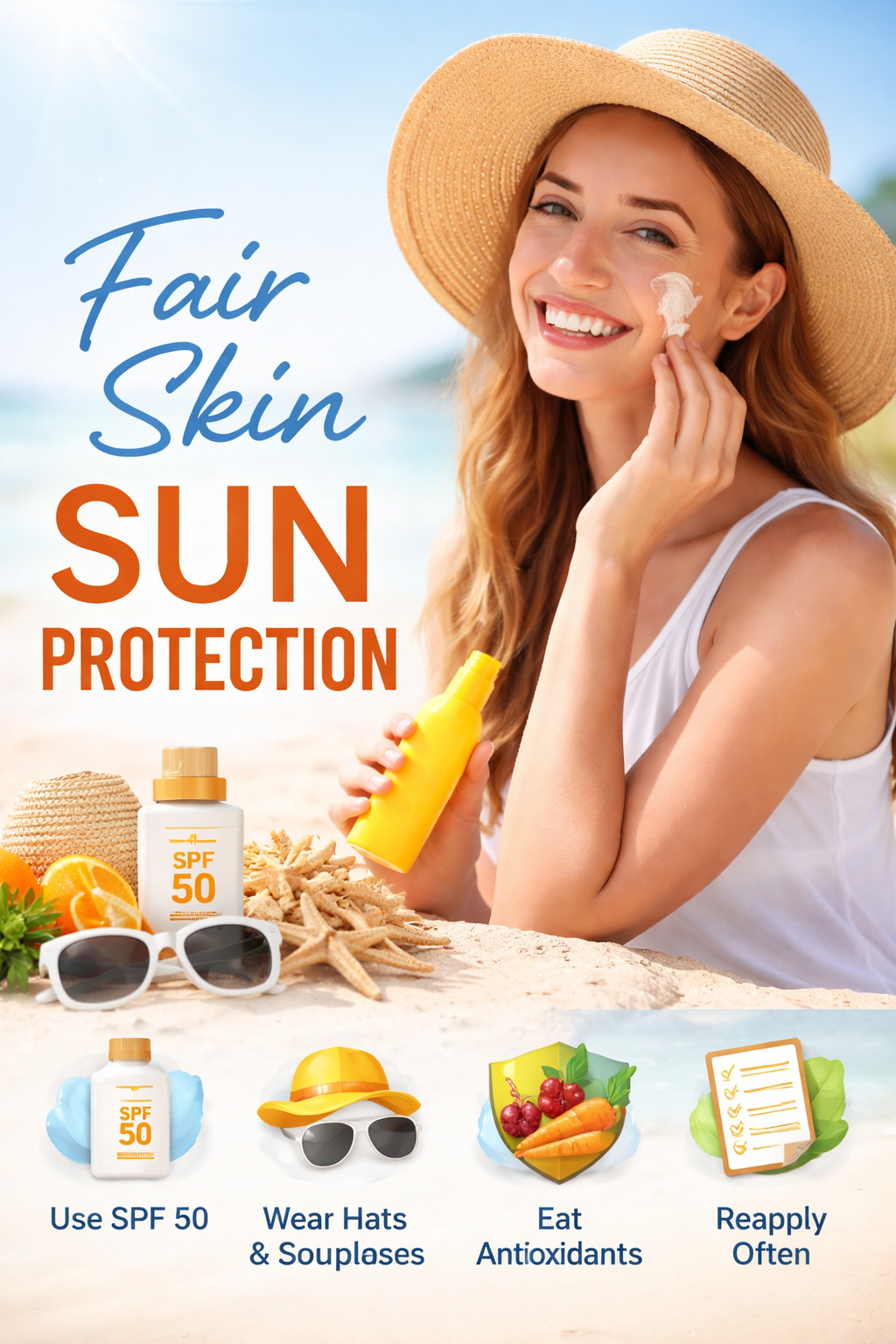
- Apply SPF 50 broad-spectrum sunscreen
- Reapply sunscreen every 2 hours or after swimming
- Wear a wide-brim hat and UV-protective sunglasses
- Use a beach umbrella for shade
- Apply sunscreen to often-missed areas (ears, feet, back of neck)
Tip: Even waterproof sunscreen wears off. Reapplication is critical for fair skin.
Sun Protection for Fair Skin During Sports and Physical Activities
Sweat can reduce sunscreen effectiveness, making active individuals more prone to sunburn.
Best practices for sports and exercise:
- Use water- and sweat-resistant sunscreen
- Choose UPF-rated athletic clothing
- Reapply sunscreen every 90–120 minutes
- Avoid midday workouts when possible
Fact: Athletes with fair skin experience higher rates of sunburn due to prolonged sun exposure and sweat-related sunscreen breakdown.
Fair Skin Sun Protection While Traveling
Traveling to sunny destinations increases sun intensity, especially near the equator or at high altitudes.
Travel sun protection checklist:
- Pack SPF 50 sunscreen
- Use lip balm with SPF
- Apply sunscreen even on cloudy days
- Wear protective clothing during sightseeing
- Take sun breaks indoors
Data Insight: UV exposure increases by 4–5% for every 1,000 feet of elevation, making sun protection essential in mountainous areas.
Daily Outdoor Exposure and Fair Skin Protection
Even short daily exposure—walking, driving, or sitting near windows—can cause cumulative damage.
Daily habits to protect fair skin:
- Apply sunscreen every morning
- Reapply if outdoors for extended periods
- Use SPF moisturizers and makeup
- Wear sunglasses and hats regularly
Chart: Sun Exposure Risk Levels for Fair Skin
| Activity | UV Risk Level | Protection Needed |
|---|---|---|
| Beach/pool | Very High | SPF 50 + clothing |
| Sports | High | Sweat-resistant SPF |
| Travel | High | Full sun protection |
| Daily errands | Moderate | Daily SPF 30+ |
Key Takeaway
Outdoor fun doesn’t have to mean skin damage. With smart planning and consistent habits, sun protection for fair skin can be effective in any environment.
Common Myths About Fair Skin Sun Protection
Misinformation about sun exposure often leads people with fair skin to underestimate the risks. Believing these myths can result in serious and long-term skin damage. Understanding the truth is essential for effective fair skin sun protection.
Myth 1 – “Fair Skin Will Eventually Tan Safely”
Many people believe fair skin can gradually build a safe tan. In reality, fair skin rarely tans without damage.
Truth:
A tan is a sign of skin injury. When fair skin darkens, it means UV rays have already damaged skin cells.
Dermatologist Insight: “There is no such thing as a healthy tan—any change in skin color caused by UV exposure is skin damage.”
Myth 2 – “SPF 15 Is Enough for Fair Skin”
SPF 15 only blocks about 93% of UVB rays, which is not sufficient for fair skin.
Truth:
Fair-skinned individuals should use SPF 30 to SPF 50 for adequate protection.
SPF Comparison Table
| SPF Level | UVB Protection |
|---|---|
| SPF 15 | ~93% |
| SPF 30 | ~97% |
| SPF 50 | ~98% |
The difference may seem small, but for fair skin, it is critical.
Myth 3 – “Sunscreen Is Only Needed on Sunny Days”
Cloud cover does not block UV rays completely.
Truth:
Up to 80% of UV rays can penetrate clouds, causing damage even on overcast days.
This makes daily fair skin sun protection essential, regardless of the weather.
Myth 4 – “Makeup with SPF Is Enough”
Many people rely solely on makeup for sun protection.
Truth:
Most people apply too little makeup to get the advertised SPF level.
Best Practice: Use sunscreen as a base layer, then apply makeup with SPF on top for extra protection.
Myth 5 – “Indoor Exposure Doesn’t Matter”
UVA rays can penetrate glass and affect skin indoors.
Truth:
Fair skin exposed to sunlight through windows still needs protection, especially for the face and hands.
Key Takeaway
Avoiding these myths helps prevent unnecessary sun damage. Fair skin sun protection requires consistent, informed habits—not assumptions.
How to Check If Your Fair Skin Sun Protection Is Working
Using sunscreen and protective measures is important, but knowing whether your fair skin sun protection routine is actually effective is equally essential. Monitoring your skin’s response helps you adjust habits before serious damage occurs.
Signs Your Sun Protection Is Not Enough
If fair skin is not properly protected, early warning signs often appear quickly.
Common indicators include:
- Redness or warmth after sun exposure
- Tingling or stinging sensation
- New freckles or dark spots
- Dry, tight, or peeling skin
Even mild redness means UV damage has already occurred, especially in fair skin.
Visual Skin Changes to Monitor Regularly
Fair-skinned individuals should regularly examine their skin for visible changes.
What to look for:
- Changes in mole size, shape, or color
- Persistent dark patches
- Rough or scaly areas
- New growths or sores that don’t heal
Important: Early detection dramatically improves outcomes for skin-related conditions.
Performing a Monthly Skin Self-Check
A monthly self-exam is one of the most effective ways to track sun damage.
Steps for a skin check:
- Examine your face, neck, and scalp
- Check arms, hands, and underarms
- Look at legs, feet, and between toes
- Use a mirror to inspect your back
This habit is especially important for people with fair skin and a history of sunburn.
When to See a Dermatologist
Professional skin checks provide an extra layer of safety.
See a dermatologist if you notice:
- Frequent sunburns despite using sunscreen
- Rapid changes in moles
- Persistent irritation or redness
- Family history of skin cancer
Expert Recommendation: Fair-skinned individuals should have a full skin exam once a year.
Checklist: Effective Fair Skin Sun Protection
- ✔ No sunburn after outdoor exposure
- ✔ Skin feels calm, not irritated
- ✔ Minimal new pigmentation
- ✔ Consistent sunscreen reapplication
- ✔ Regular skin monitoring
Key Takeaway
If your skin remains comfortable, evenly toned, and free from burns, your sun protection for fair skin routine is working. Any discomfort or redness signals the need for stronger protection.
Choosing the Right Products for Fair Skin Sun Protection
Selecting the right products is a key part of effective fair skin sun protection. Fair skin is often more sensitive, reactive, and prone to irritation, so using the wrong products can do more harm than good. The goal is to protect the skin while maintaining comfort and long-term health.
Best Sunscreen Ingredients for Fair Skin
Certain sunscreen ingredients are especially beneficial for fair and sensitive skin types.
Recommended ingredients:
- Zinc oxide – broad-spectrum protection and gentle on skin
- Titanium dioxide – ideal for sensitive and reactive fair skin
- Niacinamide – reduces redness and strengthens skin barrier
- Hyaluronic acid – keeps skin hydrated under the sun
These ingredients help protect fair skin without clogging pores or causing irritation.
Ingredients Fair Skin Should Avoid in Sun Products
Some ingredients can increase sensitivity or cause irritation when exposed to sunlight.
Avoid products containing:
- Alcohol (drying and irritating)
- Synthetic fragrances
- Essential oils (especially citrus-based)
- Oxybenzone (may cause sensitivity in some people)
Tip: Always patch-test new sunscreen or skincare products, especially if you have sensitive fair skin.
Makeup and Skincare Products with SPF
Makeup and skincare products with SPF offer extra protection but should never replace sunscreen.
Useful SPF products for fair skin:
- Moisturizers with SPF 30+
- Foundations or BB creams with SPF
- Lip balms with SPF
Best practice: Apply sunscreen first, then layer SPF makeup on top.
Sunscreen for Different Fair Skin Types
Not all fair skin is the same. Choosing products based on skin type improves comfort and results.
| Skin Type | Best Sunscreen Type |
|---|---|
| Sensitive | Mineral sunscreen |
| Dry | Cream-based SPF |
| Oily | Gel or fluid SPF |
| Acne-prone | Non-comedogenic SPF |
Reading Labels the Right Way
Understanding product labels helps you make smarter choices.
What to check on labels:
- Broad-spectrum protection
- SPF 30 or higher
- Water resistance (40 or 80 minutes)
- Dermatologist-tested
Key Takeaway
The right products make sun protection for fair skin easier, more comfortable, and more effective. Gentle ingredients and proper layering ensure maximum protection without irritation.
Long-Term Benefits of Consistent Fair Skin Sun Protection
Practicing fair skin sun protection daily is not just about avoiding sunburn today—it’s an investment in your skin’s future. Consistency over months and years delivers visible and health-protecting benefits that are especially important for fair skin.
Healthier and More Even-Toned Skin
Daily sun protection helps fair skin maintain a balanced, even complexion.
Long-term benefits include:
- Fewer freckles and dark spots
- Reduced redness and irritation
- Smoother skin texture
Over time, protected skin appears brighter and healthier with minimal discoloration.
Slower Signs of Aging
UV exposure is the leading cause of premature aging, especially in fair skin.
Consistent sun protection helps prevent:
- Fine lines and wrinkles
- Loss of firmness and elasticity
- Rough and leathery texture
Data Insight: Research shows that daily sunscreen use can reduce visible aging by up to 24% over time.
Lower Risk of Skin Cancer
This is the most important long-term benefit of proper sun protection.
Why it matters for fair skin:
- Less melanin = higher UV sensitivity
- Repeated sun exposure damages DNA
- Early prevention significantly lowers risk
Using sunscreen daily and avoiding peak UV hours can drastically reduce skin cancer risk.
Stronger Skin Barrier Over Time
Protected skin retains moisture better and becomes less reactive.
Benefits of a healthy skin barrier:
- Less sensitivity
- Faster healing
- Better tolerance to skincare products
Summary Table: Long-Term Benefits
| Benefit | Result |
|---|---|
| Daily SPF use | Reduced sun damage |
| Protective habits | Healthier skin |
| UV avoidance | Lower cancer risk |
| Consistency | Youthful appearance |
FAQs About Fair Skin Sun Protection
This section is optimized for featured snippets and directly answers the most common questions people ask about fair skin sun protection. Clear, concise answers help both readers and search engines.
What SPF Is Best for Fair Skin?
For fair skin, dermatologists recommend using SPF 30 to SPF 50 daily.
- SPF 30 blocks about 97% of UVB rays
- SPF 50 blocks about 98% of UVB rays
People with very fair or sensitive skin should choose SPF 50 for maximum protection.
How Often Should Fair Skin Reapply Sunscreen?
Sunscreen should be reapplied every 2 hours, or sooner if:
- Swimming
- Sweating
- Towel-drying
Failure to reapply is one of the most common reasons fair skin still burns.
Can Fair Skin Ever Tan Safely?
No. Fair skin does not tan safely.
Any darkening of fair skin due to sun exposure indicates damage. Self-tanning products are a safer alternative if a tanned look is desired.
Do People with Fair Skin Need Sunscreen Indoors?
Yes, especially for the face and hands.
UVA rays can penetrate windows and cause long-term damage. Daily fair skin sun protection should include indoor exposure.
Is Sunscreen Necessary in Winter or on Cloudy Days?
Absolutely.
- Up to 80% of UV rays pass through clouds
- Snow reflects UV rays, increasing exposure
Fair skin needs protection year-round, not just in summer.
Are Natural Remedies Enough for Fair Skin Sun Protection?
No. Natural remedies support skin health but cannot replace sunscreen.
The best approach combines:
- Sunscreen
- Protective clothing
- Healthy diet
- Smart sun habits
Quick FAQ Summary Table
| Question | Short Answer |
|---|---|
| Best SPF | SPF 30–50 |
| Reapplication | Every 2 hours |
| Safe tanning | Not possible |
| Indoor SPF | Yes |
| Cloudy days | Still needed |
Conclusion
Protecting fair skin from the sun is not just a beauty routine—it’s a vital step for long-term health. People with fair skin are especially vulnerable to sunburn, premature aging, pigmentation, and skin cancer due to lower melanin levels. Consistent fair skin sun protection can prevent these issues and help maintain healthy, radiant skin throughout life.
Key Takeaways:
- Always use broad-spectrum SPF 30–50 sunscreen and reapply every 2 hours.
- Wear protective clothing, hats, and sunglasses when outdoors.
- Avoid peak sun hours and seek shade whenever possible.
- Support your skin from within with antioxidant-rich foods and supplements.
- Monitor your skin regularly and consult a dermatologist if any changes occur.
By integrating these practices into your daily skincare and lifestyle routine, you can enjoy the sun safely, reduce long-term skin damage, and keep your fair skin looking healthy and youthful. Remember: sun protection for fair skin is not optional—it’s essential.