
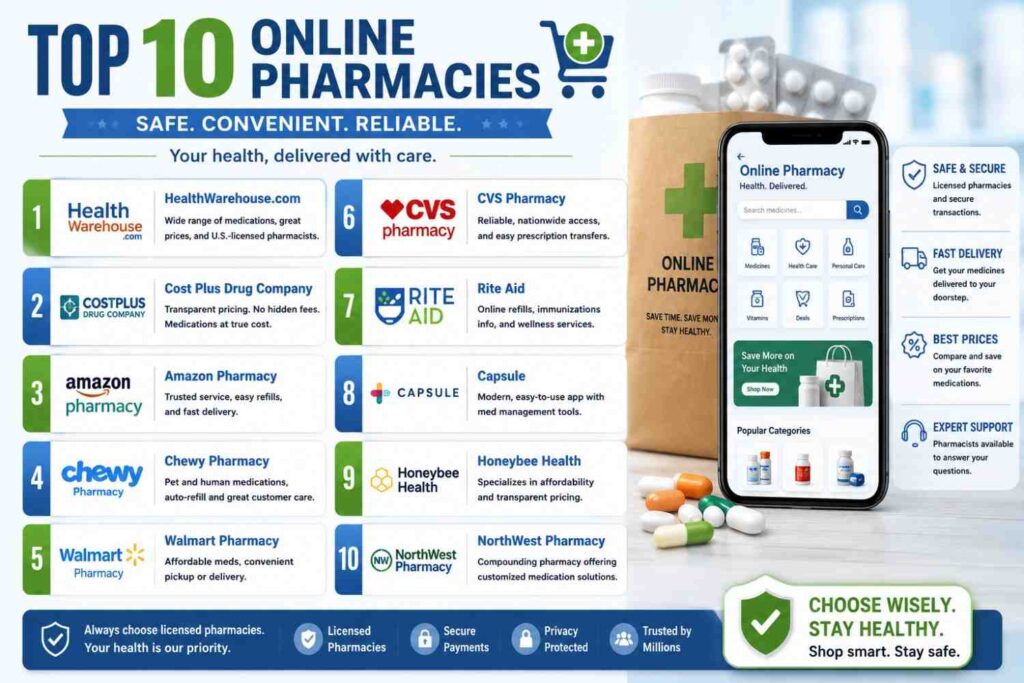
Top 10 Online Pharmacies: Safe, Trusted, and Convenient Options
The healthcare industry has undergone a significant digital transformation over the last decade, and one of the most notable developments has been the rapid growth of online pharmacies. What was once considered a niche service has now become a mainstream healthcare solution for millions of consumers worldwide. Whether individuals need routine prescription refills, long-term medication management, or convenient home delivery, online pharmacies offer an accessible alternative to traditional brick-and-mortar pharmacies.
The rise of digital healthcare has made it easier than ever to manage medications from the comfort of home. Patients can browse available services, submit prescriptions electronically, consult licensed pharmacists, compare prices, and arrange delivery without leaving their homes. This level of convenience is particularly valuable for seniors, individuals with chronic health conditions, people living in rural areas, and busy professionals who may struggle to visit a pharmacy during regular business hours.
However, convenience alone should not determine which pharmacy you choose. Not all online pharmacies operate under the same standards, and selecting a reputable provider is essential for ensuring medication safety, authenticity, and privacy. Consumers must understand how to identify legitimate pharmacies, verify licenses, and recognize warning signs that may indicate unsafe operations.
In this comprehensive guide, we’ll explore the top 10 online pharmacies, explain how online pharmacy services work, compare key features, and provide practical tips for choosing a trustworthy provider. By the end of this article, you’ll have the knowledge needed to make informed decisions about ordering medications online safely and confidently.
Why Online Pharmacies Are Growing in Popularity
The increasing popularity of online pharmacies reflects broader changes in consumer behavior and healthcare delivery. Modern patients expect convenience, accessibility, and digital solutions in nearly every aspect of their lives, and healthcare is no exception. Online pharmacies bridge the gap between traditional pharmaceutical services and modern technology, creating a more efficient experience for both patients and healthcare providers.
Several factors have contributed to this growth. Advancements in telehealth have made it easier for patients to obtain consultations and prescriptions remotely. Improvements in delivery logistics have enabled pharmacies to ship medications quickly and reliably. Additionally, many consumers have become more comfortable managing healthcare needs online, particularly after the widespread adoption of digital healthcare services in recent years.
Beyond convenience, online pharmacies can provide greater transparency in pricing, easier access to medication information, and improved tools for managing long-term prescriptions. Features such as automatic refill reminders, medication tracking, secure messaging, and pharmacist consultations help patients stay on top of their treatment plans.
While online pharmacy services continue to expand, patients should still prioritize safety and verification when selecting a provider. Understanding both the benefits and potential risks is essential for making informed healthcare decisions.
Convenience and Home Delivery
One of the primary reasons people choose online pharmacies is the convenience they offer. Traditional pharmacy visits often require transportation, waiting in line, and scheduling around business hours. Online pharmacies eliminate many of these challenges by allowing patients to order medications at any time and from virtually anywhere.
Home delivery services are especially beneficial for individuals who face mobility challenges, manage chronic illnesses, or live in areas with limited pharmacy access. Instead of making repeated trips to a local pharmacy, patients can receive their medications directly at their doorstep. Many providers also offer recurring delivery schedules, ensuring that important medications arrive before current supplies run out.
In addition to delivery services, online pharmacies often provide digital tools such as prescription tracking, automatic refill reminders, and account dashboards that help users manage multiple medications efficiently. These features contribute to a more streamlined healthcare experience and reduce the likelihood of missed doses or treatment interruptions.
Better Access to Medications
Online pharmacies have significantly improved medication accessibility for many patients. Individuals living in rural or underserved areas often have limited access to physical pharmacies, particularly those requiring specialty medications. Digital pharmacy services help bridge this gap by providing nationwide access to a broader range of prescription products.
Many online pharmacies maintain extensive inventories and can source medications that may not always be available at local locations. This can be particularly helpful for patients managing chronic conditions or requiring specialized treatments. Some providers also coordinate directly with healthcare professionals to facilitate prescription transfers and ongoing treatment management.
Furthermore, online pharmacies often integrate with telehealth platforms, allowing patients to receive consultations, prescriptions, and medication delivery through a single service ecosystem. This integrated approach can simplify healthcare access and improve treatment continuity, especially for patients who require ongoing care.
Cost Savings Opportunities
Affordability is another major factor driving the adoption of online pharmacies. Many digital pharmacy providers can offer competitive pricing due to lower operating costs compared to traditional retail locations. In some cases, patients may also benefit from manufacturer discounts, subscription savings programs, or bulk-order pricing.
Price comparison is often easier online as well. Consumers can review medication costs across different providers and evaluate insurance coverage options before making a purchase. Some pharmacies also offer transparent pricing tools that help patients understand their out-of-pocket expenses in advance.
However, consumers should exercise caution when evaluating unusually low prices. Medications offered at significantly below-market rates may indicate counterfeit products or unlicensed operations. While saving money is important, ensuring medication authenticity and patient safety should always take priority over cost alone.
Top 10 Online Pharmacies to Consider
As the online pharmacy market continues to expand, several providers have established themselves as trusted leaders through strong regulatory compliance, reliable service, and comprehensive medication management solutions. While the “best” pharmacy may vary depending on individual needs, certain providers consistently rank highly for safety, convenience, customer support, and prescription fulfillment.
The top online pharmacies typically share several characteristics. They require valid prescriptions, employ licensed pharmacists, maintain secure ordering systems, and comply with applicable healthcare regulations. Many also offer additional services such as medication synchronization, refill management, telehealth integration, and insurance support.
Consumers should remember that availability, pricing, and service offerings may vary by region. Before choosing a provider, it is important to confirm licensing, delivery coverage, and medication availability. Evaluating customer service options and pharmacist accessibility can also help determine whether a pharmacy is the right fit for long-term medication management.
The following categories represent some of the most widely recognized and trusted online pharmacy options available today.
Major Retail Pharmacy Providers
Large retail pharmacy chains have successfully expanded their services into the digital space, combining established pharmacy operations with modern online ordering systems. Providers such as CVS Pharmacy, Walgreens, and Amazon Pharmacy offer comprehensive medication management supported by extensive healthcare infrastructure.
These companies typically provide prescription transfers, online refills, insurance integration, and home delivery services. Because they already operate well-established pharmacy networks, they often inspire greater consumer confidence compared to lesser-known providers. Many also allow customers to choose between home delivery and in-store pickup, providing additional flexibility.
For individuals seeking a familiar and trusted pharmacy experience, major retail pharmacy providers often serve as an excellent starting point when exploring online pharmacy services.
Mail-Order and Pharmacy Benefit Providers
Mail-order pharmacy providers specialize in delivering medications directly to patients, often focusing on long-term prescription management. Companies such as Express Scripts, Optum Rx, and CenterWell Pharmacy are commonly associated with health insurance plans and pharmacy benefit management services.
These providers are particularly useful for patients who require ongoing medications for chronic conditions. By supplying larger quantities and coordinating refill schedules, mail-order pharmacies can simplify medication adherence and reduce interruptions in treatment.
Many insurance plans actively encourage the use of mail-order services due to potential cost savings and improved prescription management. Patients should review their insurance benefits to determine whether these services offer additional advantages.
Specialized Digital Pharmacy Platforms
A newer generation of digital-first pharmacy providers has emerged with a strong focus on technology, convenience, and customer experience. Companies such as Cost Plus Drugs, HealthWarehouse, BlinkRx, and Capsule have gained attention for innovative service models and transparent pricing structures.
These platforms often emphasize user-friendly mobile applications, fast delivery options, and simplified prescription management. Some providers have built their reputations on price transparency, while others focus on streamlined delivery experiences in urban markets.
Specialized digital pharmacies demonstrate how technology continues to reshape healthcare access. As these platforms evolve, they may play an increasingly important role in helping patients manage medications efficiently and affordably.
How to Verify a Safe Online Pharmacy
As online pharmacy usage continues to grow, so does the importance of verifying whether a pharmacy is legitimate and trustworthy. While many online pharmacies operate legally and provide safe access to medications, there are also fraudulent websites that sell counterfeit, expired, or potentially dangerous drugs. These illegitimate operations often target consumers seeking convenience or lower prices, making it essential to perform proper verification before placing an order.
A safe online pharmacy follows the same regulatory standards as a traditional pharmacy. It requires valid prescriptions, employs licensed pharmacists, protects patient information, and complies with healthcare regulations. Consumers should never assume that a professional-looking website automatically indicates legitimacy. Taking a few extra minutes to verify credentials can help prevent serious health risks and financial losses.
Organizations such as the National Association of Boards of Pharmacy (NABP) and regulatory agencies provide resources that allow consumers to check whether a pharmacy meets established safety standards. Understanding how these verification systems work can help patients confidently choose a provider that prioritizes patient safety and medication authenticity.
Ultimately, a trustworthy online pharmacy should demonstrate transparency, accountability, and a commitment to delivering high-quality healthcare services. The following verification methods can help consumers distinguish legitimate providers from potentially harmful websites.
Check for NABP Accreditation
One of the most reliable ways to evaluate an online pharmacy is by checking whether it has been accredited or recognized by respected regulatory organizations. The National Association of Boards of Pharmacy (NABP) offers programs that help consumers identify pharmacies that meet strict standards related to patient safety, prescription handling, privacy protection, and professional pharmacy practices.
Accredited pharmacies are generally required to comply with state and federal regulations, maintain secure systems for handling personal health information, and provide access to licensed pharmacists who can answer medication-related questions. These requirements help create a safer environment for consumers purchasing medications online.
Before ordering from any pharmacy, consumers should visit official verification resources and confirm that the provider appears in recognized accreditation directories. While accreditation alone should not be the only factor considered, it serves as a strong indicator that the pharmacy follows accepted industry standards and prioritizes patient safety.
Verify Licensing and Prescription Requirements
Legitimate online pharmacies should always require a valid prescription for prescription-only medications. If a website offers prescription drugs without requiring documentation from a licensed healthcare provider, this should immediately raise concerns about its legitimacy.
In addition to prescription requirements, consumers should verify that the pharmacy is licensed to operate within its jurisdiction. Reputable pharmacies typically provide licensing information, physical addresses, contact details, and customer support resources directly on their websites. They should also clearly identify the pharmacists responsible for overseeing medication dispensing and patient consultations.
Checking these details helps ensure that the pharmacy is accountable to regulatory authorities and subject to professional oversight. Consumers who take the time to verify licensing information can significantly reduce the risk of receiving unsafe or counterfeit medications.
Avoid Common Warning Signs
Identifying warning signs is an essential part of evaluating online pharmacies. Fraudulent websites often share similar characteristics that can help consumers recognize potential risks before making a purchase.
Some of the most common red flags include pharmacies that sell prescription medications without prescriptions, advertise unrealistic discounts, provide vague contact information, or lack access to licensed pharmacists. Poor website security, suspicious payment methods, and aggressive marketing claims can also indicate questionable business practices.
Consumers should approach any pharmacy that promises miracle cures, guaranteed results, or deeply discounted medications with caution. Legitimate healthcare providers focus on patient safety and compliance rather than making exaggerated claims. When in doubt, it is always better to verify a pharmacy through trusted regulatory resources before proceeding with a purchase.
Frequently Asked Questions About Top 10 Online Pharmacies
Choosing an online pharmacy often raises important questions about safety, prescriptions, pricing, delivery, and regulatory compliance. While online pharmacies have become increasingly popular, many consumers still want reassurance before ordering medications online. The following frequently asked questions address some of the most common concerns and provide practical guidance for selecting and using online pharmacy services safely.
Whether you are considering switching from a local pharmacy or using an online provider for the first time, understanding these key topics can help you make informed healthcare decisions and avoid common mistakes.
Are Online Pharmacies Safe?
Yes, online pharmacies can be safe when they operate legally and follow recognized healthcare regulations. Legitimate online pharmacies require valid prescriptions, employ licensed pharmacists, protect patient information, and comply with pharmacy licensing requirements.
However, consumers should be aware that not every online pharmacy meets these standards. Some websites sell counterfeit or unsafe medications, making verification essential before placing an order. Always look for licensing information, pharmacist availability, prescription requirements, and accreditation from recognized organizations.
When proper precautions are taken, online pharmacies can provide a safe, convenient, and reliable way to access prescription medications and healthcare support.
How Can I Verify an Online Pharmacy?
Verifying an online pharmacy involves checking several important factors before purchasing medications. Start by confirming that the pharmacy requires a valid prescription and provides access to licensed pharmacists. Legitimate providers should also display contact information, physical business addresses, and licensing details.
Consumers should review accreditation and verification resources provided by recognized regulatory organizations. These resources help identify pharmacies that meet established safety and professional standards. It is also wise to research customer reviews and investigate how long the pharmacy has been operating.
Taking these verification steps significantly reduces the risk of purchasing counterfeit medications or using an unlicensed provider.
Do Online Pharmacies Require Prescriptions?
Legitimate online pharmacies generally require valid prescriptions for prescription-only medications. This requirement helps ensure that medications are used appropriately and under professional medical supervision.
If a website offers prescription drugs without requiring a prescription, consumers should view this as a major warning sign. Responsible pharmacies follow healthcare regulations and work closely with healthcare providers to verify prescriptions before dispensing medications.
Prescription requirements not only protect patient safety but also help reduce the misuse of medications and prevent potentially dangerous drug interactions.
What Is the Difference Between an Online Pharmacy and a Mail-Order Pharmacy?
Although the terms are often used interchangeably, there are some differences between online pharmacies and mail-order pharmacies. An online pharmacy typically refers to any pharmacy that allows customers to manage prescriptions and place orders through a website or mobile application.
A mail-order pharmacy focuses specifically on delivering medications directly to patients through shipping services, often handling long-term prescriptions and chronic medication management. Many modern providers combine both models, offering digital ordering platforms alongside home delivery services.
Understanding these distinctions can help consumers choose a service that best aligns with their healthcare needs and preferences.
Can Online Pharmacies Accept Insurance?
Many online pharmacies work with insurance providers and allow patients to use their prescription benefits when ordering medications. Coverage varies depending on the pharmacy, insurance plan, medication type, and geographic location.
Before placing an order, patients should verify whether their insurance provider is accepted and confirm any out-of-pocket expenses. Some pharmacies also offer alternative pricing programs, discount cards, or cash-payment options that may provide savings even without insurance coverage.
Comparing insurance benefits and available discounts can help patients maximize value while maintaining access to necessary medications.
Are Online Medications Usually Cheaper?
Medication pricing can vary significantly between providers. In many cases, online pharmacies offer competitive pricing due to streamlined operations and lower overhead costs compared to some traditional retail locations.
Consumers may also find savings through generic alternatives, subscription programs, manufacturer discounts, and pharmacy-specific pricing models. However, the cheapest option is not always the safest choice. Extremely low prices should be evaluated carefully, particularly if the pharmacy lacks proper verification or accreditation.
A balanced approach that considers safety, service quality, and affordability often produces the best overall value.
What Should I Avoid When Buying Medicine Online?
Consumers should avoid pharmacies that sell prescription medications without requiring prescriptions, hide their contact information, offer suspiciously low prices, or make unrealistic healthcare claims. These warning signs often indicate fraudulent or non-compliant operations.
It is also important to avoid sharing personal or payment information on websites that lack proper security protections. Before purchasing medications, verify the pharmacy’s credentials, review licensing information, and confirm that licensed pharmacists are available for consultation.
Being cautious and performing basic verification checks can significantly reduce risks and help ensure a safe online pharmacy experience.
Conclusion
Online pharmacies have fundamentally changed the way people access medications, making healthcare services more convenient, accessible, and efficient than ever before. From prescription management and medication delivery to pharmacist consultations and telehealth integration, digital pharmacy platforms continue to provide valuable solutions for patients seeking greater flexibility in managing their healthcare needs.
As the industry grows, consumers have more choices than ever when selecting among the top online pharmacy providers. However, convenience should never outweigh safety. Choosing a reputable provider requires careful evaluation of licensing, accreditation, prescription requirements, pharmacist accessibility, privacy protections, and overall service quality.
Throughout this guide, we explored the factors that distinguish trustworthy online pharmacies from potentially risky alternatives. We examined the benefits of digital pharmacy services, reviewed key safety considerations, compared important features, and discussed common mistakes consumers should avoid. These insights can help patients make informed decisions and confidently navigate the evolving landscape of online healthcare.
The Top 10 Online Pharmacies highlighted in this article represent some of the most recognized and trusted options available today. While each provider offers unique strengths, the most important consideration remains selecting a pharmacy that prioritizes patient safety, medication authenticity, and professional healthcare support.
As technology continues to advance, online pharmacies are expected to play an even larger role in healthcare delivery. Enhanced telehealth integration, faster shipping capabilities, personalized medication management tools, and improved digital experiences will continue shaping the future of pharmaceutical care.
For consumers, the key takeaway is simple: take the time to verify credentials, compare services carefully, and prioritize safety when ordering medications online. By following these best practices, patients can enjoy the convenience of online pharmacy services while maintaining confidence in the quality and legitimacy of the medications they receive.