
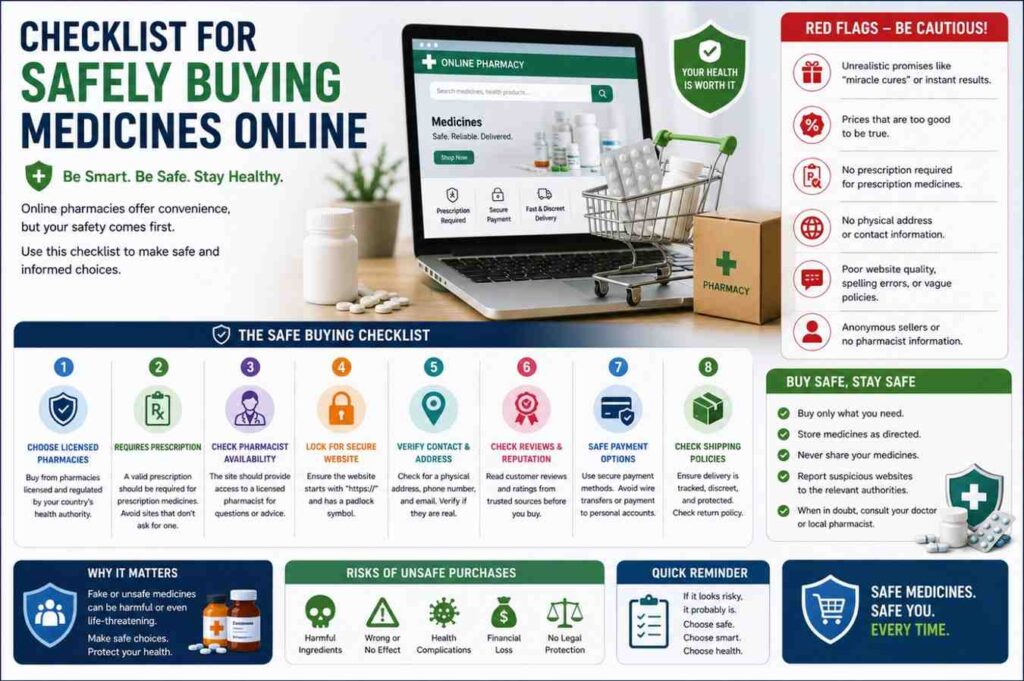
How to Safely Buy Medicines Online: Complete Guide
Buying medicines online has become increasingly common due to convenience, better access to pharmacies, and time-saving benefits. However, it also comes with risks such as counterfeit drugs, unsafe websites, and incorrect prescriptions. Understanding how to buy medicines safely online is essential for protecting your health and ensuring treatment effectiveness.
A safe online medicine purchase starts with choosing a licensed and verified pharmacy. Reputable online pharmacies require valid prescriptions, provide clear contact information, and are regulated by health authorities. Avoiding unverified sellers is crucial because counterfeit or expired medicines can cause serious health complications.
Another important aspect is understanding the medication details before purchasing. This includes checking the correct dosage, manufacturer information, expiry date, and possible side effects. Reliable platforms always provide transparent product information along with pharmacist support for patient guidance.
Safe online buying also involves secure payment methods and proper delivery practices. Trusted pharmacies use encrypted payment systems and ensure medicines are stored and shipped under appropriate conditions. By following these precautions, patients can safely benefit from the convenience of online pharmaceutical services while minimizing health risks.
Understanding Online Medicine Buying Safety
Buying medicines online has become a normal part of modern healthcare due to convenience, time-saving benefits, and access to a wider range of products. However, the digital pharmaceutical space is also filled with risks that users often overlook. Understanding how online medicine buying works is essential before making any purchase decision. It is not just about convenience—it is about protecting your health, money, and personal data.
Online pharmacies can be divided into two major categories: licensed pharmacies that follow regulatory standards and unregulated platforms that operate without oversight. Licensed pharmacies require prescriptions, follow strict storage guidelines, and are monitored by health authorities. In contrast, unverified platforms may sell counterfeit or expired medicines, which can lead to serious health complications.
Another important aspect of safety is awareness. Many users assume that all websites selling medicines are legitimate, but this is far from true. Regulatory organizations such as the World Health Organization and national drug authorities constantly warn consumers about the rise of illegal online drug sellers. These platforms often mimic real pharmacies, making it difficult for users to identify them.
Understanding online medicine safety also includes recognizing red flags such as unrealistic discounts, lack of prescription requirements, and missing contact information. When users educate themselves about these risks, they significantly reduce the chances of falling victim to fraud or unsafe medication practices.
What Is an Online Pharmacy?
An online pharmacy is a digital platform that sells medicines, health products, and sometimes medical consultation services through a website or mobile application. These platforms allow users to order medicines from the comfort of their homes, which is especially helpful for individuals with mobility issues or chronic conditions requiring regular medication.
However, not all online pharmacies operate under legal or medical standards. Legitimate pharmacies are registered, licensed, and regulated by health authorities. They require valid prescriptions and ensure that medicines are sourced from approved manufacturers. On the other hand, illegal pharmacies often bypass these requirements and may sell unapproved or counterfeit drugs.
A trustworthy online pharmacy will always display its licensing details, physical address, and regulatory certifications. In many countries, regulatory bodies like the U.S. Food and Drug Administration provide guidelines for identifying safe online pharmacies.
Why Safety Matters in Online Medicine Purchases
Safety in online medicine purchases is not optional—it is essential. Medicines directly affect the human body, and even small variations in ingredients or dosage can lead to severe consequences. Unsafe medicines may contain incorrect active ingredients, harmful chemicals, or insufficient dosage levels.
Counterfeit medication is one of the biggest risks. Fake drugs may look identical to genuine products but do not provide proper treatment. They can even worsen health conditions. Data protection is another concern, as untrusted websites may misuse personal and financial information.
Risks of Buying Medicines Online
While online pharmacies provide convenience, accessibility, and often lower prices, they also carry significant risks that can seriously impact a person’s health, safety, and financial security. Many fraudulent websites are designed to look highly professional, using fake certifications, copied logos, and unrealistic discounts to attract customers. Because of this, users may mistakenly trust unsafe platforms without realizing the potential dangers involved in purchasing medicines online.
Another major concern is that online medicine markets are not always strictly regulated. This means that some sellers operate without proper licensing or quality control, which increases the chances of receiving unsafe or ineffective products. Understanding these risks is essential for anyone considering purchasing medication online, especially for prescription or long-term treatments.
Being aware of these dangers helps users make safer decisions and avoid platforms that do not follow proper pharmaceutical standards or legal requirements.
Counterfeit and Fake Medicines
Counterfeit medicines are fake or illegally produced versions of genuine drugs that may look identical to authentic products but contain incorrect, harmful, or inactive ingredients. These medicines can fail to treat the intended condition and may even cause serious side effects or toxic reactions.
According to the World Health Organization, counterfeit drugs are a growing global issue affecting both developed and developing countries. They often enter the supply chain through unregulated online pharmacies that do not follow proper quality assurance processes.
In many cases, patients may not even realize they are taking fake medication until their condition worsens or fails to improve. This makes counterfeit drugs one of the most dangerous risks associated with online medicine purchases.
Data Theft and Payment Fraud
Fraudulent online pharmacies often target sensitive user data such as credit card details, home addresses, medical history, and personal identification information. Once collected, this data can be misused for identity theft, unauthorized transactions, or sold on illegal markets.
Many fake websites use unsecured payment systems that do not encrypt financial information properly. This makes it easier for cybercriminals to intercept and steal data during transactions. Users should always check for secure HTTPS connections and trusted payment gateways before entering any information.
Avoiding suspicious websites, unrealistic discounts, and unverified sellers is essential to protect both financial security and personal privacy when buying medicines online.
Incorrect or Unsafe Medication Delivery
Unregulated online pharmacies may deliver incorrect, expired, or improperly stored medicines, which can lead to ineffective treatment or serious health risks. In some cases, patients may even receive completely different medications than what was prescribed.
Proper medication handling requires strict storage conditions, verified supply chains, and professional oversight. Without these controls, medicines can lose effectiveness or become unsafe for consumption.
Receiving the wrong dosage or expired drugs can worsen medical conditions, delay recovery, or cause harmful side effects, making this one of the most serious risks of unregulated online pharmaceutical services.
How to Identify Legitimate Online Pharmacies
Identifying legitimate online pharmacies is essential to ensure that the medicines you purchase are safe, effective, and legally approved. Trusted pharmacies operate with full transparency, proper licensing, and strict compliance with regulatory health authorities. They prioritize patient safety by following standardized pharmaceutical practices and requiring valid medical documentation before dispensing prescription drugs.
Legitimate platforms also provide clear business information such as physical addresses, contact details, and pharmacist availability for consultation. This transparency helps users verify authenticity and reduces the risk of dealing with fraudulent or illegal sellers. Understanding these key indicators can significantly reduce the chances of falling victim to counterfeit medicine scams.
By learning how to evaluate online pharmacies properly, users can make safer decisions and ensure that their healthcare needs are met without compromising quality or security.
Check Licensing and Certification
One of the most important steps in identifying a legitimate online pharmacy is verifying its licensing and certification. Reputable pharmacies are registered with official regulatory bodies and comply with national or international pharmaceutical standards.
You can often verify a pharmacy’s license number through government health department websites or regulatory databases. This ensures that the pharmacy is legally authorized to sell and distribute medicines.
Licensed pharmacies are also required to follow strict safety protocols, including proper storage, handling, and distribution of medications, which helps maintain drug quality and effectiveness.
Look for Prescription Requirements
Authentic online pharmacies always require a valid prescription for prescription-only medications. This is a key safety measure that ensures medicines are used appropriately under medical supervision.
Websites that allow customers to purchase prescription drugs without any medical documentation are usually unsafe and often operate illegally. These platforms may sell unverified or counterfeit medicines.
Requiring prescriptions also ensures that a qualified healthcare professional has evaluated the patient’s condition, reducing the risk of incorrect dosage or inappropriate medication use.
Website Security Indicators
Website security is another important factor when evaluating online pharmacies. Legitimate websites use HTTPS encryption, which protects sensitive data such as personal information and payment details during transactions.
A padlock icon in the browser address bar is a common indicator of a secure and encrypted website connection. However, users should also check for additional security features such as privacy policies and secure payment gateways.
Safe websites clearly explain how user data is stored and protected, ensuring transparency and building trust between the pharmacy and the customer.
Step-by-Step Guide to Safely Buy Medicines Online
Buying medicines online can be safe and convenient when done carefully and through verified platforms. However, it requires a clear step-by-step approach to avoid counterfeit products, fraud, and incorrect medication use. Following a structured process ensures that you receive authentic medicines while protecting your health and financial information.
A safe online purchase also depends on verifying the pharmacy, understanding prescription requirements, and checking product details before completing the order. Each step plays an important role in ensuring that the medication you receive is both genuine and appropriate for your medical condition.
By following a proper process, you can reduce risks and confidently benefit from the convenience of online pharmacies without compromising safety or quality.
| Safety Factor | What to Check | Why It Matters |
|---|---|---|
| Pharmacy License | Verify registration with official health authority | Ensures the pharmacy is legally operating |
| Prescription Requirement | Must require valid doctor prescription | Prevents misuse of prescription drugs |
| Website Security | HTTPS + secure payment gateway | Protects personal and financial data |
| Medicine Details | Clear dosage, expiry date, manufacturer info | Ensures correct and safe usage |
| Customer Support | Active contact and support system | Helps resolve issues and verify authenticity |
| Pricing Behavior | Avoid extremely cheap offers | Prevents counterfeit medicine risk |
| Packaging Standards | Sealed and labeled delivery | Confirms product integrity during shipping |
Step 1 – Verify the Pharmacy
The first and most important step is to verify that the online pharmacy is licensed and registered with official regulatory authorities. Legitimate pharmacies are listed in government-approved databases and comply with strict healthcare regulations.
Checking the pharmacy’s background helps confirm that it operates legally and follows proper pharmaceutical standards. This includes having certified pharmacists, secure storage systems, and approved drug distribution channels.
Avoid websites that do not provide clear licensing information or appear suspicious, as they are more likely to sell counterfeit or unsafe medicines.
Step 2 – Upload Prescription
A valid prescription is essential when purchasing prescription medications online. It ensures that the medicine is appropriate for your condition and that the dosage has been correctly determined by a healthcare professional.
Legitimate pharmacies will always request a prescription before processing your order. This helps prevent misuse of drugs and reduces the risk of harmful side effects or incorrect treatment.
If a website allows you to buy prescription medicines without any medical documentation, it should be considered unsafe and potentially illegal.
Step 3 – Check Medicine Details
Before placing an order, carefully review all medicine details including dosage, expiry date, manufacturer information, and usage instructions. This ensures that you are receiving the correct and safe product.
Reliable pharmacies provide clear and transparent product descriptions, allowing customers to make informed decisions. This includes information about side effects, storage conditions, and proper usage guidelines.
Taking a few extra moments to verify these details can help prevent serious health risks and ensure effective treatment.
Step 4 – Secure Payment and Order Tracking
Using secure payment methods is essential when buying medicines online. Trusted pharmacies use encrypted payment gateways to protect your financial information from fraud or theft.
After placing an order, always check for tracking options so you can monitor the delivery process. This ensures that your medicines are shipped safely and reach you within the expected time frame.
Secure payment systems and proper tracking add an extra layer of safety, giving you confidence that your purchase is protected from start to finish..
Comparison Table of Safe vs Unsafe Online Pharmacies
| Feature | Safe Online Pharmacy | Unsafe Online Pharmacy |
|---|---|---|
| Licensing | Verified by authorities | Missing or fake |
| Prescription | Always required | Not required |
| Security | HTTPS encryption | No security |
| Medicine Source | Certified manufacturers | Unknown suppliers |
| Customer Support | Available | Poor or none |
Common Scams and How to Avoid Them
Online medicine scams are becoming increasingly common as more people turn to digital pharmacies for convenience and affordability. Fraudulent sellers often use deceptive tactics such as fake discounts, copied websites, and unverified marketplaces to trick users into buying unsafe or counterfeit medicines. Understanding these scams is essential for protecting both your health and your financial security.
Many of these scams are designed to look legitimate at first glance, using professional website designs, fake certifications, and misleading advertisements. However, they usually lack proper licensing, regulatory approval, and secure supply chains. Being able to identify warning signs early can help you avoid serious risks.
By learning how these scams operate, users can make safer decisions and ensure they only purchase medicines from trusted, verified sources.
Fake Discount Offers
One of the most common scams involves extremely low or unrealistic discount offers on medicines. While discounts can be normal in legitimate pharmacies, prices that are far below market value often indicate counterfeit, expired, or illegally sourced products.
Scammers use attractive pricing to lure customers into making quick purchases without proper verification. Once purchased, the medicines may be ineffective or even harmful due to poor quality or incorrect ingredients.
To avoid this scam, always compare prices with licensed pharmacies and be cautious of deals that seem too good to be true. Genuine medications rarely have extreme price reductions, especially for prescription drugs.
Impersonation of Trusted Pharmacies
Another widespread scam involves fake websites that impersonate well-known and trusted pharmacies. These fraudulent sites often copy logos, layouts, and branding to appear authentic and deceive customers.
A small difference in the website URL, such as extra letters or unusual domain extensions, can indicate a fake platform. Users should always carefully check the website address before making any purchase.
To stay safe, it is important to access pharmacies directly through official websites rather than clicking on random ads or email links that may lead to cloned or malicious pages.
Unverified Seller Marketplaces
Social media platforms and unregulated online marketplaces are also common sources of unsafe medicine sales. These sellers often operate without licenses, medical oversight, or quality control.
Medicines sold through these channels may be counterfeit, expired, or improperly stored, which increases the risk of ineffective treatment or harmful side effects.
For safety, always avoid purchasing prescription medicines from social media sellers or unverified marketplaces, and rely only on licensed online pharmacies that follow proper healthcare regulations.
Legal and Regulatory Guidelines for Online Medicines
Legal and regulatory guidelines play a critical role in ensuring that online medicines are safe, effective, and properly distributed. These rules are designed to protect patients from counterfeit drugs, unsafe sellers, and unregulated pharmaceutical practices. By following established regulations, online pharmacies can maintain quality standards and build trust with consumers.
Different countries have their own regulatory frameworks, but most follow strict guidelines related to prescriptions, drug safety, storage conditions, and pharmacist supervision. These laws ensure that medicines are dispensed responsibly and only when medically appropriate.
Understanding these regulations helps users identify legitimate pharmacies and avoid illegal or unsafe sources when purchasing medicines online.
| Entity / Authority | Role in Medicine Safety | Why It Matters for Users | Official Function |
|---|---|---|---|
| World Health Organization | Global health monitoring body | Warns about counterfeit and unsafe medicines worldwide | Sets global safety guidelines |
| U.S. Food and Drug Administration | Drug safety regulator (USA) | Approves safe medicines and monitors online pharmacy rules | Enforces drug safety laws |
| National Association of Boards of Pharmacy | Pharmacy verification authority | Helps users identify legitimate online pharmacies | Accredits safe pharmacies |
| Licensed Online Pharmacies | Regulated medicine sellers | Ensure prescription-based safe medication delivery | Follow legal pharmacy standards |
| Government Health Departments | National regulators | Control drug sales and prevent illegal pharmacies | Enforce country-specific laws |
FDA Regulations for Online Pharmacies
The U.S. Food and Drug Administration (FDA) sets strict regulations for online pharmacies to ensure patient safety and medication quality. These rules require pharmacies to dispense prescription drugs only with a valid prescription from a licensed healthcare provider.
FDA guidelines also emphasize proper storage, labeling, and distribution of medicines to maintain their effectiveness and safety. Online pharmacies must comply with these standards to operate legally and avoid penalties or shutdowns.
These regulations help reduce the risk of counterfeit medicines and ensure that patients receive authentic, approved medications from trusted sources.
International Safety Standards
The World Health Organization (WHO) provides global safety guidelines to combat the growing issue of counterfeit and substandard medicines. These standards help countries strengthen their pharmaceutical regulations and improve medicine quality worldwide.
WHO guidelines focus on improving supply chain transparency, strengthening regulatory systems, and promoting safe distribution practices across international borders.
By following these standards, governments and pharmacies can work together to ensure that medicines remain safe, effective, and accessible to patients globally.
Importance of Pharmacy Accreditation
Pharmacy accreditation is a key indicator of trust and reliability in online medicine services. Accredited pharmacies are regularly inspected and evaluated to ensure they meet strict safety, quality, and ethical standards.
This includes proper handling of medicines, safe storage conditions, accurate labeling, and secure distribution systems. Accreditation also ensures that qualified pharmacists are involved in the dispensing process.
Choosing an accredited pharmacy significantly reduces the risk of receiving counterfeit or unsafe medicines, giving patients greater confidence in their online purchases.
Tips for Secure Payment and Delivery
Secure payment and reliable delivery are essential parts of safely buying medicines online. Even if a pharmacy looks legitimate, unsafe payment systems or poor delivery practices can still put your personal information and health at risk. Taking a careful approach ensures that your transaction remains protected from fraud and that your medicines arrive in proper condition.
A trustworthy online pharmacy will always prioritize secure financial systems, proper packaging, and transparent order tracking. These elements work together to ensure that medicines are delivered safely, efficiently, and without compromise in quality.
By following key safety practices during payment and delivery, users can significantly reduce the risks associated with online pharmaceutical purchases.
Use Trusted Payment Methods
Using secure and widely recognized payment methods is one of the most important steps in protecting yourself when buying medicines online. Credit cards and reputable payment gateways offer encryption and fraud protection, making it harder for cybercriminals to access your financial information.
Trusted payment systems also often include buyer protection policies, which can help you recover funds in case of unauthorized transactions or delivery issues. This adds an extra layer of security compared to direct bank transfers or unknown payment apps.
Avoid websites that request unsafe or untraceable payment methods, as these are often associated with fraudulent or unregulated pharmacies.
Check Packaging and Delivery Conditions
Proper packaging is essential to ensure that medicines remain safe, effective, and uncontaminated during transit. Authentic pharmacies use sealed, tamper-proof packaging to protect the integrity of the medication.
When receiving an order, always check that the packaging is intact, properly labeled, and includes important details such as expiry date, batch number, and manufacturer information. Any signs of damage or tampering should be treated as a warning.
Medicines that are not stored or transported correctly may lose effectiveness, making safe packaging and handling a critical part of online pharmaceutical safety.
Track and Verify Orders
Order tracking is an important feature that helps ensure your medicines are delivered safely and on time. Reliable online pharmacies provide tracking numbers so customers can monitor the progress of their shipment in real time.
Tracking allows you to confirm that the package is moving through verified delivery channels and has not been delayed or redirected. It also provides transparency and accountability throughout the delivery process.
By verifying orders through tracking systems, customers gain greater confidence that their medicines are being handled properly and will arrive as expected.
Frequently Asked Questions About How to Safely Buy Medicines Online
This section addresses some of the most common concerns people have when purchasing medicines online. Understanding these answers can help you make safer, more informed decisions and avoid risky or fraudulent websites.
While online pharmacies can be convenient, safety depends entirely on using verified and regulated platforms. The following questions explain key points about legality, safety, and how to identify trustworthy services.
By reviewing these FAQs, you can better understand how to protect your health, finances, and personal information when buying medicines online.
Is it safe to buy medicines online?
Yes, buying medicines online can be safe if you use licensed and regulated pharmacies. Safe platforms follow strict guidelines, require prescriptions, and ensure proper handling and delivery of medications.
However, safety is not guaranteed on all websites. Unverified or illegal pharmacies may sell counterfeit or unsafe medicines, so it is important to check credentials before purchasing.
Using trusted sources significantly reduces risks and ensures you receive genuine, effective medication.
How do I know if an online pharmacy is real?
A real online pharmacy is usually registered with official health authorities and displays clear licensing information. You can often verify this through government or regulatory websites.
Legitimate pharmacies also provide transparent contact details, pharmacist support, and physical address information. These elements help confirm authenticity.
If a website lacks licensing details or appears unclear about its operations, it should be treated with caution.
What are the risks of buying medicine online?
The main risks include counterfeit medicines, incorrect drug delivery, data theft, and payment fraud. These risks are especially high on unregulated websites.
Fake medicines may contain harmful or ineffective ingredients, while fraudulent websites may misuse personal and financial information.
Understanding these risks helps users take proper precautions when shopping online for medicines.
Can I buy prescription drugs without a prescription?
No, legitimate online pharmacies always require a valid prescription for prescription medications. This ensures that the medicine is safe and appropriate for the patient’s condition.
Websites that sell prescription drugs without requiring a prescription are usually unsafe or illegal. They often bypass medical safety standards.
Always avoid such platforms to protect your health and ensure proper treatment.
How can I avoid fake medicines online?
You can avoid fake medicines by using only verified, licensed, and accredited online pharmacies. Always check for regulatory approval before making a purchase.
Avoid websites offering unrealistic discounts or deals that seem too good to be true, as these are common signs of counterfeit products.
Careful verification and cautious buying habits are the best ways to ensure medicine safety.
Which websites are safe for buying medicine?
Safe websites are those that are officially accredited, licensed, and regulated by recognized health authorities. These platforms follow strict pharmaceutical standards.
They also provide clear prescriptions requirements, secure payment systems, and transparent product information.
Choosing only verified pharmacy websites ensures that you receive genuine medicines and reduces the risk of fraud or unsafe products.
Conclusion
Buying medicines online can be a safe, convenient, and efficient option when it is done with proper caution and awareness. However, safety is not automatic and depends entirely on how carefully you evaluate the pharmacy and the purchasing process.
Understanding the risks, such as counterfeit medicines, fraud, and data theft, is essential before making any purchase. Equally important is verifying that the pharmacy is licensed, regulated, and follows proper prescription and safety standards. These steps significantly reduce the chances of unsafe outcomes.
Ultimately, safe online medicine purchasing comes down to awareness, responsibility, and informed decision-making. When users take the time to verify sources and follow regulatory guidelines, they can confidently benefit from online pharmacies while protecting their health and well-being.