
The Benefits of Home Delivery for Medications: A Complete Guide
Managing prescription medications can become a significant part of everyday life when treatment continues for months or years. Patients may need to keep track of remaining supplies, request refills, confirm insurance coverage, visit a pharmacy, arrange transportation, and make sure new medication is available before the current supply runs out. For someone managing several prescriptions, these responsibilities can quickly become more complicated.
Traditional community pharmacies remain an important part of healthcare and provide valuable face-to-face access to pharmacists. However, repeated pharmacy visits are not equally convenient for everyone. Distance, mobility limitations, lack of reliable transportation, caregiving duties, working hours, and other practical barriers can influence how easily a person obtains prescribed medication.
Research examining primary medication nonadherence has found significant relationships between prescription filling, poverty, and vehicle access. Such evidence demonstrates that the ability to physically reach medication services can become one part of the broader medication-access problem.
That is where prescription medication delivery may provide another option.
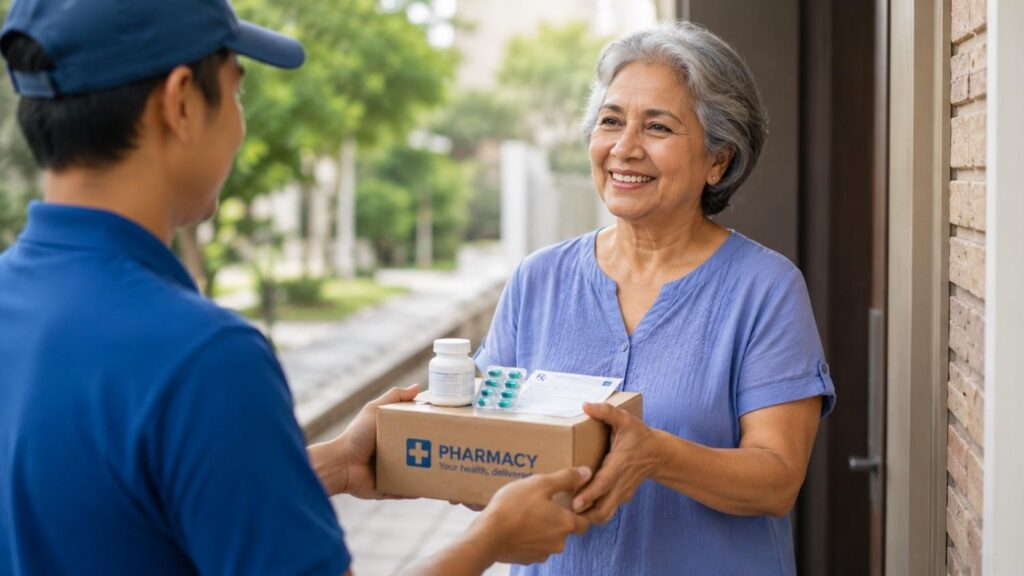
The Benefits of Home Delivery for Medications go beyond simply receiving a package at home. A well-managed home delivery pharmacy service may help reduce unnecessary travel, make routine prescription refill management more predictable, support caregivers, and provide convenient access to medicines that are appropriate for planned delivery.
Home delivery should still be treated as a healthcare service rather than ordinary online shopping. The World Health Organization describes access to safe, effective, quality-assured medicines as an important part of healthcare access, while recognizing that affordability and availability remain major challenges.
Safety is equally important. The FDA recommends using appropriately licensed pharmacy services that require valid prescriptions and provide access to a licensed pharmacist.
For that reason, patients should consider not only whether delivery is convenient, but also whether their medication is appropriate for shipping, whether their pharmacy is legitimate, how delays are handled, how the medicine must be stored, and how quickly pharmacist assistance is available when questions arise.
Why Can Home Delivery Make Medication Access Easier?
Medication access involves more than receiving a prescription from a healthcare professional. A patient must also be able to obtain the medication when needed, afford the required costs, receive an appropriate supply, and maintain access to safe and quality-assured medicines. WHO describes medicine access as a multidimensional healthcare issue involving factors such as availability, accessibility, and affordability.
Prescription home delivery can reduce some practical barriers because suitable medications can reach patients without requiring a separate trip to a physical pharmacy. This does not make community pharmacies unnecessary. Instead, delivery provides another dispensing option that may be particularly useful for routine medications and patients whose circumstances make frequent pharmacy visits difficult.
Fewer Pharmacy Trips and Transportation Barriers
One of the most practical medication home delivery benefits is reducing the number of trips required to collect recurring prescriptions. A patient taking a maintenance medication may need multiple refills throughout the year. Without delivery, each refill can involve arranging transportation, driving, using public transit, asking a family member for help, or coordinating collection with other responsibilities. These tasks may appear small individually, but they can become meaningful barriers when repeated regularly.
Transportation access has been associated with prescription-filling behavior. A retrospective observational study examining primary medication nonadherence found significant graded relationships between nonadherence, poverty, and vehicle access. In other words, communities experiencing greater economic and transportation limitations also showed greater problems with prescriptions not being filled within the study period.
Research on pharmacy accessibility likewise indicates that transportation mode matters when assessing whether a pharmacy is truly accessible. Areas that appear well served when measured by driving time can look considerably less accessible when walking or public transportation is considered instead.
Prescription delivery cannot remove every obstacle associated with medication access. Insurance restrictions, prescription costs, stock shortages, and delivery limitations may remain. However, for suitable medicines, eliminating one repeated journey can make routine prescription management considerably easier.
Greater Convenience for Patients and Caregivers
Medication management often involves more coordination than simply remembering to take a tablet. Patients may need to monitor remaining doses, obtain renewal authorization, manage different refill dates, check pharmacy messages, understand insurance requirements, and communicate with prescribers. When several long-term medications are involved, these individual tasks can overlap and become difficult to manage alongside everyday responsibilities.
Pharmacy home delivery can simplify one part of this process by reducing the need to schedule a separate collection trip whenever an eligible routine prescription is ready. A patient can instead focus on monitoring medication supplies, responding to refill notifications, and ensuring that prescriptions remain current. Medicare recognizes that mail-order programs can provide a convenient way for some beneficiaries to obtain drugs they take regularly.
For patients considering whether delivery fits their routine, understanding common medication delivery benefits can provide additional practical context alongside advice from their healthcare provider.
The same convenience may help caregivers. Someone caring for an older adult, a person with limited mobility, or another family member may already be coordinating appointments, transportation, meals, and daily support. Removing recurring pharmacy journeys can reduce part of that logistical burden.
Convenience should never reduce professional communication. Patients and caregivers still need pharmacist access for questions about directions, interactions, side effects, medication changes, or unexpected differences in the medicine received. A reliable delivery system should make medication access easier without separating the patient from appropriate pharmacy support.
Related Articles
How Can Home Delivery Support Medication Adherence?
Medication adherence generally describes how consistently a person follows the medication plan established with a healthcare professional. Adherence is influenced by many factors, including treatment complexity, cost, side effects, patient understanding, refill availability, healthcare access, and personal circumstances. For this reason, no single delivery method can guarantee that someone will take medication exactly as prescribed.
Prescription delivery may nevertheless support adherence by reducing refill-related friction. When routinely used medicine can be delivered and potentially supplied in larger quantities, patients may face fewer opportunities for transportation difficulties or missed pharmacy pickups to interrupt the refill cycle.
Easier Refill Continuity for Regular Medicines
Mail-order pharmacy research frequently reports higher adherence among patients obtaining regular medications through mail delivery compared with patients using retail channels. One review examining 15 studies found that 14 reported greater adherence among mail-order users. However, the researchers stressed that the groups were not always directly comparable. Mail-order patients often had higher previous adherence, received longer supplies, had different socioeconomic characteristics, or were offered financial incentives through their health plans.
Another large study involving patients with diabetes found that mail-order users were more likely than local-pharmacy users to meet the study’s measure of good adherence. The association remained after adjustment for factors including days supplied and out-of-pocket costs, although the observational design still means that causation should be interpreted carefully.
The practical value of prescription refill delivery is therefore best understood as reducing potential refill obstacles. Patients who do not have to make a separate trip every time medication runs low may find it easier to maintain an uninterrupted supply.
Delivery alone cannot address intentional nonadherence, side effects, affordability concerns, misunderstanding of treatment, or medication changes. Patients experiencing those problems need appropriate discussion with their prescriber or pharmacist rather than simply receiving more frequent deliveries.
Longer Supplies May Reduce Refill Frequency
Another potential advantage of mail-order prescriptions is the availability of extended medication supplies for some regularly used drugs. Instead of obtaining a new supply every month, eligible patients may sometimes receive enough medication for two or three months. Medicare states that some drug plans offer mail-order programs allowing up to a three-month supply of covered medications sent directly to the patient’s home.
Reducing the number of annual refill events may make prescription management easier. For example, a medication filled every 90 days generally requires fewer routine refill transactions than the same medicine filled every 30 days. Fewer refill points can mean fewer opportunities for transportation problems, forgotten collections, scheduling conflicts, or administrative delays to interrupt access.
However, a longer supply is not automatically appropriate. Newly started treatment may require adjustment, while some medications have specific dispensing restrictions, storage conditions, monitoring requirements, or insurance limitations. Patients should never change the amount they obtain or the way they use a medication simply because extended supplies are available.
The dispensing quantity should match the prescription, healthcare plan requirements, and professional recommendations. When a longer supply is appropriate, it can make routine management more predictable, but it should remain part of an individualized treatment plan rather than being treated as a universal advantage.
How Does Home Delivery Help With Long-Term Medication Management?
Long-term medication management requires consistency because treatment for chronic conditions may continue for months, years, or longer. During that time, patients often have to coordinate prescription renewals, routine refills, clinical reviews, insurance requirements, medication changes, and storage. Even when the treatment itself remains stable, the administrative work surrounding it continues.
Home delivery can be particularly useful when medications are stable, repeatedly prescribed, and suitable for shipment. The greatest benefit is often predictability: patients can establish a clearer routine for managing supplies without arranging frequent pharmacy collection trips.
More Predictable Prescription Management
A reliable medication delivery service can make recurring prescription management easier to organize because refills follow a more structured process. Instead of waiting until medication is almost finished and then arranging transportation to a pharmacy, patients can monitor upcoming refill dates and coordinate delivery in advance. Many pharmacy systems also provide order, refill, or shipment notifications that allow patients to see when a prescription is being processed.
This predictability can be especially valuable when several routine prescriptions are involved. Patients can maintain a medication list, record expected refill dates, and review remaining supplies before future deliveries. FDA guidance encourages patients to maintain an up-to-date medication list containing prescription medicines as well as relevant nonprescription products and supplements, helping patients and healthcare professionals keep track of treatment information.
Delivery technology should not replace personal oversight. A refill notification does not confirm that a medicine remains clinically appropriate, and automatic systems may not know immediately when a prescriber changes or discontinues treatment.
Patients should therefore continue reviewing medication supplies and communicating changes to their pharmacy. Home delivery works best when automation supports active prescription management rather than encouraging patients to stop paying attention to what they are receiving.
Helpful for Caregiver Coordination
Caregivers frequently coordinate several aspects of another person’s healthcare at once. Their responsibilities may include arranging appointments, organizing transportation, maintaining medication schedules, communicating with clinicians, monitoring supplies, and collecting prescriptions. When these responsibilities are ongoing, even relatively simple recurring tasks can add considerable pressure to the caregiver’s schedule.
For eligible long-term medications, pharmacy home delivery can remove some repeated collection trips. This may be particularly helpful when the person receiving care has difficulty leaving home, no longer drives, requires assistance when traveling, or lives at a distance from the caregiver. Delivery provides a way to bring suitable routine prescriptions directly to the location where they are needed.
Caregiver involvement should still include careful medication oversight. The caregiver should understand which medications are expected, approximately when refills should arrive, how the products must be stored, and where to contact the dispensing pharmacist if something appears incorrect.
Maintaining an accurate medication list is also valuable when multiple healthcare professionals are involved. FDA medication-safety guidance encourages keeping current information about prescription and nonprescription medicines to support safer communication with healthcare providers.
Home delivery can therefore make caregiver coordination easier, but its greatest value comes when convenience is combined with organized records, professional communication, and careful review of every prescription received.
| Patient Situation | How Home Delivery May Help | Practical Benefit | Important Consideration |
|---|---|---|---|
| Long-term medication use | Supports scheduled prescription refills | Fewer repeated pharmacy trips | Treatment and prescriptions may change over time |
| Limited transportation | Reduces dependence on travel to a pharmacy | Easier medication access | Delivery availability varies by location |
| Mobility limitations | Allows suitable prescriptions to arrive at home | Less physical travel required | Some medications may need special handling |
| Caregiver-managed medications | Simplifies recurring prescription coordination | Reduces routine pickup responsibilities | Caregivers should verify each delivery |
| Multiple regular prescriptions | Can make refill routines more predictable | Easier prescription management | Refill dates may still differ between medications |
| Busy work or family schedules | Reduces the need to schedule pharmacy visits | Greater convenience | Shipping time should be considered before supplies run out |
Can Medication Home Delivery Save Time or Money?
Home delivery can save time for some patients, but financial savings depend heavily on individual circumstances. Advertisements may present lower costs as a standard mail-order pharmacy benefit, yet prescription prices are influenced by insurance coverage, pharmacy networks, deductibles, copayments, dispensing quantities, medication choice, and plan-specific rules.
Medicare describes mail-order programs as potentially cost-effective and convenient for medications taken regularly, rather than stating that mail order is always less expensive. Patients should therefore compare both direct prescription costs and indirect expenses before deciding whether delivery offers better overall value.
Patients comparing different pharmacy services may also find it helpful to review how home delivery options can vary depending on prescription type, convenience, and individual healthcare needs.
Reduced Travel and Time Costs
Even when the amount charged for a prescription remains exactly the same, medication home delivery may reduce indirect costs connected with obtaining it. A pharmacy visit can require fuel, public transportation fares, parking expenses, time away from work, or assistance from another person. For someone who needs several routine prescription collections during the year, these indirect costs can accumulate.
Time can be equally important. Traveling to a pharmacy, waiting for the prescription, and returning home may take a few minutes for one patient and a significant portion of the day for another. Pharmacy accessibility research demonstrates that true access varies substantially according to transportation options, and communities without reliable private vehicles can face larger access challenges than simple driving-distance measurements suggest.
Home delivery can remove much of this travel burden when the medication is eligible and the shipment arrives as planned.
The value differs considerably between individuals. Someone who regularly passes a nearby pharmacy may save very little time, while a person who depends on public transportation or caregiver assistance may benefit much more.
For this reason, patients evaluating medication delivery should consider total convenience rather than prescription price alone. Travel distance, work schedules, transportation availability, mobility, delivery reliability, and the frequency of required refills all affect whether home delivery provides a meaningful time-saving advantage.
Prescription Costs Still Depend on Coverage
Patients should not assume that mail-order prescriptions are automatically cheaper. The final amount paid can vary according to the medication, insurance plan, preferred pharmacy network, deductible status, copayment structure, coinsurance, dispensing quantity, and whether the pharmacy is considered in-network.
Medicare specifically advises beneficiaries to contact their individual plans regarding mail-order services and extended supplies. Some plans may offer a two- or three-month supply of regularly used drugs, and such arrangements may be cost-effective, but the details vary by plan.
This distinction matters because two patients taking the same medication could face different costs depending on their coverage. A larger mail-order supply might reduce one person’s per-fill cost while providing little or no financial advantage to someone enrolled in a different plan.
Patients comparing options should check the total out-of-pocket amount for the same medication and quantity through available pharmacy channels. They should also verify whether delivery charges apply and whether the pharmacy participates in their insurance network.
Price should not be the only consideration. Delivery reliability, pharmacist availability, medication suitability, shipping conditions, and convenience also affect overall value. The best pharmacy option is therefore the one that safely meets the patient’s medication needs while fitting their coverage and practical circumstances.
What Safety Issues Should Patients Consider?
Medication delivery can be convenient, but the same safety standards that apply to prescriptions obtained from a physical pharmacy should continue to apply when medication is ordered or delivered remotely. Patients should know which pharmacy is dispensing the medicine, confirm that a valid prescription is required, and have a reliable way to speak with a pharmacist.
The FDA warns that unsafe online pharmacies may sell counterfeit, expired, unapproved, improperly stored, or otherwise unsafe products. It advises consumers to check pharmacy licensing and avoid services that sell prescription medications without requiring appropriate prescriptions.
Use Properly Licensed Pharmacy Services
The most important safety step is making sure prescription medication comes from a legitimate and appropriately licensed pharmacy. A professional website or low advertised price is not enough to establish legitimacy. The FDA notes that unsafe online pharmacies can create convincing storefronts while providing medications that may be fake, expired, or otherwise unsafe.
According to FDA guidance, important signs of a safer online pharmacy include requiring a prescription from an appropriately licensed healthcare professional, providing identifiable contact information, having a licensed pharmacist available for questions, and holding appropriate state pharmacy licensing in the United States.
Patients can also verify online pharmacy licensing through the relevant state board of pharmacy. FDA specifically recommends checking the pharmacy’s status and advises against using an online pharmacy that cannot be verified appropriately.
Professional pharmacist access remains important after delivery begins. Patients may need clarification about directions, interactions, storage, side effects, missed doses, or unexpected differences in packaging or appearance.
Home delivery should therefore change the method of receiving a prescription, not the professional safeguards surrounding it. If a delivery service cannot clearly identify the dispensing pharmacy or provide appropriate pharmacist support, convenience should not outweigh the safety concern.
Storage and Shipping Conditions Matter
Medication quality can depend on appropriate storage and handling. Some products remain stable under ordinary room-temperature conditions, while others require refrigeration, protection from moisture, protection from light, or other specific handling. FDA prescription-labeling guidance recognizes that medications may have special storage and handling conditions, including instructions to refrigerate a product or protect it from light.
Shipping therefore matters. Medicines can travel through warehouses, vehicles, sorting facilities, and outdoor environments before reaching the patient. The FDA warns that medications from unsafe sources may have been stored without necessary temperature controls, potentially affecting their quality or effectiveness.
Patients should read the storage instructions supplied with their prescription and move delivered medication to the appropriate storage environment after receiving it. FDA guidance also recommends reading medication information carefully for specific storage instructions.
Packages deserve inspection before use. Damaged seals, broken containers, unusual labeling, unexpected medication appearance, or concerns about excessive heat or cold should not simply be ignored.
If there is uncertainty about how a shipment was handled, patients should contact the dispensing pharmacist and provide details about what happened. The pharmacist or manufacturer can evaluate medication-specific factors more reliably than general advice because stability requirements differ from one drug to another.
Delivery Is Not Ideal for Every Situation
Prescription home delivery is most useful when the medication need is predictable. It may be less appropriate when treatment must begin immediately because shipping introduces a period between dispensing and receipt. Even reliable delivery systems can occasionally experience interruptions caused by inventory problems, weather, transportation disruptions, address issues, weekends, or other logistical factors.
Medication characteristics also matter. Some medicines require refrigeration, careful temperature management, special packaging, frequent clinical monitoring, or dispensing under specific legal or professional requirements. FDA prescription-labeling guidance recognizes that individual medicines may carry particular storage and handling instructions.
Patients whose treatment is changing frequently may also prefer shorter dispensing intervals until the medication and dose are stable. Obtaining a large supply immediately before a clinician changes treatment can create unnecessary unused medication and additional disposal concerns.
Urgent medications deserve special consideration. If waiting for shipping could create a clinically important interruption, patients should contact their pharmacist, prescriber, or health plan to discuss an appropriate alternative rather than assuming delivery will arrive in time.
The useful question is therefore not whether home delivery is universally better than a local pharmacy. The question is whether the dispensing method fits the specific medicine, expected timing, storage conditions, prescription requirements, healthcare coverage, and individual patient’s needs.
| Factor | Home Medication Delivery | Local Pharmacy Pickup |
|---|---|---|
| Convenience | Suitable prescriptions can arrive at the patient’s home | Requires a pharmacy visit |
| Transportation | Can reduce transportation barriers | Usually requires travel or transportation |
| Routine Refills | May simplify recurring prescription management | Requires pickup as refills become available |
| Pharmacist Access | Often available by phone or through the pharmacy service | Direct in-person pharmacist access may be available |
| Urgent Medication Needs | Shipping time may make delivery less suitable | Often better suited to prescriptions needed quickly |
| Storage and Handling | Shipping and temperature conditions may need consideration | Medication remains within the pharmacy distribution process until pickup |
| Delivery Risk | Delays, weather, address issues, or damaged packages may occur | Shipping-related delays are generally avoided |
| Best Fit | Stable, regularly prescribed medications suitable for delivery | Urgent prescriptions, changing treatments, or situations requiring direct pharmacy support |
How Can Patients Use Medication Home Delivery Safely?
Safe medication delivery requires more than placing an order and waiting for a package. Patients should understand who is dispensing the medication, how to contact a pharmacist, when the refill is expected, what storage conditions apply, and what action to take if the shipment is delayed, damaged, or different from what was expected.
The goal is to combine the convenience of prescription delivery with the same careful medication management used in other pharmacy settings. Planning ahead, maintaining accurate information, and contacting qualified professionals when concerns arise can prevent small logistical problems from becoming medication interruptions.
Confirm the Pharmacy and Professional Support
Before relying on any home delivery pharmacy, identify the actual dispensing pharmacy and verify that it operates legitimately. Patients should not assume a service is safe simply because its website appears professional or because it advertises familiar medicines.
The FDA recommends avoiding online pharmacies that sell prescription medicines without requiring a valid prescription or that do not provide appropriate licensing and pharmacist access. Safer services should have a licensed pharmacist available to answer medication-related questions.
Patients in the United States can also check state pharmacy licensing. FDA’s BeSafeRx resources advise consumers to confirm an online pharmacy through the appropriate state board of pharmacy and not use a pharmacy that cannot be found in the relevant licensing database.
Professional support remains important even when a prescription has been taken for years. New medicines, dosage changes, medical conditions, side effects, or interactions can change what information a patient needs.
Before making home delivery the primary refill method, patients should therefore know how to contact the pharmacist, how prescription changes are processed, and how urgent concerns are handled. Reliable access to professional support is part of safe prescription management rather than an optional addition to delivery convenience.
Plan Routine Refills Before Supplies Run Out
Shipping creates a time gap between prescription processing and medication arrival, so patients should avoid waiting until the final dose before dealing with a routine refill. The exact amount of advance planning required varies by pharmacy, insurance plan, medication, location, and delivery service, which means there is no universal refill deadline that fits every patient.
Instead, patients should follow the refill instructions supplied by their pharmacy and health plan. Medicare advises beneficiaries to contact their plans about whether longer supplies or mail-order options are available for medications they take regularly.
Patients should also monitor the medication they actually have on hand rather than relying completely on an automated reminder. Address changes, payment issues, prescription expiration, prior authorization requirements, stock shortages, weather, or transportation problems can affect an expected shipment.
If a delay occurs and the remaining supply may not last until delivery, the safest approach is to contact the dispensing pharmacy or appropriate healthcare professional as early as possible. They can explain available options based on the particular medication and healthcare plan.
Planning refill delivery while there is still medication available creates a practical buffer and reduces the chance that an ordinary logistical problem will result in an avoidable interruption.
Check Each Delivery Carefully
Patients should inspect every medication shipment before storing or using it, even when they have received the same prescription through the same pharmacy many times. Begin with the outer package and check for obvious signs of damage, tampering, leakage, crushing, or unusual exposure. Then review the prescription label and confirm that the medication name, patient information, strength, dosage form, and other expected details appear correct.
Unexpected differences should be taken seriously. The FDA lists damaged packaging and medication that looks different from a patient’s usual medicine among warning signs associated with unsafe online pharmacy purchases.
A difference in appearance does not automatically mean the medicine is wrong because manufacturers and generic products can vary. However, patients should not guess. The dispensing pharmacist can verify whether a different appearance is expected.
Temperature-sensitive deliveries require additional attention. If medication that should remain refrigerated arrives warm, if packaging intended to control temperature appears compromised, or if the shipment has been exposed to unusual conditions, contact the pharmacy before using the product.
After inspection, store the medication according to its instructions. FDA guidance recommends checking medication information for specific storage directions because storage requirements can differ between products.
Quick Answer About The Benefits of Home Delivery for Medications
The Benefits of Home Delivery for Medications primarily involve convenience, easier access, fewer pharmacy trips, and simpler management of prescriptions taken on a regular schedule. For patients using stable maintenance medications, prescription delivery can remove the need to travel to a pharmacy every time a refill becomes available. This may be especially useful for people facing mobility limitations, transportation difficulties, demanding work schedules, caregiving responsibilities, or significant travel time to the nearest pharmacy.
Home delivery can also support refill continuity. Research comparing mail-order and retail pharmacy users has repeatedly found higher medication adherence among many mail-order users. A review covering 15 studies reported that 14 showed higher adherence through the mail-order channel. However, the researchers emphasized that mail-order patients often differed from retail users in important ways, including previous adherence, days supplied, socioeconomic characteristics, and financial incentives. Therefore, home delivery should be viewed as one potential support for adherence rather than a guarantee that medication will always be taken correctly.
Some health plans may also allow longer supplies of medications used regularly. Medicare states that certain plans offer mail-order programs through which covered drugs may be supplied for up to three months, reducing the number of refill events required during the year.
Home delivery is not suitable for every medication or every situation. Shipping time, temperature requirements, prescription coverage, treatment changes, urgent medication needs, and pharmacist access must still be considered. The best approach is to use prescription delivery through a legitimate pharmacy while maintaining communication with qualified healthcare professionals.
Frequently Asked Questions About The Benefits of Home Delivery for Medications
The Benefits of Home Delivery for Medications can be significant for patients who regularly manage stable prescriptions, but no single dispensing method is right for everyone. Suitability depends on the medication, required timing, pharmacy service, insurance plan, storage requirements, healthcare system, and individual circumstances.
The following answers address common questions patients and caregivers may have when comparing prescription home delivery with traditional pharmacy collection.
What are the main benefits of medication home delivery?
The main benefits include fewer trips to a pharmacy, easier access for people facing transportation or mobility barriers, simpler management of routine prescription refills, and greater convenience for patients or caregivers who regularly coordinate long-term medications.
Home delivery may also support refill continuity because routine medicines can be shipped without requiring the patient to organize a collection trip each time. Research has frequently reported higher adherence among mail-order users, although studies also identify differences between mail-order and retail populations that make simple cause-and-effect conclusions inappropriate.
Some health plans offer longer supplies through mail-order programs as well. Medicare states that certain plans may provide up to a three-month supply of covered drugs through home delivery.
The benefit depends on the patient’s circumstances. Someone living close to a trusted pharmacy may prefer in-person collection, while a patient facing difficult transportation or managing several recurring prescriptions may find delivery much more useful.
Home delivery should therefore be considered another medication-access option rather than a universal replacement for community pharmacies.
Is medication home delivery safe?
Medication home delivery can be safe when the prescription is dispensed by a legitimate, appropriately licensed pharmacy and the patient continues to have access to qualified pharmacy support. The method used to deliver a medicine does not remove the need for a valid prescription, correct dispensing, proper labeling, safe storage, and pharmacist oversight.
The FDA advises consumers to avoid online pharmacies that do not require prescriptions, cannot demonstrate appropriate licensing, or do not provide access to a licensed pharmacist. It also provides resources for verifying state-licensed pharmacies.
Patients should inspect medication when it arrives and confirm that the package and prescription information match expectations. Damaged packaging, unexplained differences in medication appearance, or concerns about storage conditions should be discussed with the dispensing pharmacist before the medication is used.
Safety also depends on choosing delivery appropriately. Medicines that require urgent treatment, specialized handling, refrigeration, or close clinical monitoring may need additional arrangements.
Therefore, home delivery itself is neither automatically safe nor unsafe. Safety depends on pharmacy legitimacy, medication suitability, appropriate handling, patient awareness, and continued professional oversight.
Does home delivery improve medication adherence?
Research has found an association between mail-order pharmacy use and higher medication adherence in several patient populations. A review of 15 studies reported higher adherence through mail-order dispensing in 14 of them.
A study involving nearly 14,000 patients with diabetes also found that mail-order users were more likely than local-pharmacy users to demonstrate good adherence across several types of chronic-disease medications, even after researchers adjusted for certain potential confounding factors.
These findings do not mean delivery alone causes better adherence. People who choose mail order may already differ in their medication habits, socioeconomic circumstances, insurance incentives, or ability to obtain longer supplies. Researchers specifically identify such differences when interpreting the evidence.
The most reasonable explanation is that delivery may remove some refill barriers. Fewer collection trips and potentially longer supplies can make it easier to maintain medication availability.
However, adherence is also affected by side effects, treatment complexity, cost, beliefs about medicine, and communication with healthcare professionals. Home delivery cannot solve all of these factors and should be considered one supportive tool rather than a complete adherence strategy.
Is a mail-order pharmacy always cheaper?
No. Mail-order pharmacy services are not automatically cheaper than community pharmacy prescriptions. The amount a patient pays depends on factors including the medicine, prescription quantity, insurance coverage, deductibles, copayments, coinsurance, preferred pharmacy networks, and individual plan rules.
Medicare describes mail-order programs as potentially cost-effective and convenient for medications used regularly, but advises patients to contact their plans for specific information.
A longer supply can sometimes change the economics of a refill because one dispensing event may cover several months. However, the financial effect varies from one insurance arrangement to another.
Patients should compare the same medication and supply length across the pharmacy options permitted by their plan. They should also check whether delivery charges, network restrictions, or different copay structures apply.
Indirect savings may still exist even when medication prices are identical. A patient who avoids fuel expenses, parking, public transportation, or time away from work may find home delivery more economical overall.
The best comparison therefore includes both the prescription’s direct out-of-pocket cost and the practical costs associated with obtaining it.
Is home delivery suitable for every prescription?
No. Home delivery is better suited to some prescriptions than others. Stable maintenance medications used regularly are often natural candidates because the need is predictable and refills can generally be planned before the current supply is exhausted.
Other medicines may be less suitable for routine shipping. A medication needed immediately could require local dispensing because even normal shipping introduces a delay. Certain drugs may also have special handling, storage, monitoring, or dispensing requirements.
FDA labeling guidance recognizes that prescription products can carry specific storage and handling instructions, including refrigeration or protection from environmental conditions such as light.
Treatment stability should also be considered. When a medication or dosage has recently changed, obtaining a large supply may not always be appropriate until the treatment plan becomes more established.
Patients should therefore check with their pharmacist or healthcare professional rather than assuming every prescription can or should be delivered.
The most appropriate dispensing method depends on the medicine, urgency, storage conditions, legal requirements, healthcare coverage, patient circumstances, and availability of professional support. Home delivery is valuable precisely when it is used selectively for situations in which its convenience does not compromise timely and safe medication access.
What if a medication package arrives damaged?
A damaged medication package should not simply be accepted as safe. Patients should keep the medication and packaging, avoid using the product if its integrity or storage conditions are uncertain, and contact the dispensing pharmacy for guidance.
The FDA warns consumers to be cautious when medicines arrive in broken or damaged packaging and notes that unsafe medicines may also have been stored under inappropriate conditions.
The type of damage matters. A crushed outer shipping box may not necessarily affect a sealed medication container inside, while broken seals, leaking containers, damaged blister packs, or compromised temperature-control packaging may create more significant concerns. Only medication-specific professional guidance can determine whether a particular shipment remains suitable.
Take photographs if useful and retain the delivery materials until the pharmacy explains what to do. The pharmacist may need information about the condition of the package, delivery timing, medication type, and possible temperature exposure.
Patients should not attempt to determine pharmaceutical stability solely from appearance or general online information.
When there is uncertainty, contacting the dispensing pharmacist is the safest and most efficient next step because the pharmacy can assess the particular product and arrange replacement when appropriate.
Conclusion
The Benefits of Home Delivery for Medications are primarily connected with convenience, medication access, refill continuity, and easier organization of medicines used regularly. For suitable prescriptions, delivery can reduce repeated pharmacy journeys and remove part of the logistical burden associated with maintaining an ongoing medication supply.
These advantages can be particularly meaningful for patients who have limited transportation, mobility difficulties, demanding schedules, significant travel distance to a pharmacy, or caregivers coordinating several healthcare responsibilities. Research has also repeatedly identified higher medication adherence among many mail-order pharmacy users, although evidence does not prove that delivery alone causes the improvement. Longer prescription supplies, previous adherence patterns, socioeconomic differences, and insurance incentives can also influence the results.
Longer supplies may provide another practical benefit. Some Medicare plans, for example, allow up to a three-month supply of covered medications through mail-order pharmacy programs.
However, home delivery has limitations. Shipping delays can occur, prescription coverage varies, treatment plans can change, and certain medications require specialized storage or timely dispensing. Safety also depends heavily on using legitimate pharmacy services.
The FDA advises patients to use appropriately licensed pharmacies that require valid prescriptions and provide access to licensed pharmacists.
The strongest approach is therefore to treat prescription delivery as part of healthcare rather than ordinary e-commerce. Patients should choose legitimate pharmacy services, plan routine refills before medication runs out, follow storage instructions, inspect each shipment, and contact a qualified pharmacist whenever something appears incorrect.
When those safeguards are followed and the medication is appropriate for delivery, home delivery can provide a practical and convenient way to make ongoing prescription management easier.