
Full Article
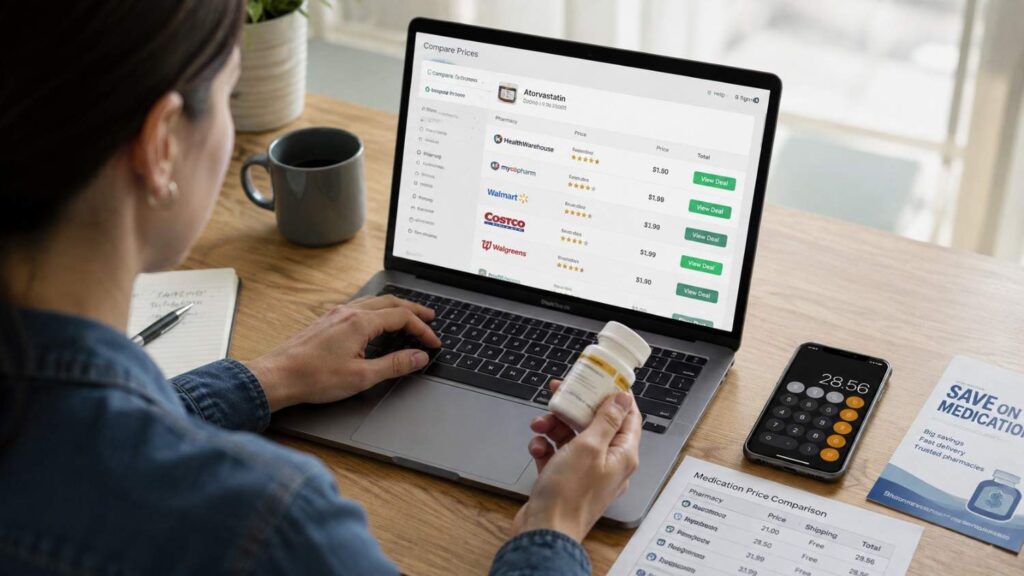
Prescription-price comparison works best when it is approached as a structured financial and medication-safety decision. People often search one drug name, see several prices, and assume the lowest result represents the obvious choice. In reality, differences in quantity, dosage form, pharmacy network, insurance rules, coupons, and generic availability can make apparently simple comparisons misleading.
This article uses the United States as its reference market. Consumers in other countries should use their local medicine regulator, pharmacy regulator, insurance system, and approved pharmacy-verification resources.
The two goals should remain separate but equally important: reduce legitimate out-of-pocket costs and protect medication safety. FDA continues to warn that unsafe online pharmacies may sell counterfeit, expired, unapproved, improperly stored, or incorrectly formulated medicines. Some unsafe sellers also operate without requiring a valid prescription.
Cost should therefore never be evaluated without verification.
The comparison process becomes easier when you start with your insurance benefit, check alternative legitimate payment methods, confirm whether an appropriate generic exists, and investigate the pharmacy itself before supplying medical or financial information.
For Medicare beneficiaries, official Medicare tools and pharmacy-network information should be part of that process. For commercially insured consumers, the insurer’s official portal or pharmacy-benefit service is usually the best starting point for understanding plan-specific prices.
How to Compare Prices on Prescription Drugs Online: A Safe Step-by-Step Guide
Learning how to compare prices on prescription drugs online can help you make more informed decisions about where and how to fill a medication. The goal is not simply to find an unusually low advertised number. It is to compare the same prescription through legitimate pharmacies and payment methods while understanding how each option affects your insurance benefits and ongoing access.
Prices can differ because of pharmacy contracts, insurance networks, deductibles, copayments, coinsurance, formulary placement, discounts, quantity, and generic availability. Medicare explicitly notes that prescription costs can depend on the medications a person takes and the pharmacy used. Its Part D guidance also distinguishes standard network pharmacies, preferred pharmacies, mail-order options, and out-of-network pharmacies.
Commercial discount programs introduce another possible price. GoodRx, for example, allows consumers to compare prices at participating pharmacies, but it clearly states that its coupons are not health insurance.
Safety must remain part of every comparison. FDA warns that unsafe websites may sell medicines containing too much, too little, none of the correct active ingredient, or harmful substances. Legitimate online pharmacies should meet clear licensing and prescription requirements.
One thing I always check first is whether the quote represents the exact prescription. Once that is confirmed, compare insurance, cash, discount, and assistance options systematically rather than chasing an isolated headline price.
Related Articles
Why Prescription Drug Prices Vary Online
Prescription prices vary because the amount a consumer pays is not determined by one universal national retail price. The final cost can reflect the pharmacy, insurance arrangement, drug formulary, deductible status, copayment or coinsurance, quantity dispensed, network classification, and whether the transaction is processed through insurance or an independent discount program.
For Medicare drug coverage, CMS explains that covered-drug costs can involve deductibles, copayments, and coinsurance, while Medicare separately notes that the pharmacy selected can affect out-of-pocket cost. Preferred in-network pharmacies may charge lower cost sharing than other network locations.
Commercial discount pricing creates another layer. A coupon price may be lower than a pharmacy’s usual cash price or an insurance copay in a particular case, but the discount is generally processed separately rather than combined with insurance. GoodRx explicitly identifies its discounts as non-insurance pricing.
Drug characteristics also matter. Brand-name products and FDA-approved generics can have different prices, and competition among multiple generic manufacturers can contribute to lower pricing. FDA explains that generic manufacturers do not repeat the full clinical-development program required for the original brand product and that competition is an important reason generics generally cost less.
The practical takeaway is that prescription-price comparison requires more context than ordinary retail shopping. You are comparing both a medical product and the payment system used to obtain it.
Compare Insurance, Cash, and Discount Prices Separately
Start with three distinct numbers whenever possible: your insurance price, the pharmacy’s cash price, and a reputable discount price. Keeping these categories separate prevents a common mistake—assuming that a coupon is being added on top of insurance.
Commercial prescription discounts usually work as an alternative payment route. GoodRx states that its discounts and coupons are not insurance and are used instead of, not in conjunction with, an insurance claim. The same restriction applies to Medicare and Medicaid transactions using GoodRx.
A service such as prescription price comparison can help you check discounted prices at participating pharmacies alongside your insurance and cash options.
That means the lowest immediate price does not automatically have the same long-term insurance effect. GoodRx’s current terms state that coupon-based cash payments may not count toward private prescription-drug out-of-pocket costs; it advises consumers to confirm this with their coverage provider. For Medicare Part D, its terms state that such cash payments do not count toward Part D cost-sharing obligations.
For this reason, ask the pharmacist what the prescription costs through insurance and what the non-insurance price would be before choosing.If your insurer’s website provides real-time drug pricing, start there. Then compare equivalent pharmacy cash or discount quotes.The best decision may differ from prescription to prescription. Avoid assuming that either insurance or a discount program will always be cheapest.
Prescription Price Options Compared
| Price Option | What It Includes | Best Use | Key Consideration |
|---|---|---|---|
| Insurance Price | Copay or coinsurance based on your prescription plan | When the medication is covered by your insurance | Check deductible, formulary status, and pharmacy network |
| Cash Price | Pharmacy’s direct price without using insurance | When comparing the pharmacy’s standard out-of-pocket cost | Ask the pharmacy for the current price for the exact prescription |
| Discount Price | Reduced price offered through a prescription-discount service | When looking for an alternative to the insurance or cash price | Discount services are not insurance and prices can vary by pharmacy |
| Preferred Pharmacy Price | Insurance price at a preferred in-network pharmacy | For plans that provide lower cost sharing at preferred pharmacies | Confirm that the pharmacy is preferred under your specific plan |
| Mail-Order Price | Insurance or plan-based price through an eligible mail-order pharmacy | Regular medications and eligible longer supplies | Check whether a 90-day supply is permitted and compare the total cost |
Check Whether an FDA-Approved Generic Is Available
Generic availability should be part of the comparison because FDA-approved generic medicines are not merely lower-priced look-alikes. FDA requires a generic to contain the same active ingredient as its reference brand product and meet requirements involving strength, dosage form, route of administration, quality, stability, and bioequivalence. FDA states that approved generics provide the same clinical benefit and risks as their brand-name counterparts.
Generics usually cost less because manufacturers rely on FDA’s previous finding that the brand product is safe and effective rather than repeating the entire original clinical-development program. Competition among manufacturers can further reduce prices.
However, not every prescription medicine has a conventional generic. FDA advises consumers that its Orange Book can be used to determine whether generic versions of a drug are approved. FDA also maintains a separate list of authorized generics, which are brand products marketed without the brand name on the label.
For biologic medicines, the comparable concept may be an FDA-approved biosimilar rather than a traditional generic. FDA says approved biosimilars have no clinically meaningful differences in safety and effectiveness from their reference biologics.
Ask the prescriber or pharmacist whether a generic, authorized generic, or biosimilar is appropriate rather than changing treatment based solely on an online price.
Compare Pharmacy Network and Supply Options
A pharmacy can have an attractive public price yet still be a poor option under your insurance plan. Before transferring a prescription, check whether the pharmacy is in-network and whether your plan distinguishes between ordinary and preferred network pharmacies.
Medicare Part D provides a clear example. Medicare states that in-network pharmacies contract with plans, while preferred in-network pharmacies may offer lower copayments or coinsurance because they have agreed to charge plan members less than other pharmacies in the network. Out-of-network pharmacies usually cost more, and a member may initially have to pay the full cost.
Supply quantity can also influence convenience and total cost. Medicare notes that some pharmacies or plan mail-order programs may provide a two- or three-month supply of covered medications. Its mail-order guidance says some plans permit up to a three-month supply of eligible covered drugs delivered to the home.
Do not assume that a 90-day supply is automatically permitted or appropriate. Prescription quantity, insurance rules, medication stability, controlled-substance requirements, and clinical considerations can affect availability.
Compare both the total price and the practical refill schedule. A slightly lower price at a pharmacy that repeatedly lacks stock, cannot process your insurance properly, or offers poor pharmacist access may create more problems than it solves.
For maintenance medicines, ask your plan whether preferred retail or approved mail-order options offer better value.
How to Compare Prices on Prescription Drugs Online Step by Step
An accurate comparison begins with consistency. Every price should refer to the same drug, strength, dosage form, release type, and quantity. If those elements change during the search, the resulting numbers may look useful while actually representing different prescriptions.
I recommend comparing in a fixed sequence. First, record the exact prescription details. Second, check the insurer’s official pricing tool and identify preferred or in-network pharmacies. Third, obtain direct cash prices from legitimate pharmacies when useful. Fourth, compare reputable discount prices separately. Fifth, ask whether a lower-cost FDA-approved generic or other clinically appropriate alternative exists. Finally, verify the pharmacy before ordering online.
For Medicare beneficiaries, Medicare Plan Compare is particularly valuable because the official tool allows people to save or enter drugs and pharmacies while comparing plan costs. Medicare also provides separate guidance on preferred pharmacies, mail-order programs, Extra Help, and other drug-cost assistance.
Safety verification belongs inside the price-comparison process, not after it. FDA’s current BeSafeRx guidance says a legitimate U.S. online pharmacy should require a prescription, provide a physical U.S. address and phone number, employ a licensed pharmacist who can answer questions, and hold state-board licensure.
NABP’s Safe Pharmacy resource provides another verification layer through its Safe Site Search Tool.
Use the following table to organize your search.
| Comparison Source | What to Check | Main Advantage | Important Caution |
|---|---|---|---|
| Insurance portal | Copay, coinsurance, formulary and pharmacy network | Shows plan-specific pricing | Benefit rules affect the result |
| Pharmacy | Current cash price for exact prescription | Direct quote | Confirm drug, strength and quantity |
| Discount-price tool | Coupon price at participating pharmacies | Makes cross-pharmacy checking easier | Discount is not the same as insurance |
| Medicare Plan Compare | Drugs, pharmacies and plan-cost estimates | Official Medicare comparison tool | Estimates depend on entered information |
| Assistance program | Eligibility and covered medication | May lower qualifying patients’ costs | Requirements vary by program |
Step 1 — Match the Exact Prescription at Every Pharmacy
Start by reading the prescription label or prescription information carefully. Record the medication name, whether you are comparing a brand or generic, strength, dosage form, release type, and quantity.
These details are clinically important, not simply pricing filters. FDA’s generic approval requirements demonstrate why strength, dosage form, route of administration, and release technology are treated as meaningful distinctions. An immediate-release formulation should not be casually compared with an extended-release version as though they were the same product.
Create a small spreadsheet or note with the exact prescription across the top. For each legitimate pharmacy, record the insurance price, cash price, available discount price, quantity, and date checked.
When using an online comparison service, verify that its search settings match the prescription before treating the result as comparable. GoodRx, for example, lets users search a medication and compare participating pharmacies, but the selected prescription details determine the displayed quote.
Do not alter the dose or quantity to force a cheaper search result. If a different strength, formulation, or package appears significantly less expensive, ask the pharmacist or prescriber whether there is an appropriate clinically equivalent way to adjust the prescription.
The goal of Step 1 is simple: make every number answer exactly the same question.
Step 2 — Check Your Insurance or Medicare Options
Once the prescription details are fixed, check the official tools connected to your coverage. Private insurers and pharmacy-benefit plans commonly provide drug-pricing or pharmacy-search functions. Use those tools to determine whether the drug is covered, how it is categorized, and which pharmacies have preferred status.
For Medicare, the official Plan Compare service lets beneficiaries compare available health and drug plans and use saved medications and pharmacies when reviewing plan costs.
Pharmacy status matters. Medicare explains that preferred in-network pharmacies may provide lower out-of-pocket costs than other network pharmacies, while out-of-network use usually costs more. Mail-order programs may also be available for some regular medications.
Do not stop at the single refill price if you are choosing or reviewing a drug plan. Consider the expected annual cost of all regular medications, premiums, deductibles, and pharmacy arrangements.
People with limited income and resources should also review assistance. Medicare’s Extra Help program can help qualifying beneficiaries with Part D premiums, deductibles, coinsurance, and other drug costs. Eligibility and benefit details should be checked on the current official Medicare page.
If a discount price looks cheaper than insurance, ask how paying outside the plan affects your deductible or other accumulated benefits before choosing.
Step 3 — Verify the Pharmacy Before You Pay
A prescription seller should pass a safety check before you enter payment information or send a prescription. FDA warns that unsafe online pharmacies may offer prescription medicines without a valid prescription, operate without U.S. or state licensure, lack pharmacist access, or advertise discounts that appear too good to be true.
FDA says a safer online pharmacy should always require a doctor’s prescription, provide a physical U.S. address and telephone number, have a licensed pharmacist available to answer questions, and be licensed with a state board of pharmacy. FDA’s BeSafeRx resources also direct consumers to state pharmacy licensing information.
For an additional layer of online pharmacy verification, consumers can review pharmacy and medication-source information before making a purchase.
NABP provides another practical check. Its Safe Pharmacy service allows users to enter a website address in the Safe Site Search Tool and see whether it is verified, not recommended, or not yet reviewed. NABP also advises consumers to verify state licensure.
Never interpret an attractive website design, search advertisement, social-media account, or “Canadian pharmacy” claim as proof of legitimacy.
FDA warns that unsafe products may contain too much, too little, none of the intended active ingredient, the wrong ingredients, or harmful substances. Improper storage can also affect medication quality.If verification fails, do not buy—even if the price is dramatically lower.
Online Pharmacy Safety Checklist
| Verification Factor | What a Legitimate Online Pharmacy Should Provide | Why It Matters |
|---|---|---|
| Prescription Requirement | Requires a valid prescription when prescription medication is involved | Helps protect against inappropriate or unauthorized medication sales |
| U.S. Address | Provides a physical U.S. address and telephone number | Gives consumers identifiable contact information |
| Licensed Pharmacist | Provides access to a licensed pharmacist | Allows consumers to obtain professional medication guidance |
| Pharmacy License | Is properly licensed with the relevant state board of pharmacy | Helps establish that the pharmacy operates under applicable pharmacy regulations |
| NABP Verification | Can be checked through NABP’s Safe Pharmacy resources | Provides an additional way to verify an online pharmacy |
| Medication Source | Provides legitimate, properly regulated medication | Reduces the risk of counterfeit, expired, unapproved, or incorrectly formulated medicines |
| Website Warning Signs | Does not bypass prescription requirements or make unusually suspicious claims | Helps consumers avoid potentially unsafe online pharmacy sellers |
Quick Answer About How to Compare Prices on Prescription Drugs Online
The safest way to compare prescription prices online is to begin with the exact medication you were prescribed and then compare the same strength, dosage form, release type, and quantity across legitimate sources. Check your insurance plan’s price first, including preferred in-network pharmacies. Then compare the pharmacy’s cash price and any reputable discount price separately.
Do not assume that insurance is always cheapest, but do not assume that the lowest coupon price is automatically the best overall option either. Commercial discount programs operate separately from insurance. GoodRx, for example, states that its coupons are not insurance and cannot be combined with the insurance claim for the same prescription.
Also ask whether an FDA-approved generic is available. FDA requires approved generics to contain the same active ingredient and meet requirements for strength, dosage form, route of administration, quality, performance, and bioequivalence to the reference product.
Finally, verify any online pharmacy before ordering. FDA says a legitimate U.S. online pharmacy should require a valid prescription, provide U.S. contact information, have a licensed pharmacist available, and hold state-board licensure.
What information do you need before comparing prices?
Before searching, copy the prescription details exactly. You need the drug name, strength, dosage form, release type when relevant, and prescribed quantity. A search for a medication name alone can produce prices that are not genuinely comparable.
For example, 30 tablets and 90 tablets represent different quantities. A 10 mg tablet and a 20 mg tablet are different strengths. Immediate-release and extended-release formulations can also be distinct prescription products. FDA’s generic-drug approval framework specifically distinguishes dosage form and release technology, which illustrates why seemingly similar products should not be treated as interchangeable without professional guidance.
I recommend creating a simple comparison note with five columns: pharmacy, exact prescription, payment method, quoted price, and date checked. That makes it easier to compare like with like.
If you use a commercial price-comparison tool, select the exact dose and quantity before comparing pharmacies. GoodRx’s current service likewise asks consumers to search the medication and compare pricing among participating pharmacies.
Never change your prescribed strength, release type, or quantity simply because another version appears cheaper online. Discuss any potential change with the prescriber or pharmacist first.
What should you compare besides the advertised price?
The displayed price is only one part of the comparison. Also consider whether the pharmacy is in your insurance network, whether it is designated as a preferred pharmacy, how much medication the quoted price covers, whether the coupon replaces your insurance claim, and whether the pharmacy can reliably fill future refills.
For Medicare Part D, pharmacy network status can materially affect out-of-pocket costs. Medicare explains that preferred in-network pharmacies may offer lower copayments or coinsurance than other network pharmacies, while out-of-network pharmacies can leave a member paying substantially more or even the full cost initially.
Convenience can matter as well. Medicare notes that some plans offer mail-order programs providing up to a three-month supply of eligible covered medicines. That option may be convenient and cost-effective for medications taken regularly, although plan rules determine availability.
Discount programs require another layer of comparison. GoodRx states that its discounts are used instead of, rather than together with, an insurance or Medicare claim. Its terms also note that cash payments using its discounts may not count toward private prescription-coverage out-of-pocket costs, and Medicare Part D coupon payments do not count toward Part D cost-sharing obligations.The best price is therefore the best legitimate total option for your situation, not simply the smallest number on a search-results page.
FAQ Section
The FAQ portion of this guide addresses the practical questions that arise after users see different prices for what appears to be the same medicine. The most important principle is that the comparison must remain medically and financially equivalent.
A different tablet count, strength, formulation, manufacturer category, pharmacy network, or payment method can explain why prices appear inconsistent. Insurance prices should also be distinguished from independent coupon pricing because commercial discounts are generally processed instead of insurance rather than added to it.
Online safety is another major search intent. FDA continues to issue warning letters involving websites that illegally sell prescription drugs, including sites offering prescription-only medicines without required safeguards. Current FDA guidance directs consumers toward licensed pharmacies that require valid prescriptions and provide pharmacist access.
Consumers should also distinguish between traditional generic drugs and biosimilars. FDA-approved generics meet specific equivalence requirements for conventional drugs, while biosimilars are highly similar to FDA-approved reference biologics with no clinically meaningful differences in safety or effectiveness.
Finally, a low price should never prompt a patient to independently switch medications. If a generic, biosimilar, different formulation, or therapeutic alternative seems financially attractive, the appropriate next step is to discuss it with the pharmacist or prescriber.
The following questions address the most common price-comparison concerns in greater detail.
Frequently Asked Questions About How to Compare Prices on Prescription Drugs Online
Understanding how to compare prices on prescription drugs online requires more than finding a search box and typing in a medication name. Readers need to know whether they are looking at an insurance copay, cash price, coupon quote, preferred-network price, or another payment arrangement.
That distinction explains many of the confusing differences people see online. GoodRx, for example, clearly states that its coupons are not insurance and cannot be combined with insurance, Medicare, or Medicaid for the same transaction.
Pharmacy network status can also affect cost. Medicare explains that preferred in-network pharmacies may provide lower cost sharing, while out-of-network pharmacies generally cost more.
Safety deserves equal attention. A comparison tool can help identify prices, but it does not automatically prove that every website selling medicine is a lawful U.S. pharmacy. FDA and NABP provide separate verification resources for that purpose.
Consumers should therefore ask four questions before filling a prescription: Is this the exact medication prescribed? Is this the actual amount I will pay? How does this payment method interact with my insurance? Is the pharmacy properly licensed and verifiable?
The six FAQ answers below address those questions while keeping price savings separate from medical decision-making.
Why does the same prescription cost different amounts at different pharmacies?
Prescription prices can differ because each quote may reflect a different combination of pharmacy contracts, insurance arrangements, discounts, network status, quantity, and payment method.
Under Medicare Part D, for example, pharmacy classification matters. Medicare says preferred in-network pharmacies may offer lower copayments or coinsurance than other pharmacies in the plan network. Out-of-network pharmacies generally cost more and may initially require the beneficiary to pay the full price.
A commercial coupon may produce yet another number because it is not the same transaction as an insurance claim. GoodRx identifies its discounts as non-insurance pricing and says they are used instead of insurance rather than combined with it.
Quantity and formulation can also create large differences, so verify that every quote covers the same prescription.
Instead of asking, “Why is Pharmacy A cheaper?” ask, “Are these two prices truly for the same drug, strength, formulation, quantity, and payment method?”
Once those variables match, the comparison becomes more meaningful.
If the difference is still large, ask the pharmacist to confirm the quoted price and whether any network, manufacturer, or discount arrangement explains it.
Is paying cash always cheaper than using insurance?
No. Cash is not automatically cheaper, and insurance is not automatically cheaper. The result depends on the specific medication, pharmacy, insurance benefit, deductible status, and any legitimate discount program being considered.
The best approach is to obtain the insurance price first, then compare the pharmacy’s cash price and a reputable discount price separately.
Commercial discounts need special attention because they generally replace the insurance claim rather than reduce an insurance copay. GoodRx’s current terms state that its coupons are not insurance and cannot be combined with insurance, Medicare, or Medicaid.
There may also be longer-term consequences. GoodRx states that its coupon-based cash payments may not count toward private prescription coverage out-of-pocket expenses, depending on the plan. Its terms further state that payments using GoodRx discounts do not count toward Medicare Part D cost-sharing obligations.
Therefore, saving a few dollars on one refill may not be the only factor to consider.
Ask the insurer or pharmacy-benefit provider how a cash purchase affects your deductible and other benefit calculations.
For an occasional medication, the immediate price may dominate the decision. For expensive or recurring medicines, the effect on annual insurance costs may matter much more.
Are generic prescription drugs safe?
FDA-approved generic medicines must meet rigorous regulatory requirements. FDA says generics contain the same active ingredient as their brand-name counterparts and must meet requirements for strength, dosage form, route of administration, quality, stability, and performance. They must also demonstrate bioequivalence.
FDA states that approved generics provide the same clinical benefit and risks as the corresponding brand-name product.
There can be permissible differences, such as certain inactive ingredients, appearance, or markings. FDA notes that inactive-ingredient differences are not clinically important for most people, although a minority of patients may notice tolerability issues and should discuss concerns with their healthcare professional or pharmacist.
Not every brand-name prescription has an approved generic. FDA’s Orange Book can help identify approved generic products, and the agency maintains a separate list of authorized generics.
Do not substitute a medication solely because an online search uses the word “generic.” The product should be FDA-approved and appropriate for the prescription.
If you have concerns about a particular manufacturer or inactive ingredient, discuss them with the pharmacist before switching.
How can I tell whether an online pharmacy is legitimate?
Begin with FDA’s basic safety indicators. A legitimate U.S. online pharmacy should require a valid doctor’s prescription, provide a physical address and telephone number in the United States, have a licensed pharmacist available to answer questions, and be licensed with a state board of pharmacy.
FDA identifies several warning signs: no prescription requirement, no U.S. or state licensure, no pharmacist access, suspiciously deep discounts, damaged or foreign-language packaging, missing expiration information, and weak protections for personal or financial data.
Use independent verification rather than trusting claims on the seller’s own website.
NABP’s Safe Pharmacy service includes a Safe Site Search Tool that lets consumers enter a website URL and check whether the site is verified, not recommended, or has not been reviewed. NABP also recommends confirming pharmacy licensure with the relevant state board.
If a website offers prescription-only medicines without requiring a prescription, treat that as a major warning sign rather than a convenience.
Do not provide personal, medical, or payment information until the pharmacy has been independently verified.
If you cannot verify the seller, use a different pharmacy.
Can Medicare help me compare prescription costs?
Yes. Medicare provides an official Plan Compare tool for reviewing Medicare health and drug coverage options. Users can enter their ZIP code and compare available plans, while Medicare account users can use saved drugs and pharmacies when reviewing plan costs.
The pharmacy selected matters as well. Medicare says preferred in-network pharmacies may offer lower out-of-pocket costs than other pharmacies in the same plan network. Mail-order programs may also provide up to a three-month supply of eligible regular medications under some plans.
For someone comparing plans, look beyond the cost of one medication. Enter all regularly used prescriptions and compare estimated overall plan costs, pharmacy arrangements, premiums, and drug coverage.
Medicare also offers Extra Help for qualifying people with limited income and resources. The program helps with Part D premiums, deductibles, coinsurance, and other prescription costs. Current eligibility and cost details should always be checked directly through Medicare because amounts can change by year.
When using a separate commercial discount instead of Part D for a fill, understand how that payment interacts with Medicare cost-sharing before deciding.
For plan-specific questions, Medicare or the plan itself is the authoritative source.
Are prescription discount websites the same as insurance?
No. Prescription-discount programs and health insurance are different financial arrangements.
GoodRx, one widely used example, states explicitly that its prescription discounts and coupons are not insurance. Its discounts may be used instead of insurance at participating pharmacies, but they cannot be combined with an insurance claim, Medicare, or Medicaid for the same fill.
This distinction matters when comparing prices. A website may display a discount that is lower than your insurance copay, but choosing that discount means the prescription is being processed through a different payment route.
Consumers should also understand how the choice affects accumulated insurance costs. GoodRx advises that cash purchases made using its discounts may not count toward private prescription-drug coverage out-of-pocket costs and says Medicare Part D discount payments do not count toward Part D cost-sharing.
Before using any discount program, verify the participating pharmacy, exact prescription details, final price, and the program’s terms.
Price-comparison websites can be useful tools, but they should not replace pharmacy verification or insurance-benefit review.
If you are unsure whether a coupon will help in your situation, ask the pharmacist to compare the available legitimate payment options.
Conclusion
Prescription price comparison is most effective when it combines financial research with medication-safety checks. Searching several pharmacies can reveal meaningful differences, but those differences are only useful when the prescriptions being compared are identical.
Start with the exact medicine, strength, dosage form, release type, and quantity. Then check your insurance plan’s pricing and pharmacy network. Compare a pharmacy cash price and legitimate discount quote separately, keeping in mind that commercial coupon transactions are generally alternatives to insurance rather than additions to it.
Ask about generics when appropriate. FDA-approved generics meet strict requirements and are expected to provide the same clinical benefit and risks as their brand-name counterparts. For biologics, an FDA-approved biosimilar may sometimes represent another treatment option, but medication changes should involve the prescriber or pharmacist.
For Medicare beneficiaries, official Plan Compare tools and pharmacy-network information should be part of every broader coverage comparison. Preferred pharmacies, mail-order options, and Extra Help may affect total drug spending.
Finally, never allow a dramatically low price to override basic verification. FDA and NABP both provide resources for identifying safer online pharmacies and checking pharmacy credentials.
The goal is not merely to pay less—it is to pay the lowest appropriate and legitimate price for the medication your healthcare professional prescribed.
A systematic approach can help you reduce costs without separating price shopping from medication safety.
Compare the Total Cost, Not Just the Headline Price
A headline prescription price can be useful, but it does not tell the entire financial story. Before choosing it, confirm how much medication the quote covers, whether the pharmacy is in your network, whether a coupon replaces insurance, and how the transaction affects your longer-term benefits.
This becomes especially important for recurring prescriptions. An insurance price that seems slightly higher today may contribute differently to deductible or out-of-pocket calculations than a coupon-based cash purchase. GoodRx, for example, advises that its discounts are separate from insurance and that coupon payments may not count toward private coverage out-of-pocket costs; its terms say Medicare Part D discount payments do not count toward Part D cost-sharing.
Medicare beneficiaries should also compare preferred pharmacies because Medicare says these pharmacies may provide lower copayments or coinsurance than other network options.
Consider convenience and continuity as well. Reliable stock, pharmacist access, delivery options, and refill management have practical value.
A professional comparison therefore looks at both the immediate price and the way the purchase fits into the patient’s broader prescription plan.
Keep Your Prescriber and Pharmacist Involved
Online price comparison should help you ask better questions—not encourage you to redesign your treatment independently.
If a generic product appears substantially cheaper, ask your pharmacist whether the approved generic is appropriate for the prescription. FDA-approved generics meet rigorous equivalence and quality requirements, but individual questions about inactive ingredients, formulations, or substitutions are best handled by a healthcare professional.
The same principle applies when you find a different dosage strength, extended-release version, biosimilar, therapeutic alternative, or larger quantity at a lower apparent cost. Those options may have different clinical or prescription requirements.
A pharmacist can also clarify whether the displayed price matches the exact prescription, whether a coupon can be processed at that pharmacy, and whether the pharmacy is seeing an insurance rejection or network issue.
Your prescriber may be able to discuss clinically appropriate alternatives when a medication remains unaffordable.
Do not skip doses, split dosage forms that were not meant to be split, change strengths, or purchase from an unverified seller simply to reduce cost.
The safest savings strategy keeps the prescribing professional and pharmacist involved when the proposed cost-saving option changes anything about the medication itself.